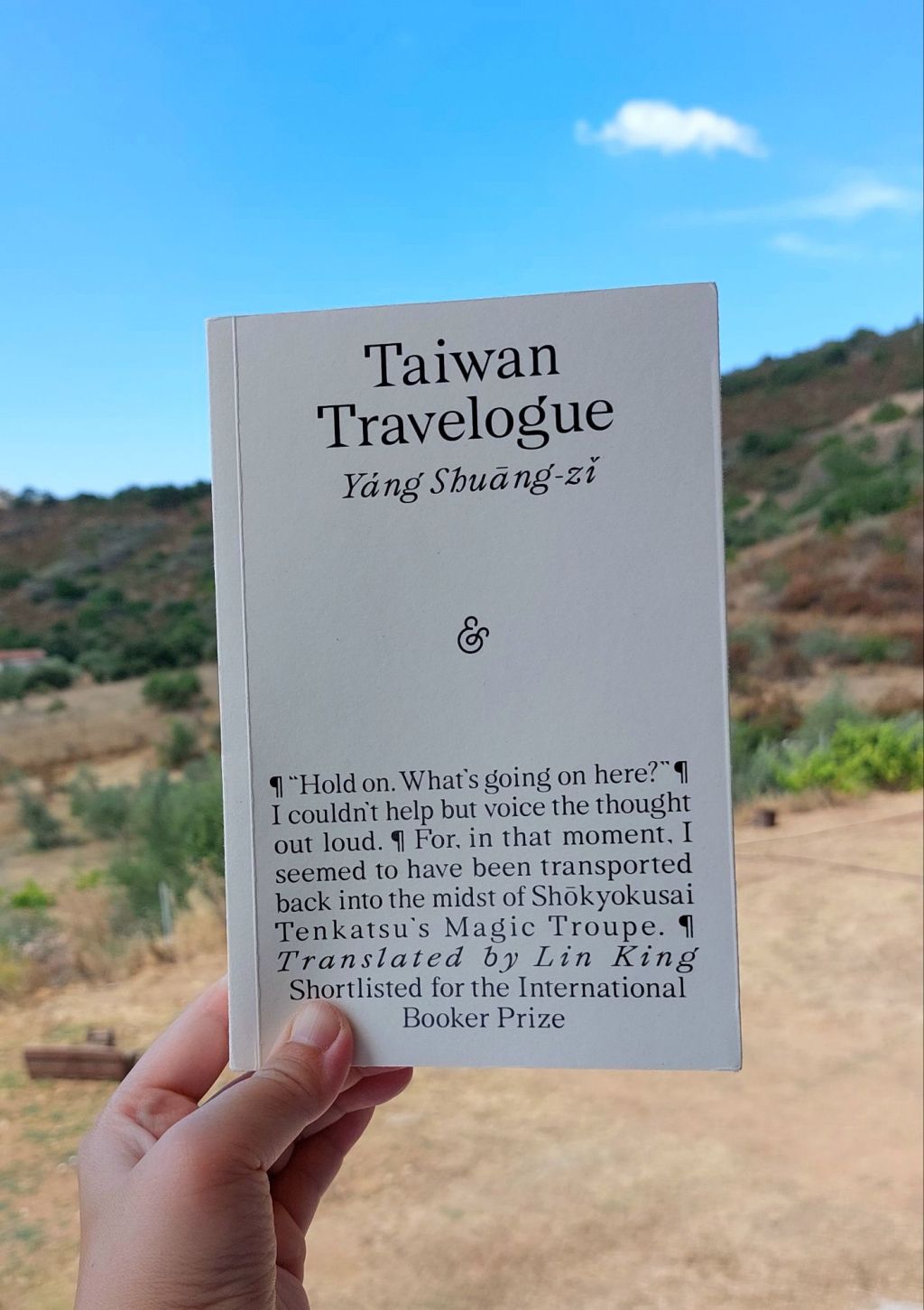
Taiwan Travelogue
Yang Shuang-zi, 2020
臺灣漫遊錄
楊双子
320 pages
Read in 2026.06
Check the synopsis and details on amazon.com
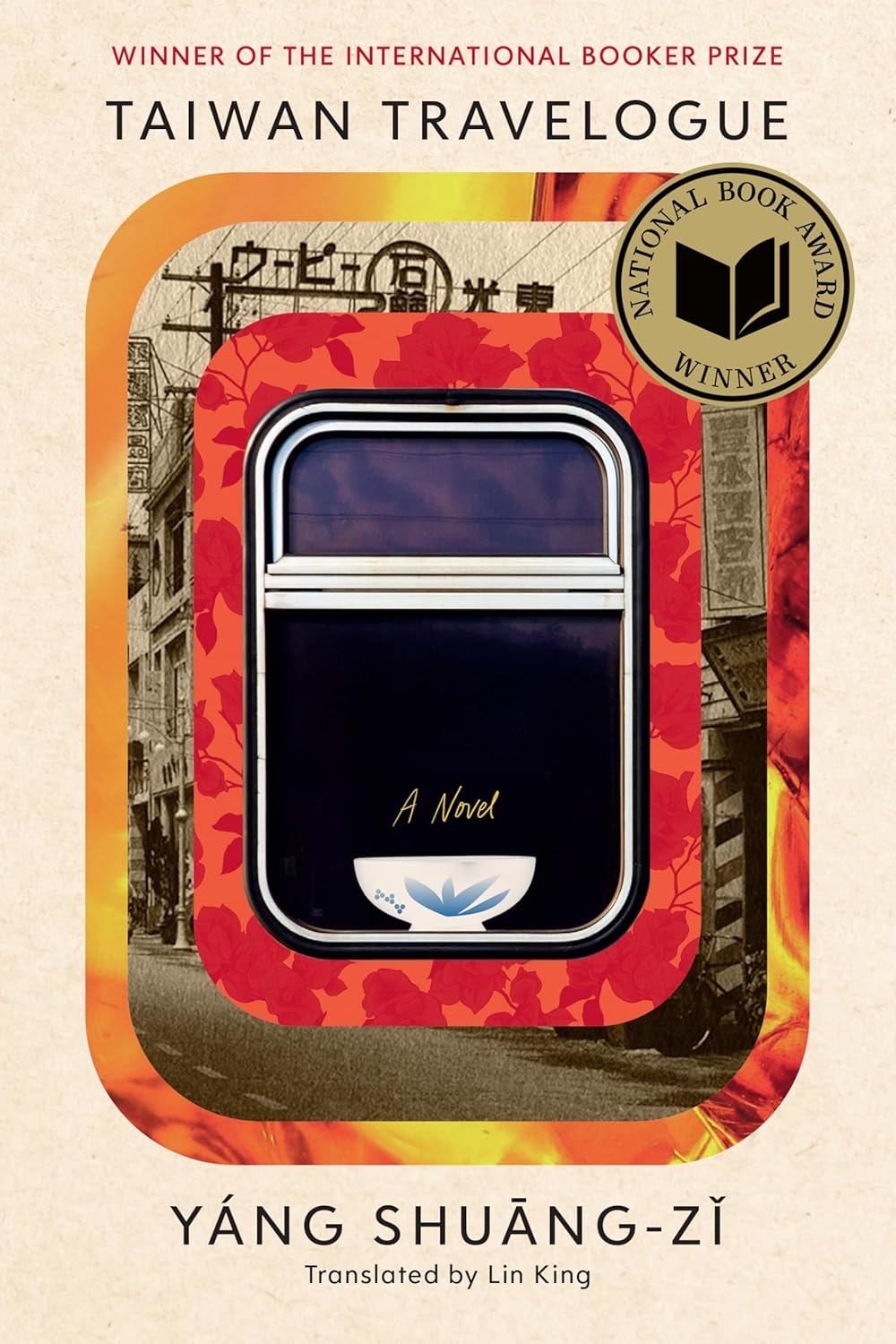
🔽 Summary and quick note 🔽
✔ A Japanese woman goes to colonised Taiwan, she writes about travelling in Taiwan with her translator
✔ Their mutual love for food and not mutual feeling of power gives a subtle tension and builds up
✔ The winner of International Booker Prize plays with translation and languages between coloniser and colonised

★★★★★ A Japanese woman goes to colonised Taiwan, with her translator she travels and eats local food; seemingly simple and cordial but the tension slowly builds up. System of power structure is so deeply rooted, kindness can be oppressing. Heartbreaking yet heartwarming, their love for food shows their mutual feelings.
English reviews, ENG_About_Japan, ENG_Female_led, ENG_Friendship, ENG_Historical Fiction, ENG_History, ENG_LGBTQ
🔽 Book review 🔽

Oh dear oh dear, indeed.

It starts off as something simple, or seemingly simple and cordial, two women with similar age, their love of food - but it's not.
The book is supposed to have been discovered by Yang Shuang-zi, written originally in Japanese, but it's not, it's a fiction created by the Taiwanese writer (or writers, it was started as a project for the twin sisters and Jo-hui passed away before completion)
And me, a Japanese, I am reading it in English - but this book plays a lot around the theme of language and translation so it's somehow fitting.

As you read on you realise what we imagine or assume is, sometimes, or probably often, not what it seemed at the beginning.
We are complicated and contradictory and sometimes we refuse to explain ourselves.
It plays a lot with translation, not between "equal" languages but between languages of coloniser and colonised.
The name of the places are deliberately pronounced in Japanese way, and there are endless implications or hints of the systematic power structure.

If it was between European and non-European people, or between a man and a woman, it might have been more obvious and easily acknowledged and even accepted as norm, but the book plays with the themes between two east Asian women.
Surely they are equal? Both equally oppressed?

It takes a few chapters to understand what is actually happening here.
(And I try to comment on it without actually saying much to avoid spoiler)
In such relationship, one has an undeniable power, and it is rooted so deeply that the powerful cannot see it.
Again if it was a man wanting to treat a woman well, because he thinks he should and wants to, then the society would accept it as a gentlemanly attitude.
That, is power, a power granted to men, a power granted to colonisers, to think "why don't you appreciate my kindness?"
The book is not clearly explaining the power structure because the narrator is the coloniser, the powerful, thus she's not aware.
It's refusing to explain, leaving what's lost in translation remain lost, except, the feeling that something is "off", why is she refusing her kindness? What is it that she's offering actually? What is her secret? What is this mutual feeling that they are trying not to show?

It's a heartbreaking story not because they misunderstand each other, but because they actually have mutual feelings, they care for each other.
It's at the same time heartwarming because there were definitely a few moments of happiness, like when they eat together, when they share a bowl of dessert.
Undeniable happiness and genuine and mutual love, in those moments the society stops existing.

Reading this in English was a double edged sword.
By writing how names are pronounced (like the city Taipei is called Taihoku in the book, the Japanese pronunciation of the colonised city) it keeps reminding us that there is always colonialism in the background.
English translation also does well in giving the hidden tone of how dialogues would have been written (pretending it to be written) in Japanese, however for that perspective, I assume Japanese translation would naturally do better and English naturally could not do more.
I think reading this in Japanese one day will give me a different experience.

And, ahhh Taiwan, the food!
Food... after this book's success (and R. F. Kuang's next book is based in Taiwan too!) I'm sure Taiwan will get longer queues of foreigners at every food stall.
I've been regretting over a year that last time I went to Taipei I didn't get a pack of Taiwanese herbal tea.
🔽 Related pages 🔽
English reviews, ENG_About_Japan, ENG_Female_led, ENG_Friendship, ENG_Historical Fiction, ENG_History, ENG_LGBTQ
🔽 Where to buy / Summary and more info 🔽

●●● Amazon.com (US) ●●●

Taiwan Travelogue: A Novel
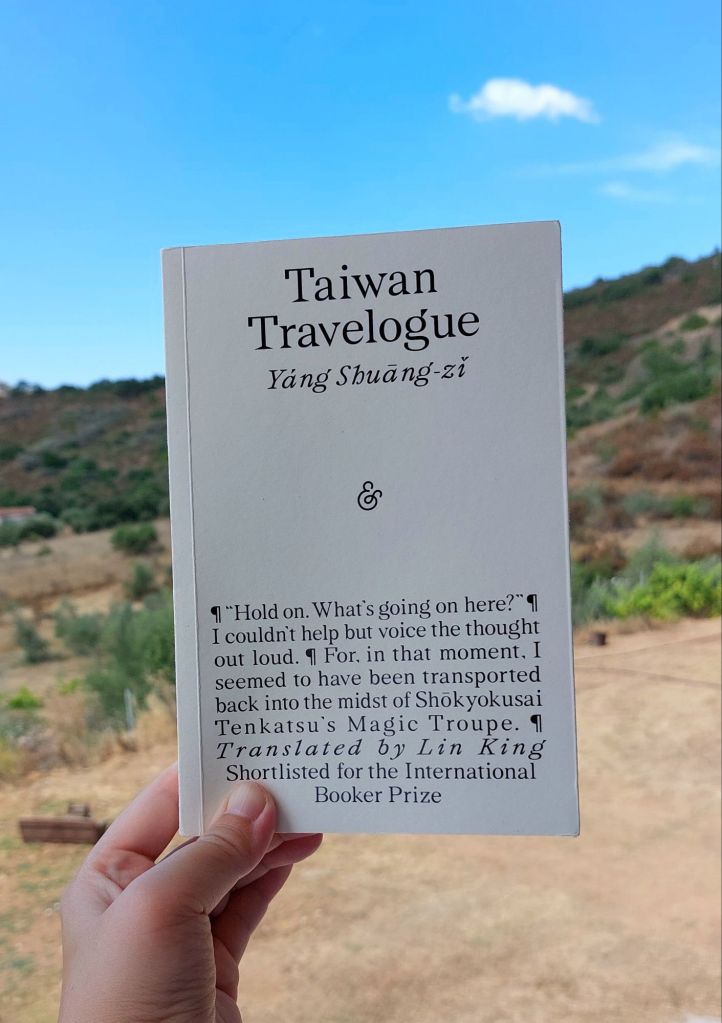
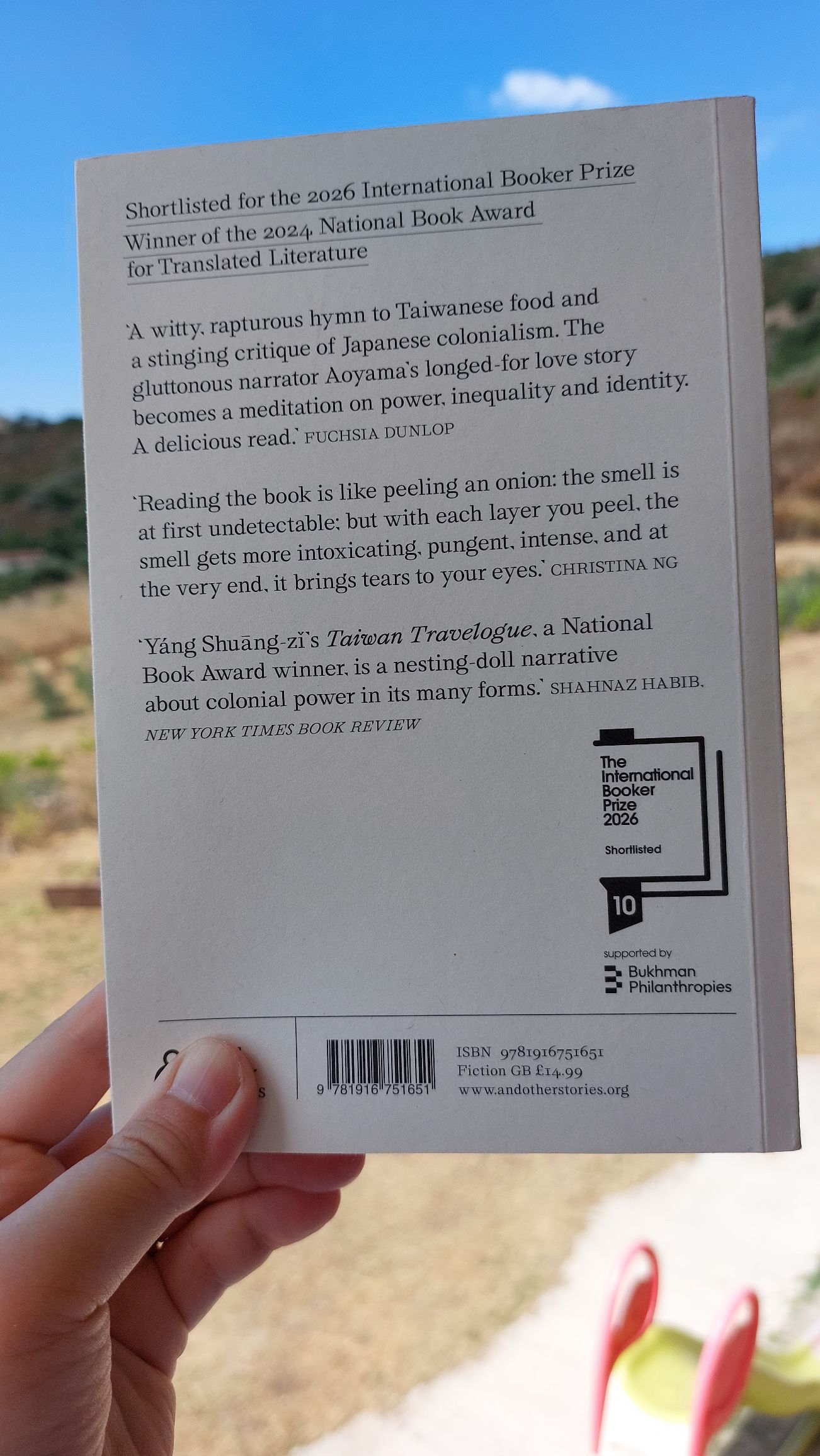







 赤パンの本棚 akapan's bookshelf