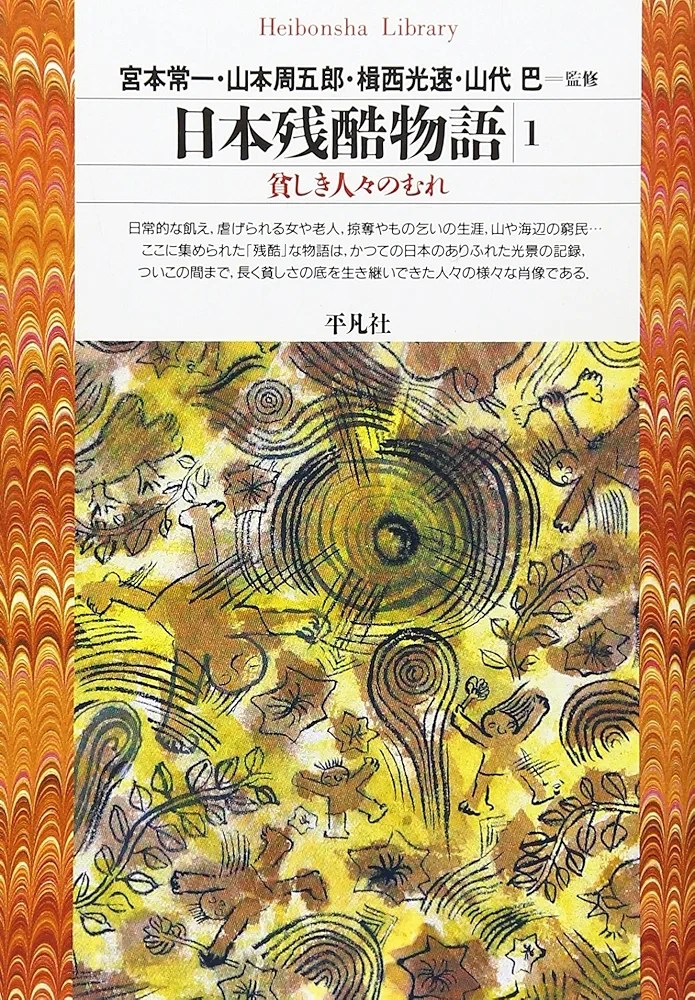
「日本残酷物語1 貧しき人々の群れ」宮本常一 他 著 1959/ “Japan cruel stories 1, flock of poor people” Miyamoto Tsuneichi et al >>


🔽ログ🔽
日本残酷物語1
貧しき人々の群れ
宮本常一 他 著 1959年
540ページ
読了=2025年2月
🔽楽天kobo (内容、著者紹介も)🔽

日本残酷物語 1【電子書籍】[ 宮本常一 ]


🔽🔽読書記録🔽🔽
宮本常一さんといえば(大好きです)普通の日本人の近代史を語らせれば右に出るものはいない民俗学者。
そして普通の大半の日本人というのは、貧しかった。
他の国からの旅行者も口を揃えてその貧しさを書き残しているけれど、宮本常一民俗学とは、とにかく歩いてその土地の人の話を聞くことだけど、この本もすごい。
百年ちょっと前の日本人の大半が貧しさに苦しみ、盗みや殺し、身体を売り家族を文字通り捨て、肉親だろうが我が子だろうが背には腹を変えられぬ底辺の生活をしていた。

一般的に学校で習う歴史は社会の強者だけが記録され語られていて、弱者というか普通の人の生活は見えない。
でもここには大衆の、普通の人のいくつもの例が掲げられている。

それは残酷である、あるんだけど、残酷という言葉で終らせていいのか。
子を間引きする親に他に生き延びる方法はあったか、行政はなにをしたのか。
ただ食べるため赤の他人の船や旅人を襲う村人は残酷なのか。

ここには女性の例が多くあるのがありがたい。
女性はその人生をかき荒らされ、女だからと穢れとして下にみられ、一人の人間とは見なされず、家庭での立場も常に戦場で、しかも妊娠をする、そしてなぜかその責任を負わされる。
炭鉱の女性の章もよかった。
いかに家庭も社会も背負う女性がたくましいかがはっきりとかかれている。

本来日本人なら義務教育で知っておきたい、知るべきな、日本の歴史。


🔽 買えるところ 🔽
●●楽天●●
日本残酷物語 1【電子書籍】[ 宮本常一 ]

●●アマゾン●●
日本残酷物語1


🔽 日本語情報 (「BOOKS」より引用) 🔽
平凡社ライブラリー 95
監:宮本 常一
監:山本 周五郎
監:楫西 光速
出版社:平凡社
ISBN:9784582760958
判型:A6変
ページ数:540ページ


★★★★★ Normal, majority of Japanese people were poor. And their lives where cruel to them, yes, but can we just simplify this side of history, the history of the majority. Great Anthropology.

🔽 basic info 🔽
Nihon Zankoku Monogatari 1
(Japan cruel stories 1, Flock of poor people)
Miyamoto Tsuneichi et al, 1959
日本残酷物語1 貧しき人々の群れ
宮本常一 他
Read 2025.02
(Not available in English)


🔽 Book review and notes 🔽
Miyamoto is my favourite Japanese anthropologist.
He focuses on folklores and local traditions, and he firmly believes on going to places on foot to meet the locals to learn about their local customs, of the normal people.

Normal people in Japan were poor. Many foreign travelers from 100 years ago or so all talk about how poor Japan was centuries ago. An English explorer Isabella Bird is a famous one among those.

Just over 100 years ago, majority of people in Japan suffered from poverty, living lives of thefts, killings, selling their bodies, disposing some family members (often their children of elderly) - to survive.
You might have heard of the tradition of getting rid of the elderly in the mountain, or newborns in the river "before they were considered living human of the family" the latter famously being considered incredibly cruel by Western Christians that time.
There are endless examples in this book, examples of how the poorest and weakest of the society had to survive.
In the meantime, today we love to focus on the rich and powerful like samurai, shogun and rich merchants of Edo period, and how Japan was "sophisticated".
That's not the reality, the life was cruel, people were cruel.
But do we dismiss them only as "cruel"?
Parents who had to select which babies would survive, did they have a choice?
What did the government do while the rich had their sophisticated lives?
The sad history of villages attaching trading ships or another village to eat, were they merely cruel?

In one chapter they specifically talk about female.
Female are always the victim, especially when the time is hard.
Female were considered impure and inferior. They were always fighting, in society, in family, with elder female members.
How dare they give birth to more mouths to feed, it's the female's responsibility and "fault" how insane.
A chapter on women working in the mining was also great, they carry their family, society, finance on their shoulders, and my god they were strong.

This is the kind of history we should learn at school, this is the real history of Japan.

🔽 Where to buy 🔽

●●● Amazon.com (US) ●●●

日本残酷物語〈1〉貧しき人々のむれ (平凡社ライブラリー) Paperback Bunko
Amazon.co.uk (UK)
日本残酷物語〈1〉貧しき人々のむれ (平凡社ライブラリー) Paperback Bunko

Amazon.it (Italy)
-


コメントを残す