★★★★☆ 31 men and 1 woman on a remote island. She makes sure to take advantage of being the only woman, but it’s not that simple, she gets old and fat, and gets greedy, too.
🔽 log 🔽
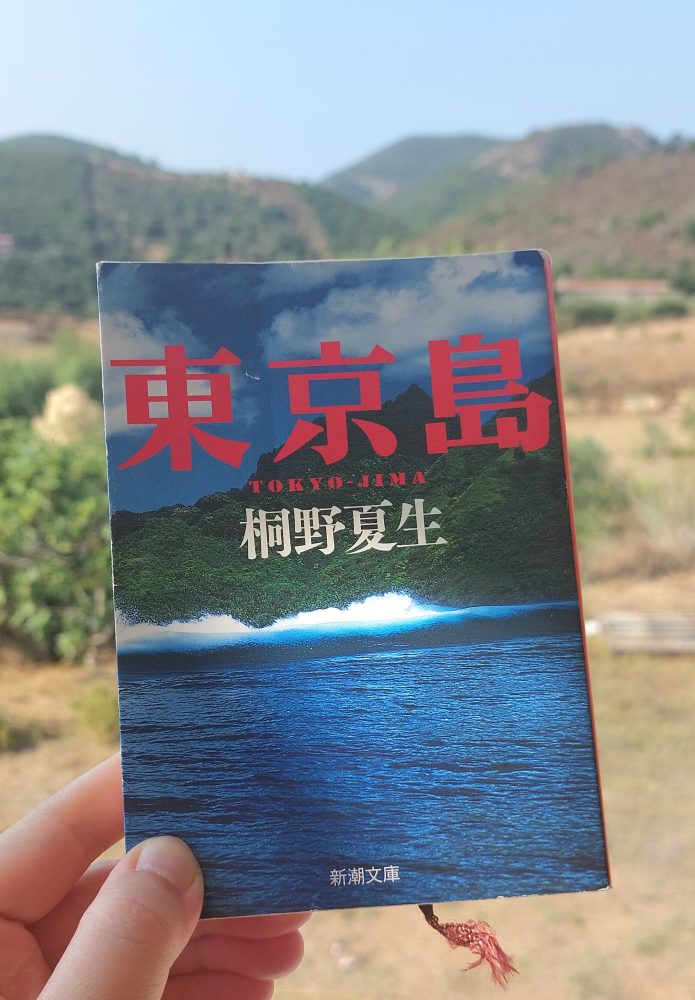
Tokyo Island
Natsuo Kirino, 2008
東京島
桐野夏生
Read 2024.7


🔽 Book review and notes 🔽

31 men and 1 woman on a remote island.
She makes sure to take advantage of being the only woman, but it's not that simple, she gets old and fat, and gets greedy, too.

As time goes on, 5 years, 6 years, they slowly start to fall apart and form their own communities.
I only recently read Robinson Crusoe, and I'm not sure if he'd prefer years alone, or with these people.

Men are not to be depended on, but she's so used to be treated like a queen by now, what should she do now that she's getting old and fat?
It's not a beautiful story, it's the real woman with real problems, even if she's on an island with dozens of men alone.
★★★★★ A difficult read, difficult to understand what’s actually happening, but once you get a hang of it, and with a bit of research it’s gripping. Must read this again, now that I know the story.
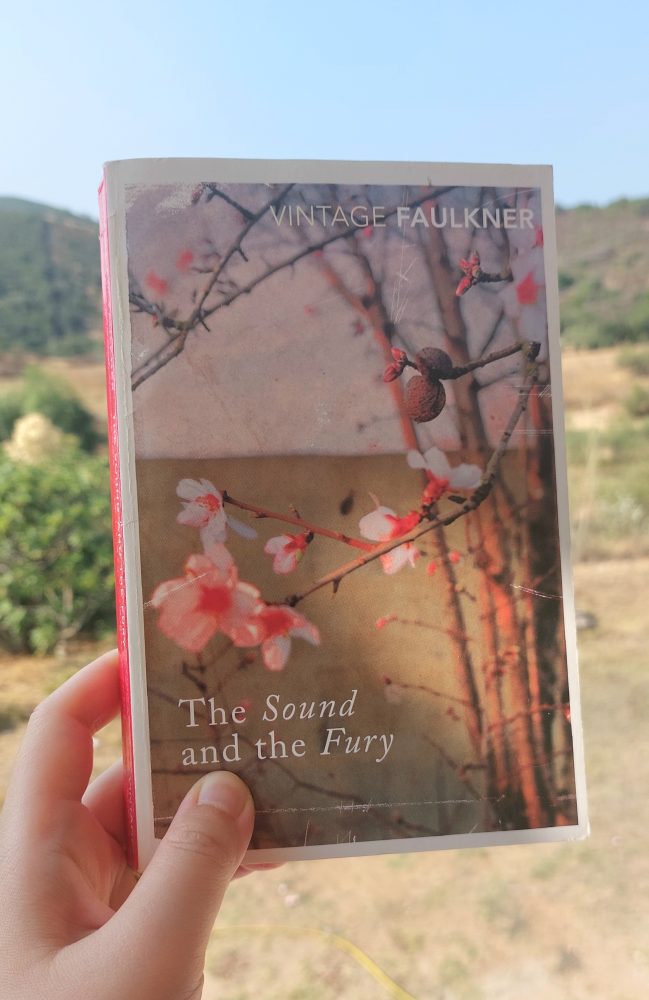
🔽 log 🔽 The Sound and the Fury William Faulkner, 1929 464 pages Read 2024.7
🔽 Book review and notes 🔽 A difficult read. The first chapter is written from the perspective of a disabled man, who is the fourth child of the family and it's not chronological, things come up as they come up in his mind, jumping around the time and repeating the same things, repeating his love for his sister. Then it goes to the first son's perspective, then the second son's, then ends with no first-person narrator and concludes how the family has collapses.
Throughout the book things go back and forth and there is little explanation of what's actually happening or who's speaking, as if you are reading from the character's mind so you're supposed to follow with no description of events.
Though it's difficult, and I needed a synopsis from Wikipedia, it is gripping once you get a hang of it. Unique, for sure, and it's a sad story of a proud but dysfunctional family. Must read this again, now that I know the story.
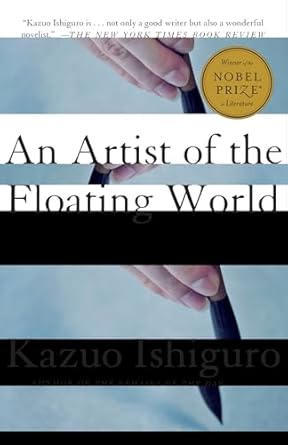
★★★★★ Remembering the past, remembering the regrets and hoping for a bright content future. Classic Ishiguro here, perfectly capturing the Japanese sentiment. Elegant.
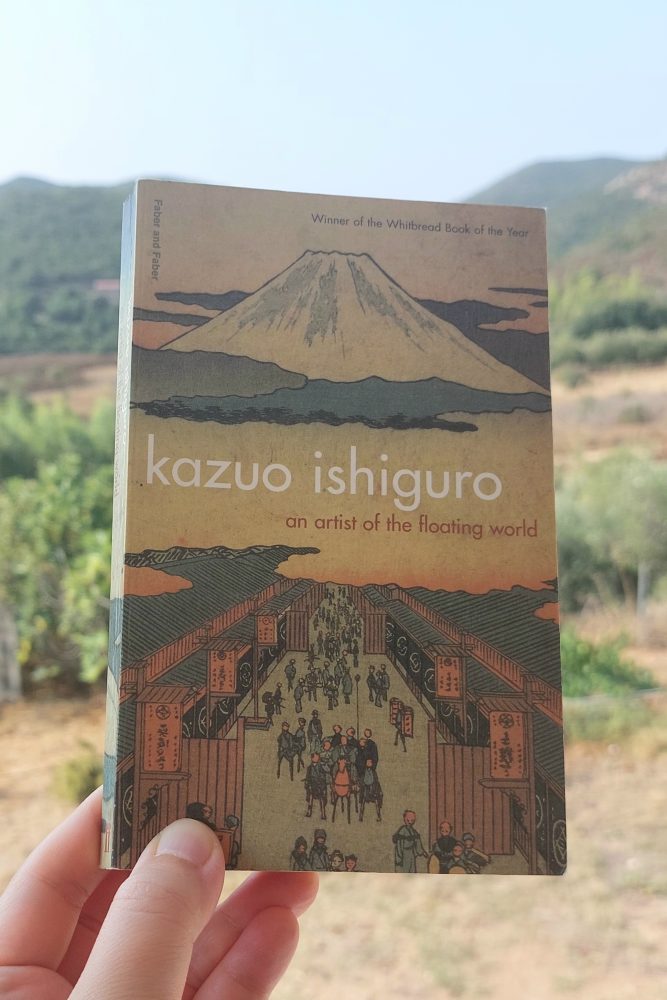
🔽 log 🔽 An Artist of the Floating World Kazuo Ishiguro, 1986 206 pages Read 2024.7
🔽 Book review and notes 🔽 Remembering the past, remembering the regrets and hoping for a bright content future. Classic Ishiguro here, with an old man as the protagonist, perfectly capturing the Japanese sentiment.
He revisits and reviews his life as he gets old, old enough to have others around him die, and slowly sees his mistakes of being too nationalistic, though that was the norm, and for his daughter's sake he acknowledges the mistakes.
Slow and elegant and all you expect from Ishiguro.
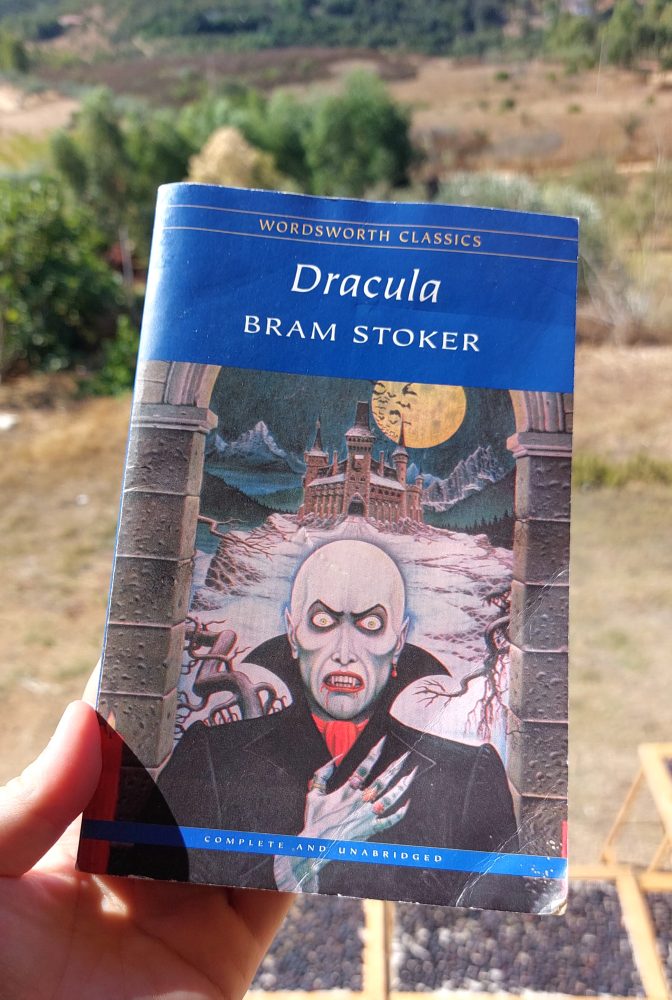
★★★★★ Who doesn’t know Dracula? But so the threat is in the town and awakens intelligence and sexuality in women, and men go out to destroy. Definitely playing with female sexuality and empowerment.
🔽 Book review and notes 🔽 The classic of the classics, who doesn't know Dracula?
The entire novel is written as if it were collection of diaries, notes and letters. In a way surprisingly to me that it was full of pure adventures, good guys chasing the bad guy to save woman. But it is the woman who became the victim because of the men's heroism and she saves their asses. Also if you read between the lines, it's sexual, or bisexual even. Dracula likes the blood of young beautiful women, but he also imprisoned Jonathan and attempted to attack him also.
So, the threat is in the town and it brings about the awakening of women to their intelligence and sexuality, so the 4 men go out to hunt. That's one way to look at it but certainly it's playing a lot with the idea if female sexuality and empowerment.
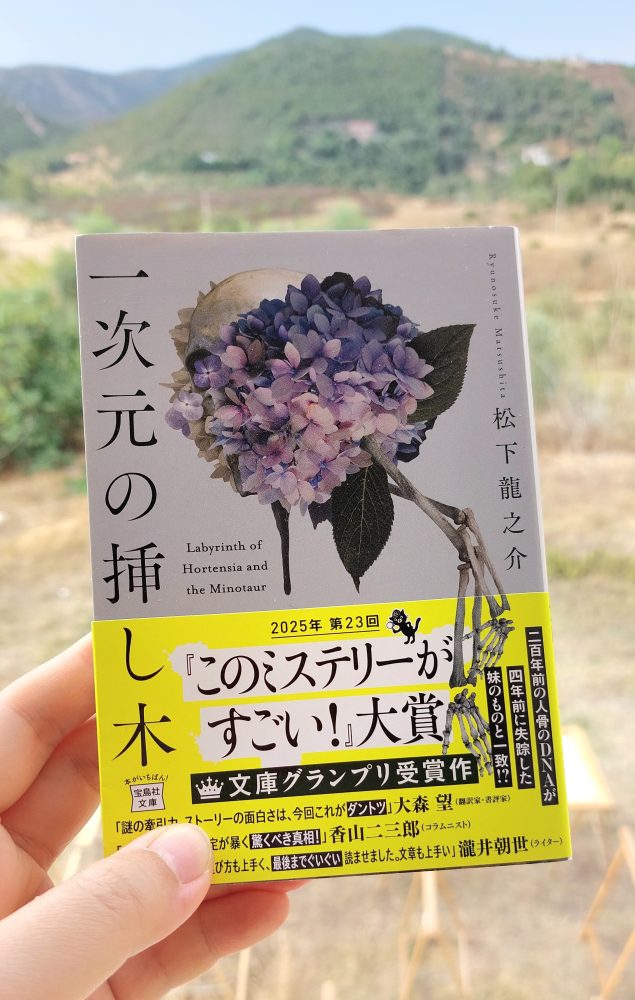
★★★★★ What’s so fab about it is that you know it’s impossible, but it’s so good that it doesn’t matter. Exciting and entertaining, definitely the most loved mystery of 2025 in Japan.
🔽 log 🔽
一次元の挿し木
松下龍之介 2025
(Labyrinth of Hortensia and Minotaur)
Ryunosuke Matsushita
256 pages
Read 2024.8
(Not available in English)


🔽 Book review and notes 🔽
The author is in his mid-20s and it was only his debut novel.
It's so entertaining that all bibliophiles have read it in Japan.

The DNA of an ancient bones found in India matches the DNA of his missing sister.
And there are evil organisations and scientific secrets that are bigger than life; so you know it's impossible, there is no reality to it, but, but! you let that go because the story is so good.
Who cares if it's the story is unlikely, but not even SF, if it's entertaining, people will read and get addicted to it.

The protagonist is a beautiful lone young man who never smiles, his younger sister is a quiet pretty girl, there are also a bored housewife and poor students and Greek mythology, Frankenstein's monster, then the sound of mysterious liquid splashing - all the good ingredients are there.

We're all waiting for his future books now.
(And I'm sure it will soon be available in English)
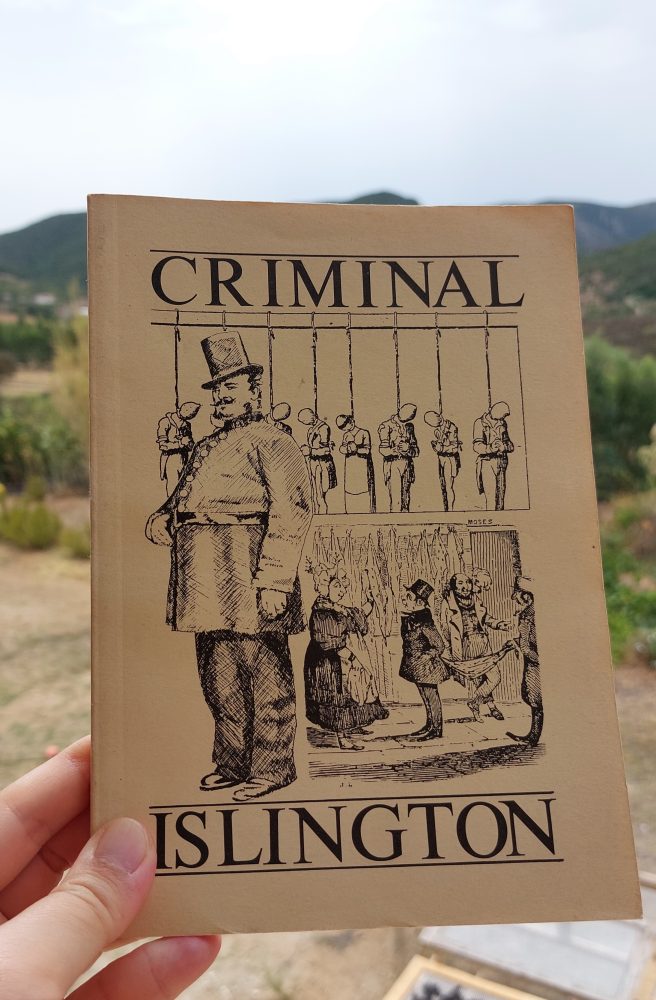
★★★★☆ Record of crimes, policing and prisons in Islington, my home in London. This is when British Empire was at its peak, yet, citizens of London lived in poverty. Hypocrisy.
🔽 log 🔽 Criminal Islington The Story of Crime and Punishment in a Victorian Suburb Islington Archeology & History Society, 1989 90 pages Read 2024.7
🔽 Book review and notes 🔽 Collection of essays related to criminals, policing and prisons. Being so closed to the City, Islington, especially Clerkenwell had a pretty bad history. It’s interesting that there was no “police” outside of the City, and at the same time people realised that the petty crimes are born out of poverty so the policing and the housing improved the situation.
Crazy to think that the alleys in London were so poor yet they had the Empire.
In any case, interesting to know the area I know so well has such an interesting (but not very proud) history.
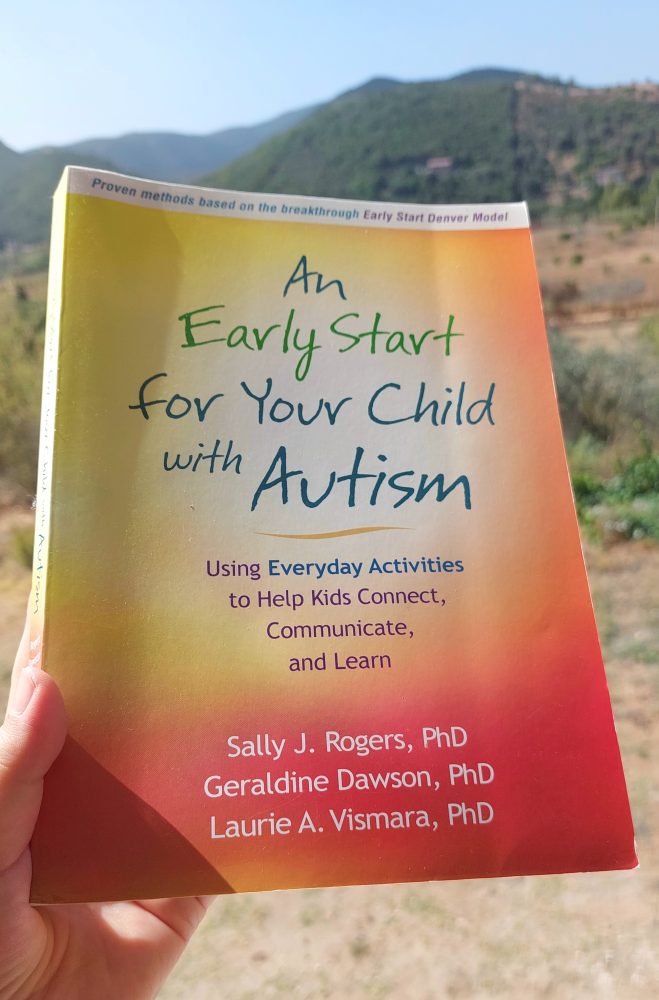
★★★★☆ For children aged 2-3 years and just been diagnosed. The interesting thing was to learn the rationale behind the step to take though.
🔽 log 🔽
An Early Start for Your Child with Autism: Using Everyday Activities to Help Kids Connect, Communicate, and Learn
Sally J Rogers, etc, 2012
342 pages
Read 2024.7


🔽 Book review and notes 🔽
Clearly it was too late to read this, this is for children aged 2-3 years and just been diagnosed.
We've already done or already doing all the steps...

The interesting thing was to learn the rationale behind the step to take, good to read it properly rather than just guessing, however correct it was.

The later chapters were more appropriate like speech, but the whole book is really for the newly diagnosed, so if that's your family's case, then a great book.
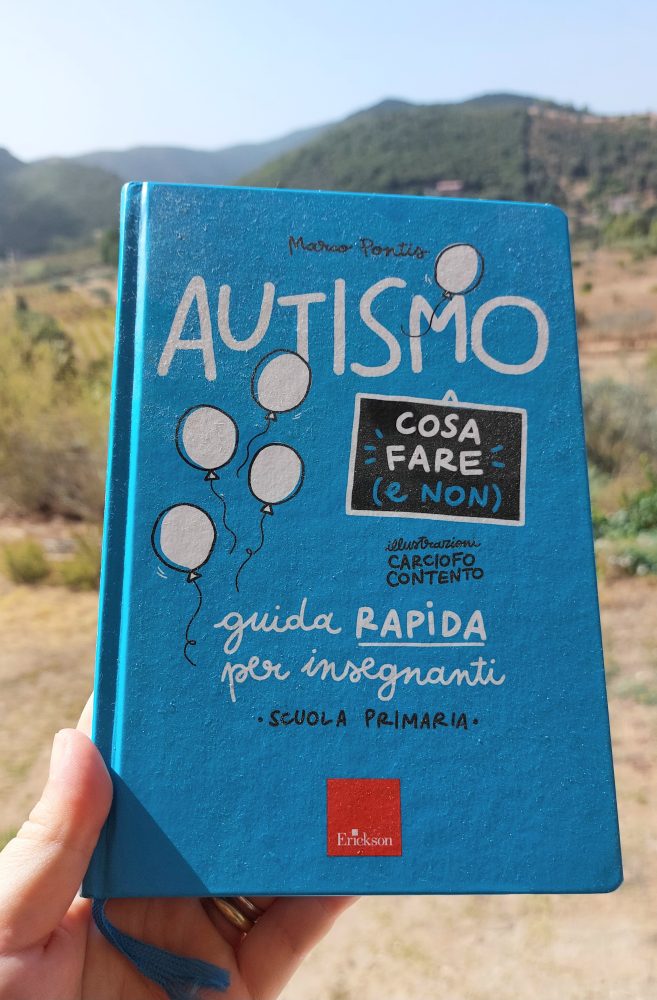
★★★★☆ Written for assistant teachers at school, so not home or therapist, but useful even for parents.
🔽 log 🔽
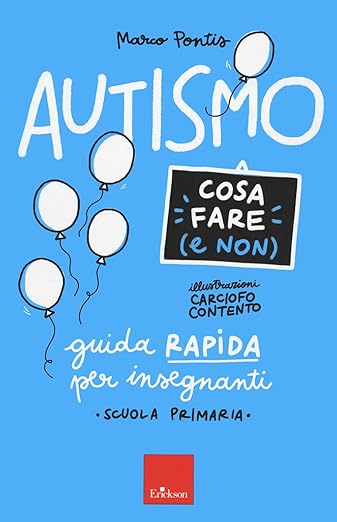
Autismo. Cosa fare (e non)
Guida rapida per insegnanti. Scuola primaria
Marco Pontis, 2021
150 pages
Read 2024.8
(English not available)


🔽 Book review and notes 🔽
For Italian teachers.
Written for assistant teachers at school, so not home or therapist, but useful even for parents.

Nothing new specifically to note (it doesn't go deep, and assumes it's for a classroom) but good to read in Italian and normally what they suggest is consistent in various books.
★★★★☆ It is scary to think just how we continue to demand to be strong, stepping on all the other animal and the ecosystem that surrounds us – and, on other fellow human beings.
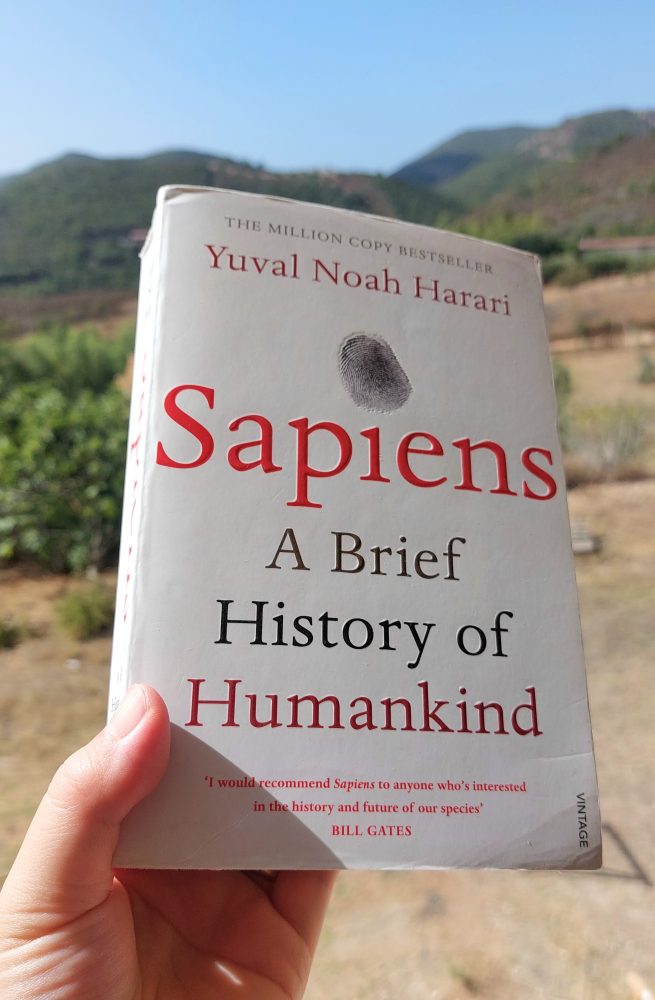
🔽 Book review and notes 🔽 One of the most talked about books in the last decade.
As I was warned, it is interesting, clever, provoking but above all scary. It is scary to think just how we evolved to be the most powerful being on the planet, and how we continue to demand to be strong, stepping on all the other animal and the ecosystem that surrounds us - and, on other fellow human beings.
If you stop and think, it's crazy how we're destroying our world by selfish.
As he says, the earth is a big shopping centre. We love to consume and want more - but what exactly do we want? What is the happiness that we want? And in future, when we evolve to something new, what new things will we want?
Another scary part is, he doesn't seem to criticise this aspect of our greed and seem to just speak about it, which might be alarming. So though interesting, I don't like it, and I kept it with 4 stars only.
★★★★★ Women looking at each other, women being looked at by each other. This is everyday stuff, a mundane, but why does it have to be a taboo to talk about women's normality? Sharp and warm.
🔽 log 🔽
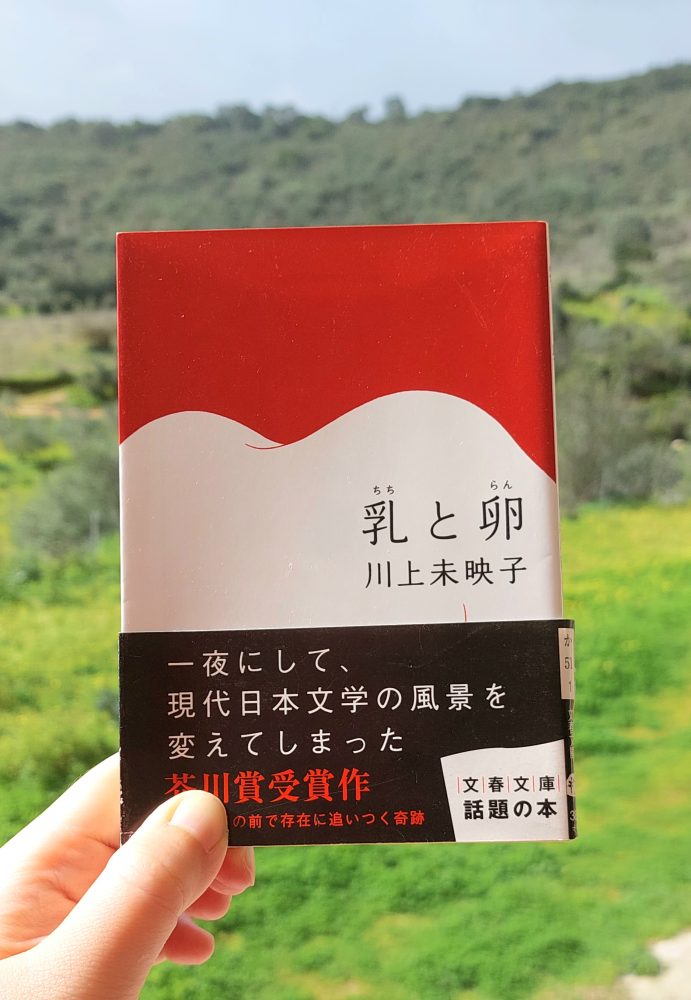
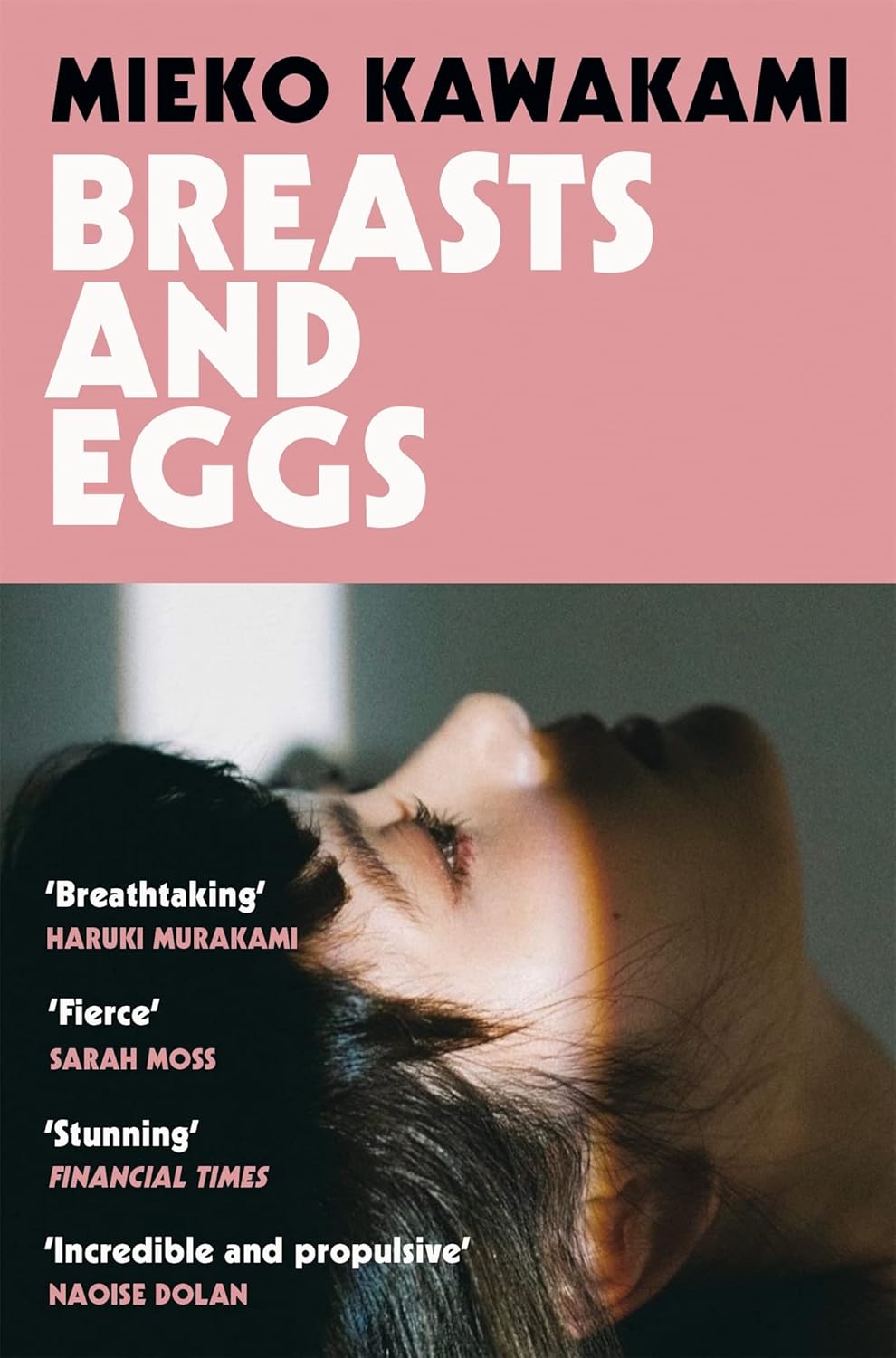
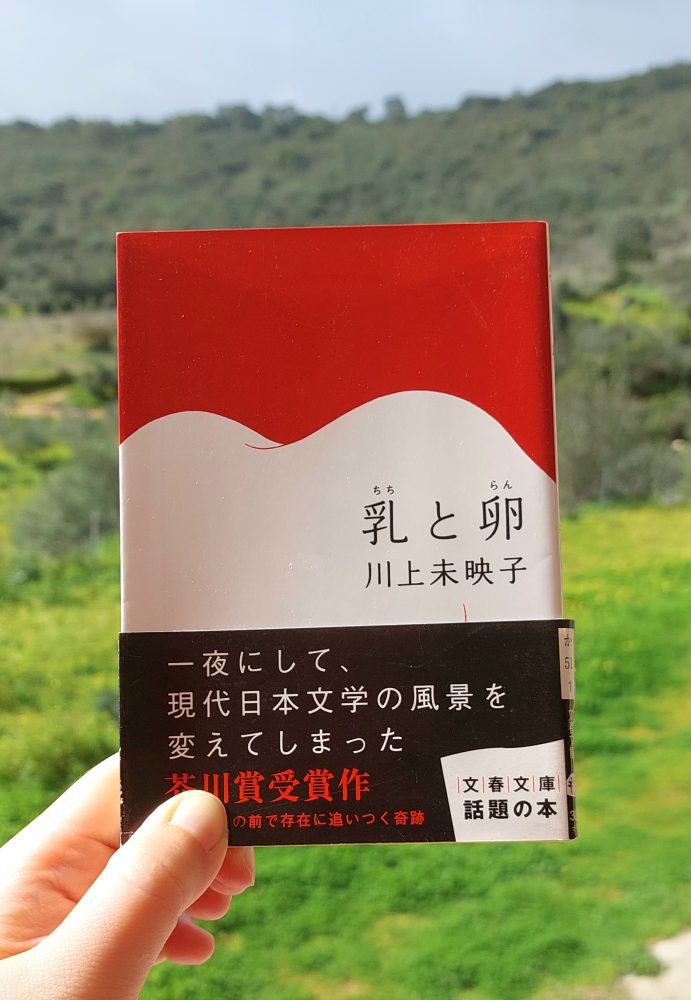
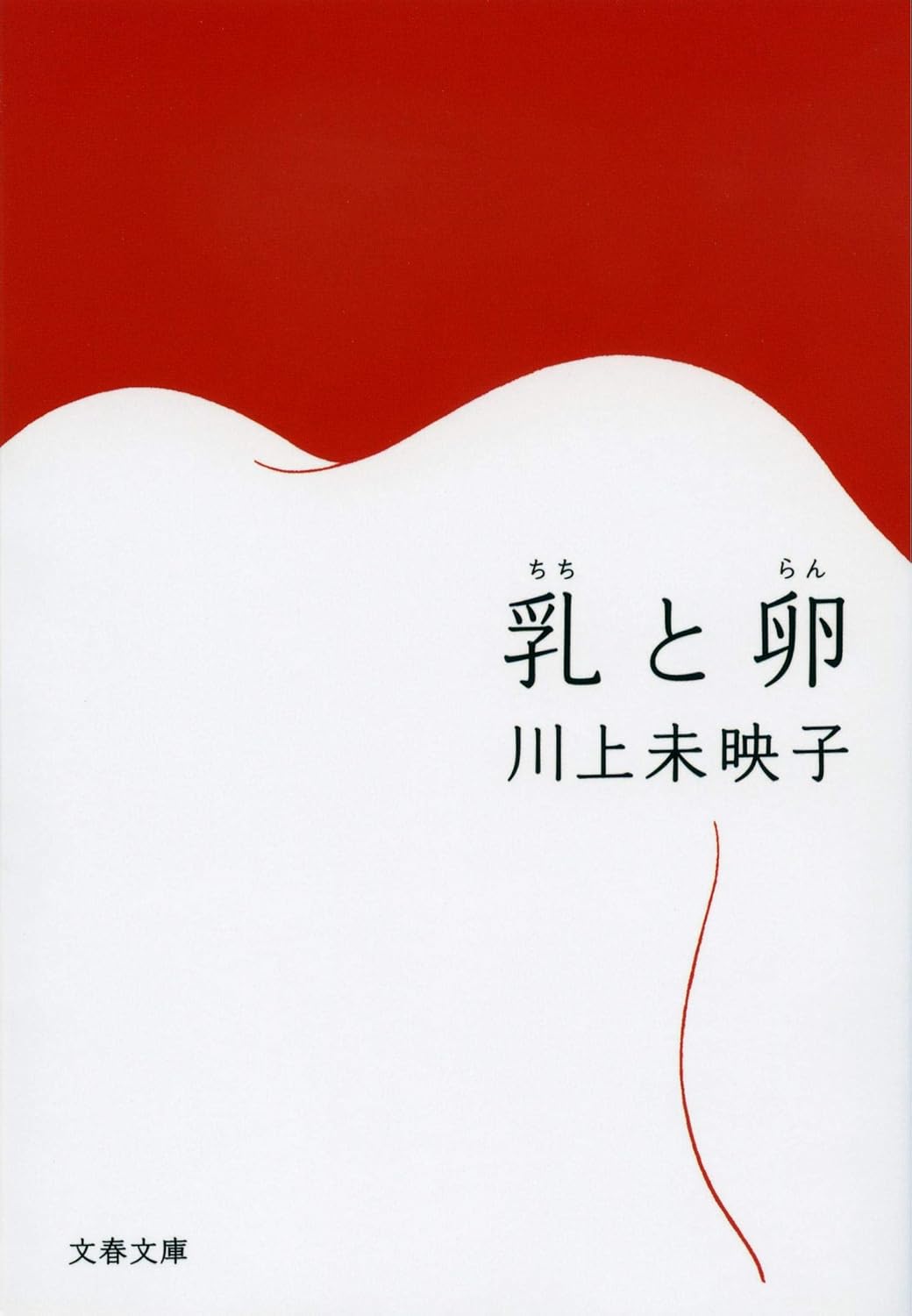
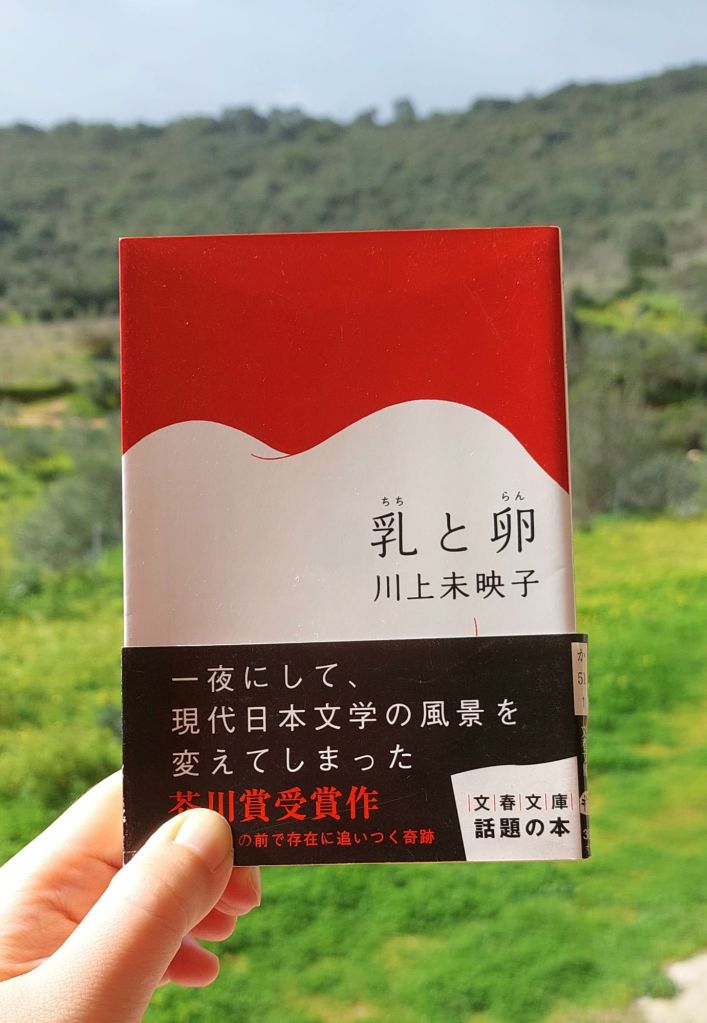
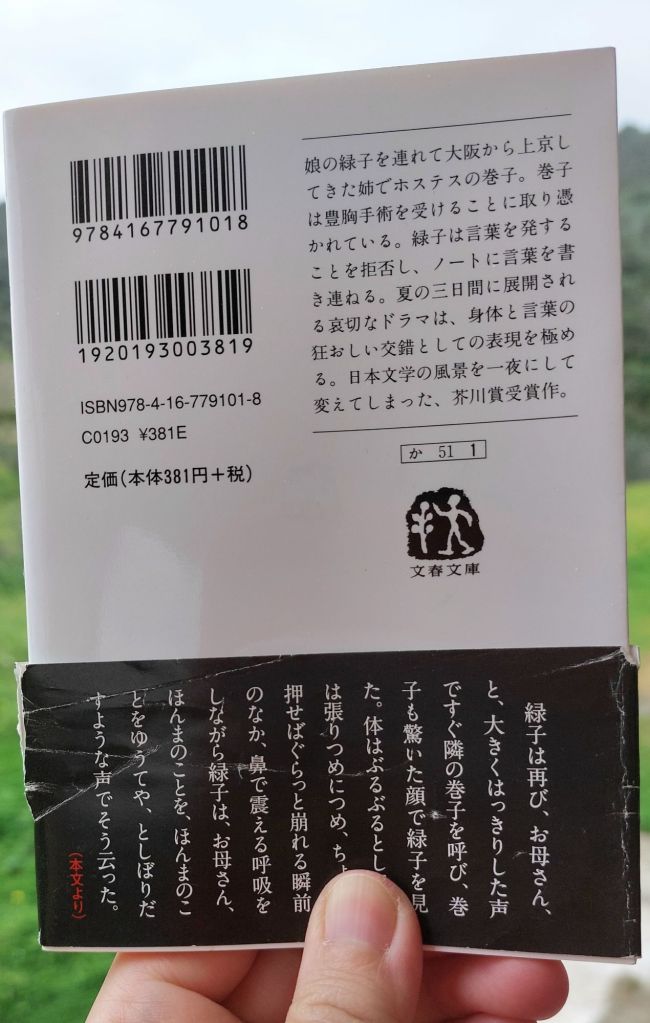
Breasts and Eggs
Mieko Kawakami, 2008
乳と卵
川上未映子
Read in 2020.05
🔽 Book review and notes 🔽

There's no other stories like this.

3 women, 3 days.
What does it mean to be a woman?
It goes on about sexual "tools" and about reproduction "tools" and menstruations that just happen in between
Women looking at each other, women being looked at by each other.
This is everyday stuff, boring, a mundane, but why does it have to be a taboo to talk about women's normality?
In the original Japanese it's written in a way that's not easy to read mixed with Osaka dialects, there was nothing like this before Kawakami, a story that talks about the truth in everyday life. Her theme and storytelling is sharp, but her writing is warm.

Today her books can be found in English and many other languages, but naturally I wait to get them in Japanese!
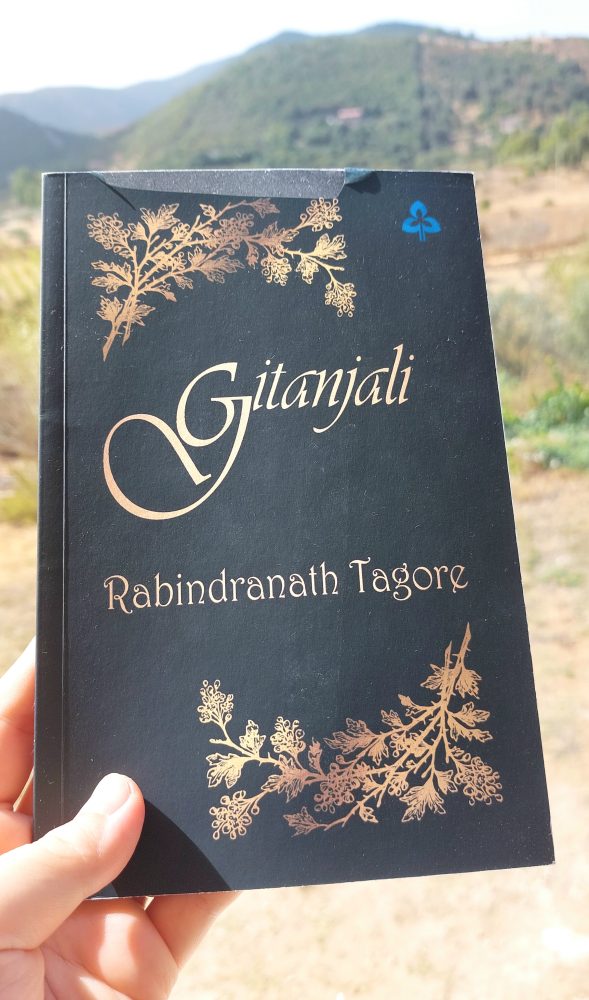
It's a poem so inevitably it loses the beauty when it's translated. I also looked a bit at the Japanese translation but it was better than the English version.
"Song offerings" to god, so I'm unfortunately not familiar with the sentiment as I don't know much, but it is nice and beautiful to read. It opens your mind and heart to another layer of the world, away from the everyday rush life.
First Asian to receive a Nobel Prize. He had a warm relationship with Japan and Japanese artists, but he was very critical of the Japanese nationalism in the 1920s and eventually stopped visiting Japan.
★★★★★ His adolescence, friendship and first love, like any stories of this kind, but the sense of not belonging was too real and obvious, he really did not belong. A bittersweet love for his home, India.
🔽 log 🔽
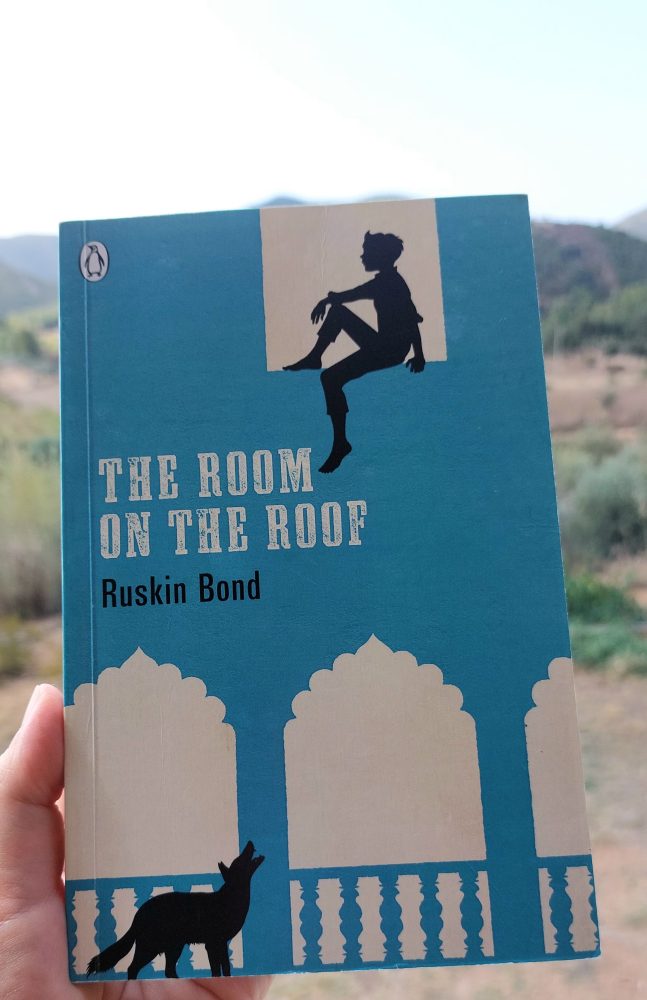
The Room on the Roof
Ruskin Bond, 1956
184 pages
Read 2024.08


🔽 Book review and notes 🔽
First long novel I read of Ruskin Bond, and his first novel when he was still a teenager.

It talks of his own youth, of being a white English boy raised in India and not belonging anywhere.
His adolescence, friendship and first love, like any stories of this kind, but the sense of not belonging was too real and obvious, he really did not belong.

Bittersweet, under the Indian sun the boy is undeniably in love with India, his home.
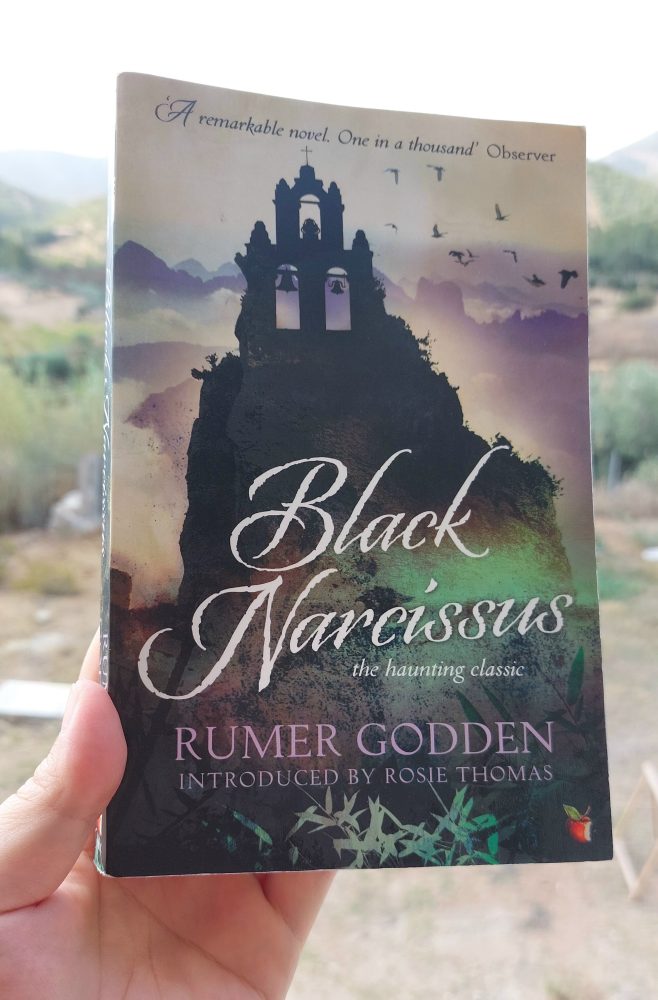
★★★★★ Nuns with good intentions in the isolated hills out of Darjeeling, which used to be a harem. If that doesn’t promise the hysteria and darkness. As expected they slowly went mad.
🔽 Book review and notes 🔽 Nuns with good intentions in the isolated hills out of Darjeeling, which used to be a harem. If that doesn't promise the hysteria and darkness, I don't know what does. As expected they slowly went mad.
It's in a way stereotypical, how can they dare to go out to someone else's back garden to preach, when the locals have been living perfectly fine. How could the women, with different tempers expect to live peacefully, when they're not welcome.
It's the dark side of living in Darjeeling hills, as the young General said, people go mad when they stay too close to the mountain Kanchenjunga, God.
Sexual tensions, the struggle between white supremacy and Christian philanthropy, the end of British Empire. And it did make it into a rather successful film and series. In the final days of the Imperial rule, some British also thought it was good and made a film out of it, too. I must watch it.
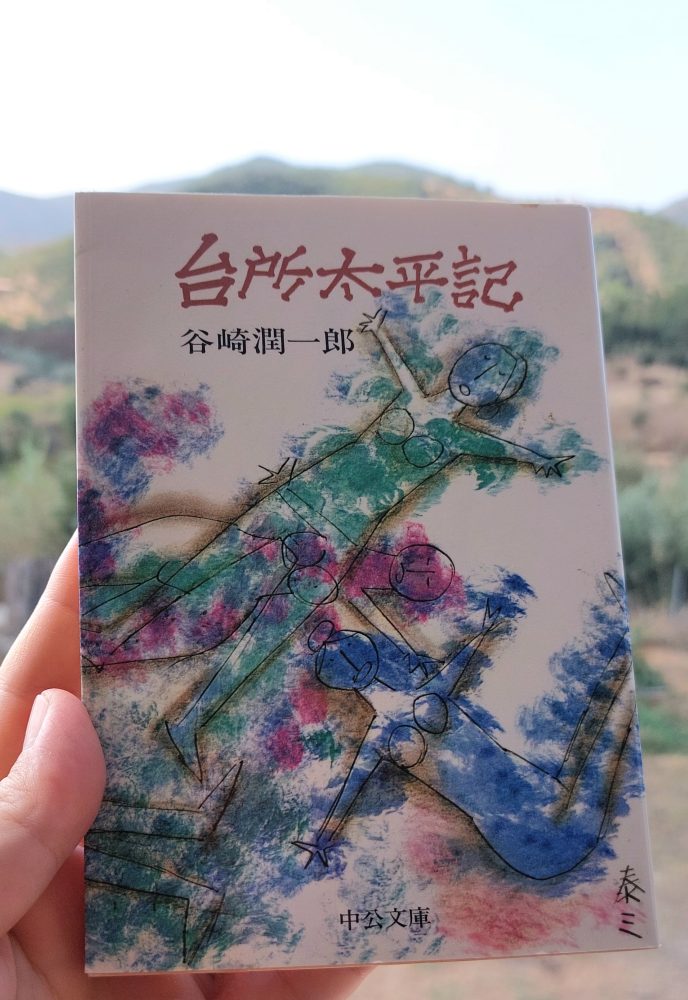
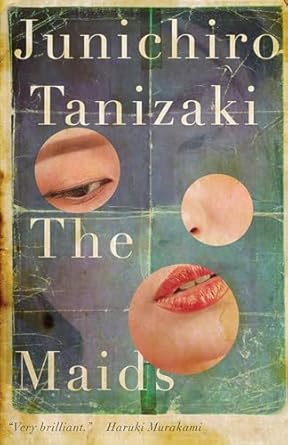
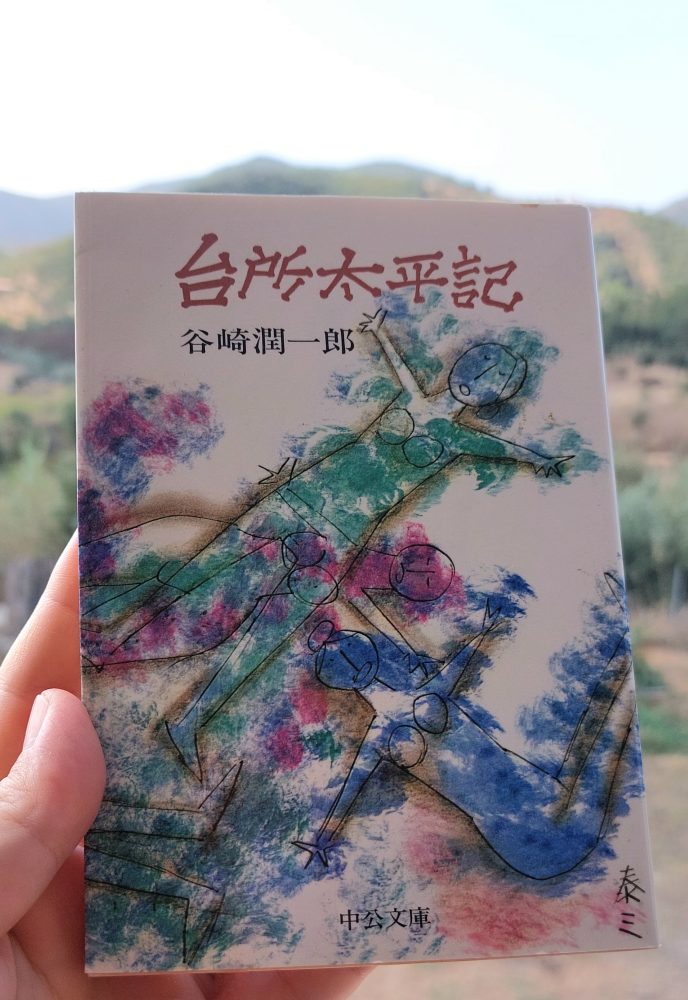
★★★★★ Maids in Japan this period were not just housekeepers, they were a part of the family. And it’s Tanizaki, all his women are unique and loveable, and all a bit crazy.
🔽 Book review and notes 🔽 In the house with an old man, many maids come and go. Back then, maids were not just housekeepers, the young girls come out from countryside, and their employers treat them like nieces, taking care of their affairs.
And remember it's Tanizaki, it means all the women in the book are unique, loveable and a bit crazy. The house is always noisy with the maids chatting away and running around, exactly as the old man likes. Yes he likes the girls and looking at their feet, but he also lets go of their little madness, or their love affairs, even love affairs among the girls. It's an old custom or value that's disappeared.
It might not be one of his more famous books, but it's fun, it's sensual, it's subtly sensational, definitely a lovely read.
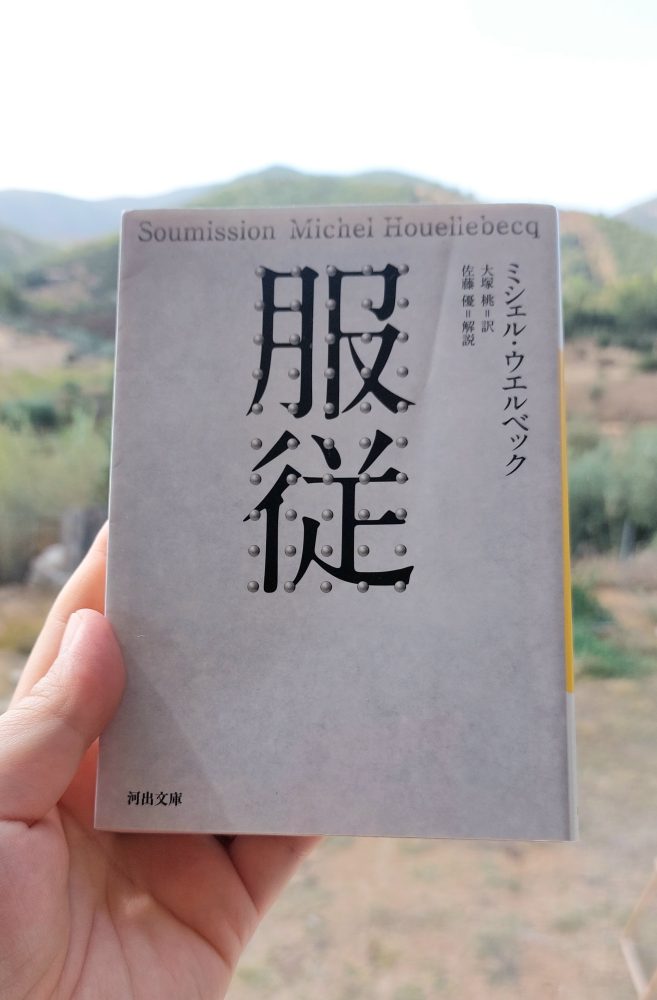
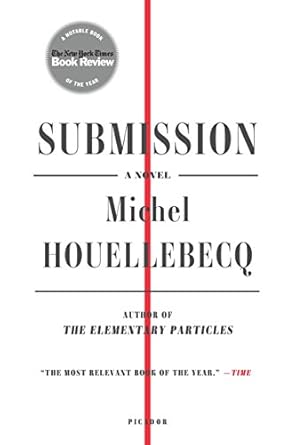
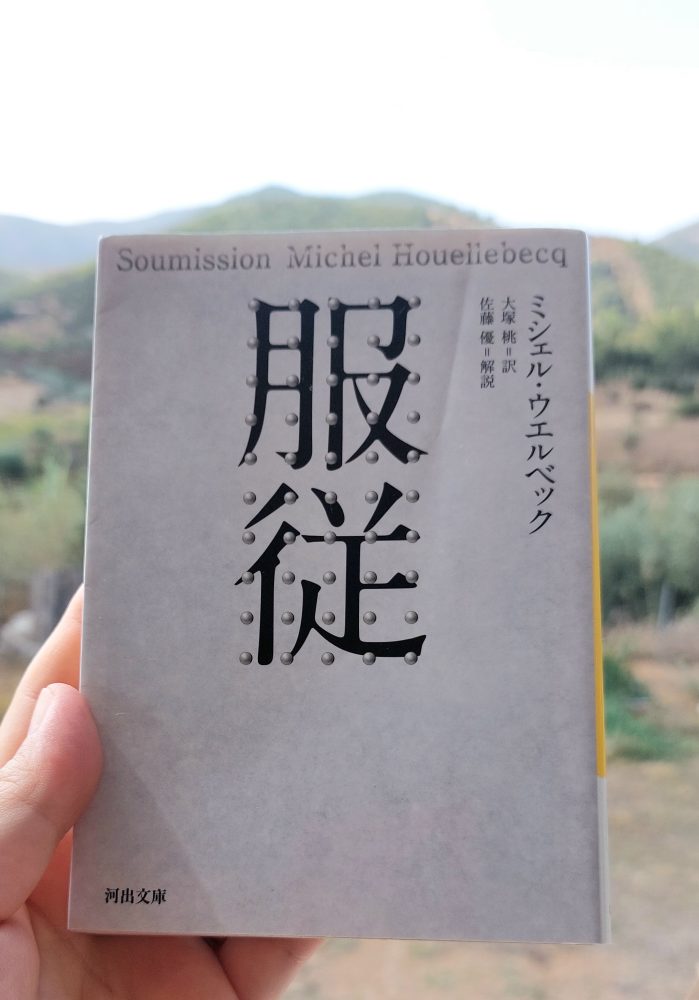
★★★★☆ A controversial novel where the government and leaders in France become more and more Islam, to cling to their careers. It’s not so impossible. Today Europe is tired of the emptiness that they want to bow to something big. Fascism or Islam?
🔽 log 🔽
Submission
Michel Houellebecq, 2015
Soumission
Read 2024.8


🔽 Book review and notes 🔽

A controversial novel where the government and leaders in France become more and more Islam, to cling to their careers. It's not so impossible.

Today Europe is tired.
Now moving away from Christianity and Individualism, freedom, and social justice, what they want is a big religion, a bigger than life idea to bow to, where you can ignore women's right and live only thinking about themselves.
Even if that means they submit to Islam.
After all which is better, certainly not Fascism.
Very provocative, but not so impossible.

I must add that it makes you sick while reading this that it simplifies a religion that is complex and has deep history, whether you are a Muslim or not. And it's totally understandable that it made Muslim people angry, it's provocative yes, but a bit sick.
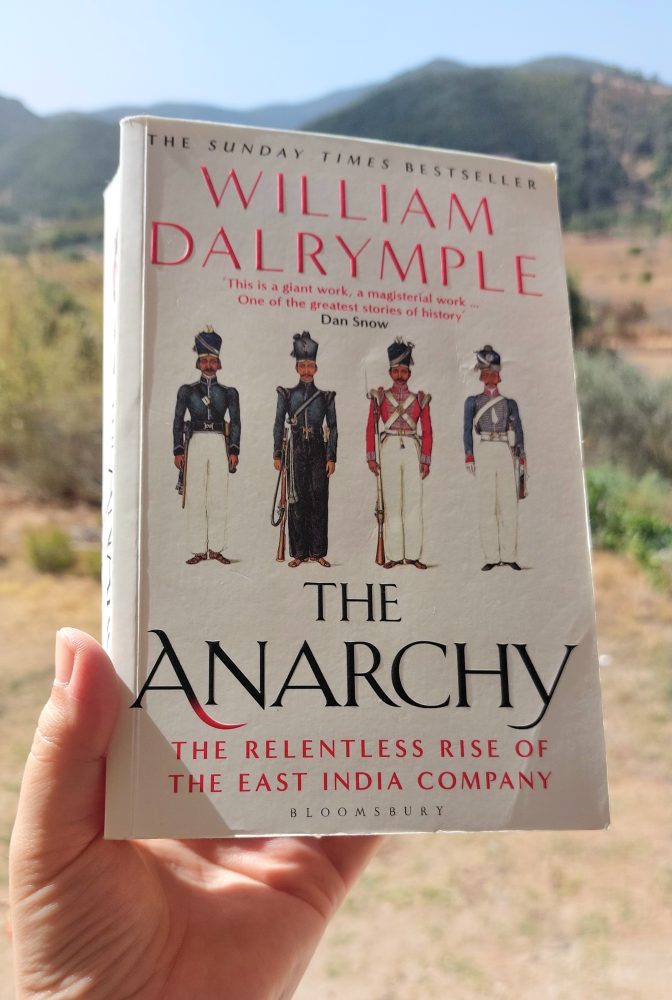
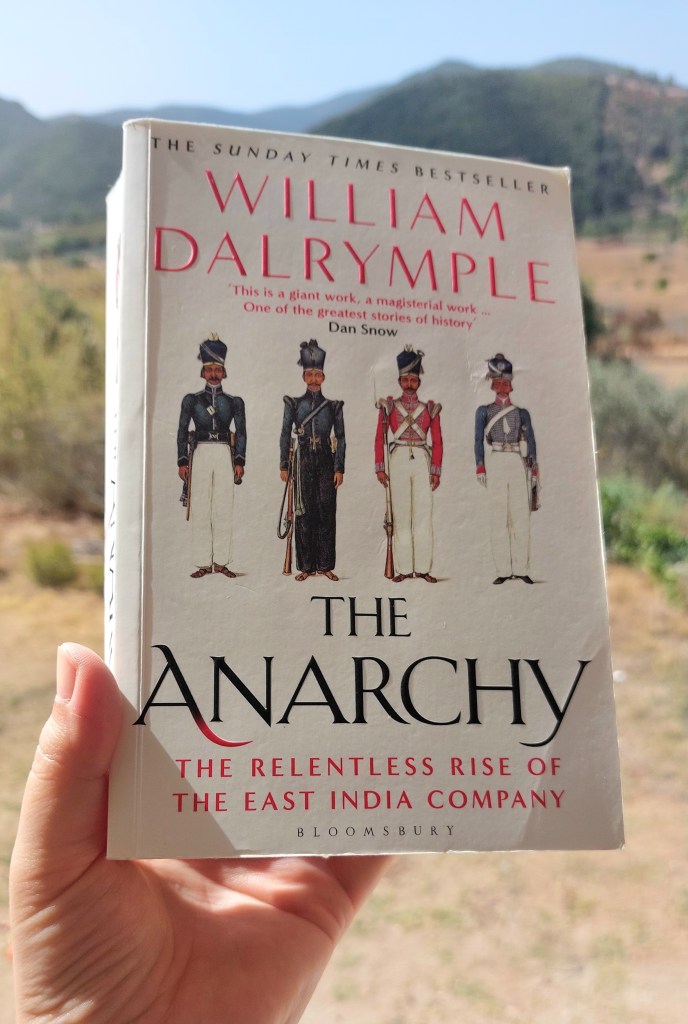
★★★★★+♥ Why was the East India Company so successful? Well, because they were disrespectful, aggressive, opportunist, deceitful and selfish gang of thugs. The book is such a cultural heritage not only because it’s insightful but also passionate and humane.
🔽 log 🔽 The Anarchy The relentless rise of East India Company William Dalrymple, 2019 576 pages Read 2024.08
🔽 Book review and notes 🔽 A great book, definitely the top, the best. It’s the topic I’ve always been interested in; how in the world could small England colonise India, a great power?
So is it like, Mughal Empire was a lion, and EIC a hyena? A handful of gang, a mob, disrespectful, aggressive, opportunist, deceitful and selfish, who only thought of making quick money, took the gamble for their own profit. They were hardly truthful to their employer, government or Crown either. But East India Company was too big to fall, Britain was too dependent on the wealth India brought, so they nationalised it, and took over what EIC had, ie the power over the subcontinent, the start of the British India.
History is definitely more interesting and exciting than fiction here, the facts are fascinating but then you have Mr Dalrymple writing about it with his compassion, passion and humane sensibility, it becomes such a force, it’s so powerful, and utterly important.
This careful yet brave book focuses on the fall of Mughal Empire and how EIC took all the opportunities with aggression and lies, because that is what it was, and it’s hardly to do with the ability of EIC as merchants. It contains endless anecdotes and references taken from the writing of the time that had been buried in the cluster of materials in India, so they are the facts that we were never aware of. And facts are scary, truth hurts, historical facts almost always hurt Britain. No wonder, sadly, some people don’t like Dalrymple’s books, history hurts them.
One particularly interesting character that I didn’t know about was Warren Hastings who loved and cared about India, unusual for EIC employee but had nasty enemies.
Again a great book, I’d even go as far as saying an important cultural treasure, and an instant classic.
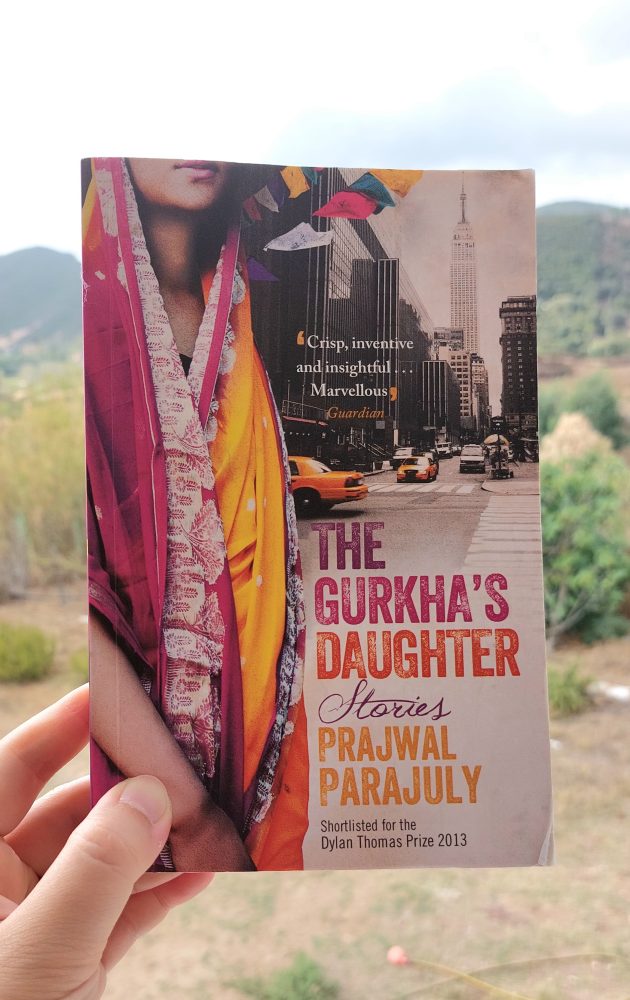
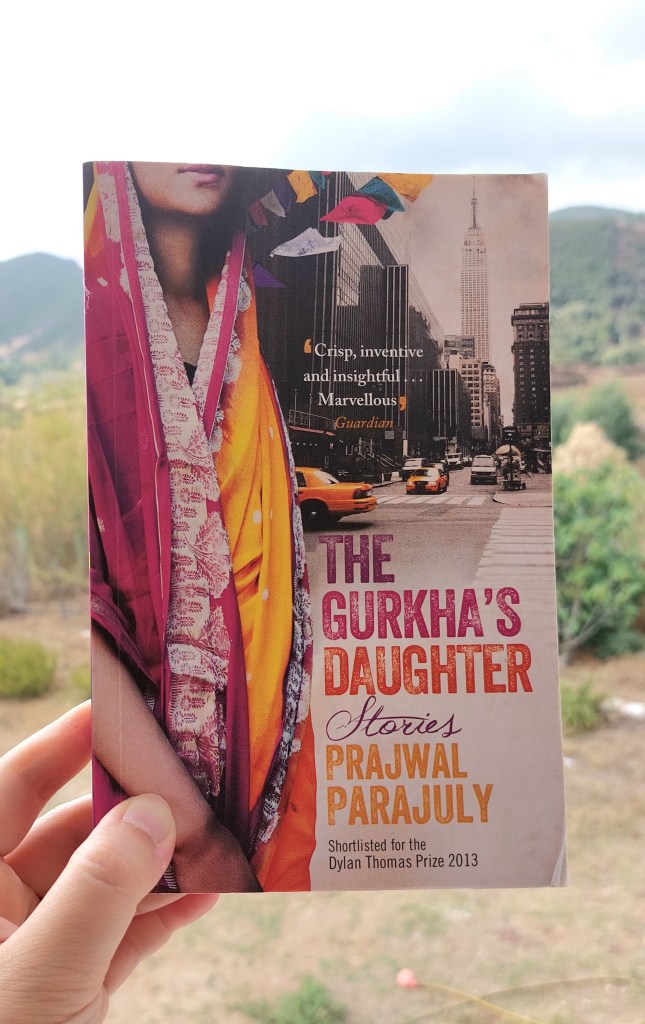
★★★★☆ Nepal and Diaspora, sense of not belonging where they live. Far from home people’s tradition and customs are distant memories while the feelings for home gets stronger.
🔽 log 🔽
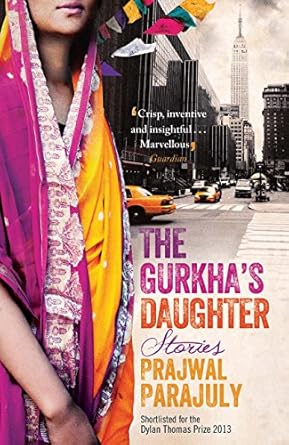
The Gurkha's daughter
Prajwal Parajuly, 2013
280 pages
Read in 2024.09
🔽 Book review and notes 🔽 A collection of short stories of people who have different ties to Nepal.
It's about lives of people living in diaspora, sense of not belonging where they live. To begin with, Nepalese people in Darjeeling area have a different sense of home, and not necessarily uniformed. And how about Nepalese in Bhutan who got kicked out to Nepal? Or Muslim from Bihar in Kalimpong? A guy from Darjeeling in New York who's never been to Nepal?
The stories are subtly harsh and sad but not exaggeratingly dramatic, just like real lives of real people, they carry their own inevitable drama and the longing, between tradition and practice and sense of home. Nice short stories.
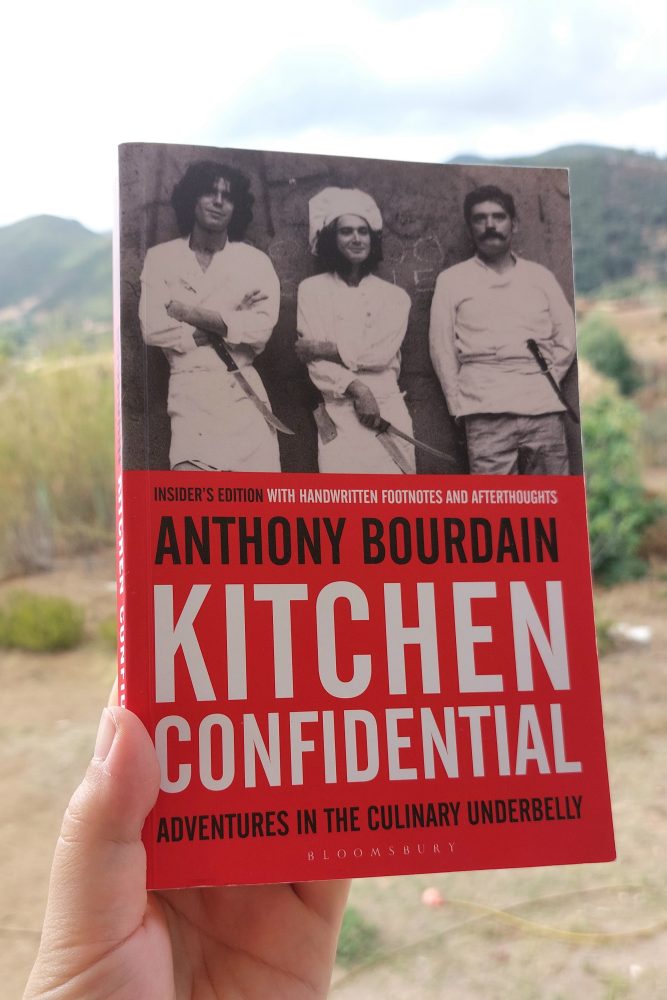
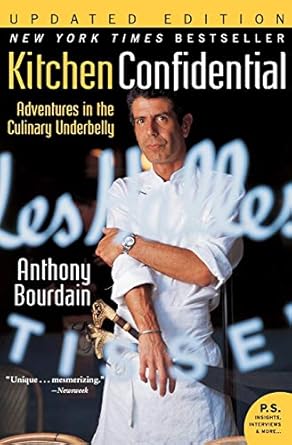
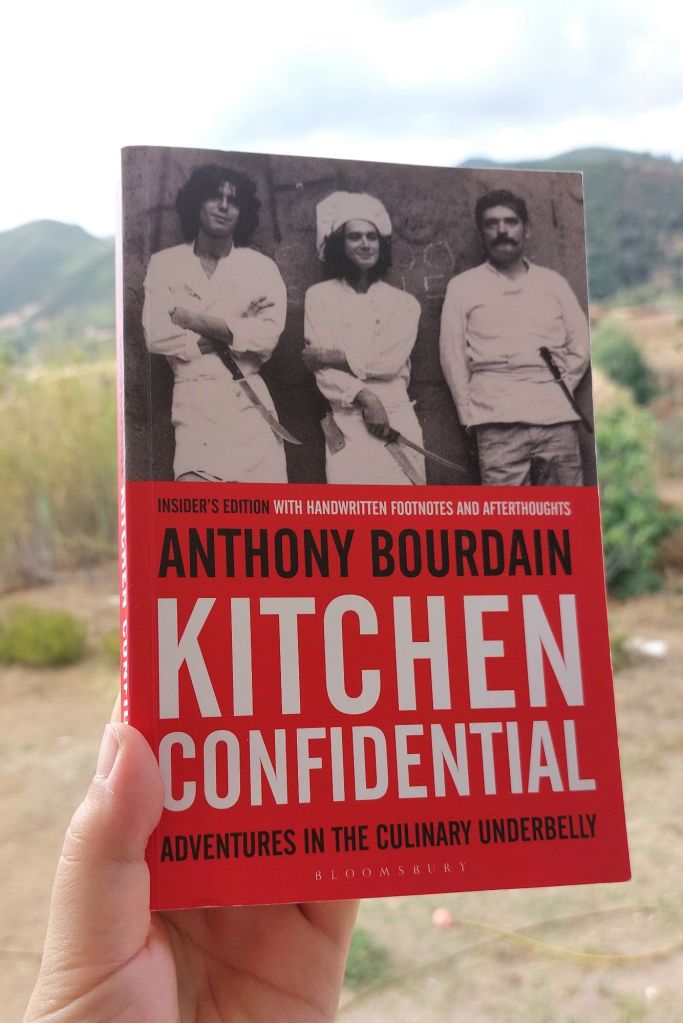
★★★★★ It’s a biography but not about him, it’s about the love of food, love of cooking, of his colleagues and kitchen. It’s really how he was, foul mouth, brutally honest, caring guy. A classic.
🔽 Book review and notes 🔽 Yes, no wonder this is considered a classic.
It’s a biography but it’s not about him, it’s about the love of food, love of cooking, of his colleagues and kitchen, and as he says, it’s universal.
Kitchen is a heated place, I have worked briefly at a small restaurant so I had a tiny preview of the kitchen life. It’s a difficult job and it’s all about working as a team, not a team, a military. What your chef says is absolute, you only say “yes chef”.
Bourdain was such a loved character from TV shows, and it’s nice to read that it’s really how he was, foul mouth, brutally honest, caring guy.
Funny he mentions Orwell’s Down and Out in Paris and London, that I recently ready. And this books is only second to that classic.
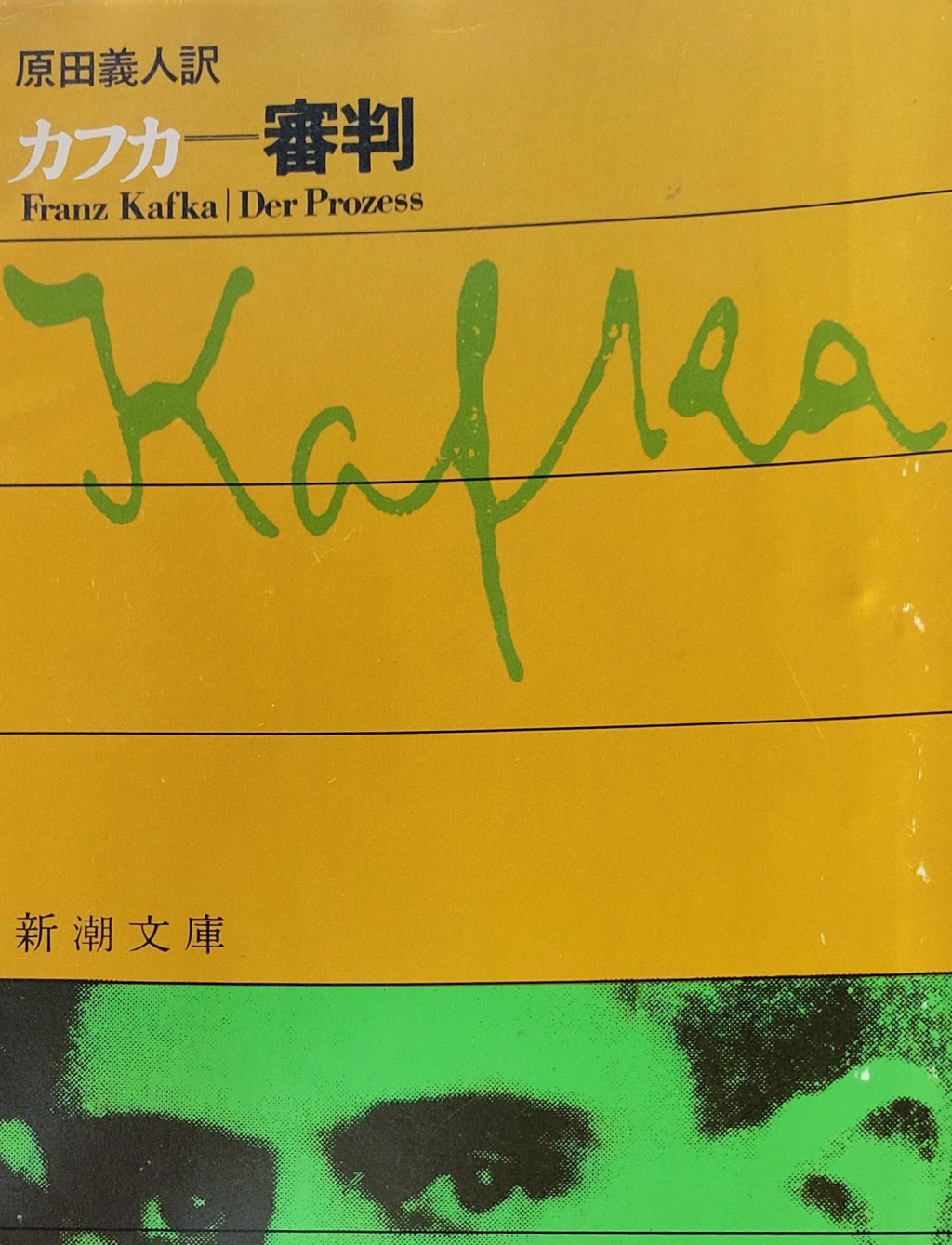
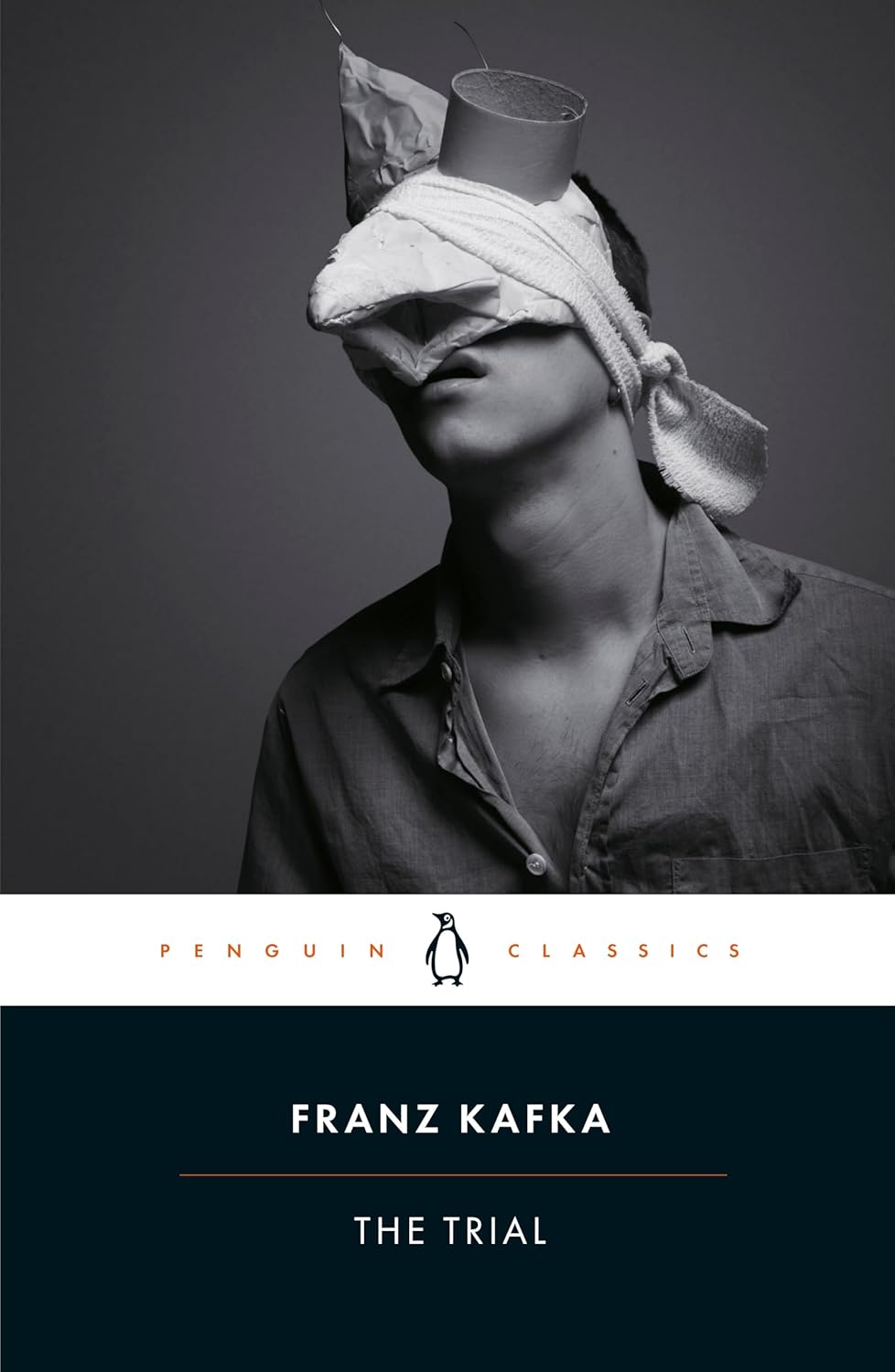
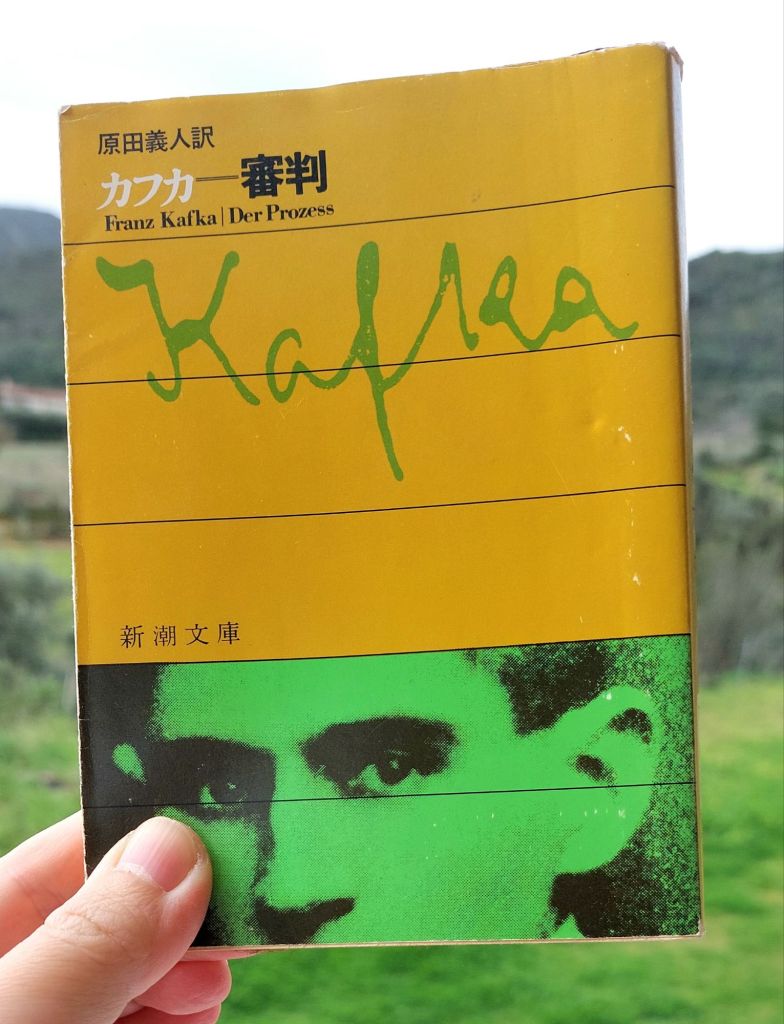
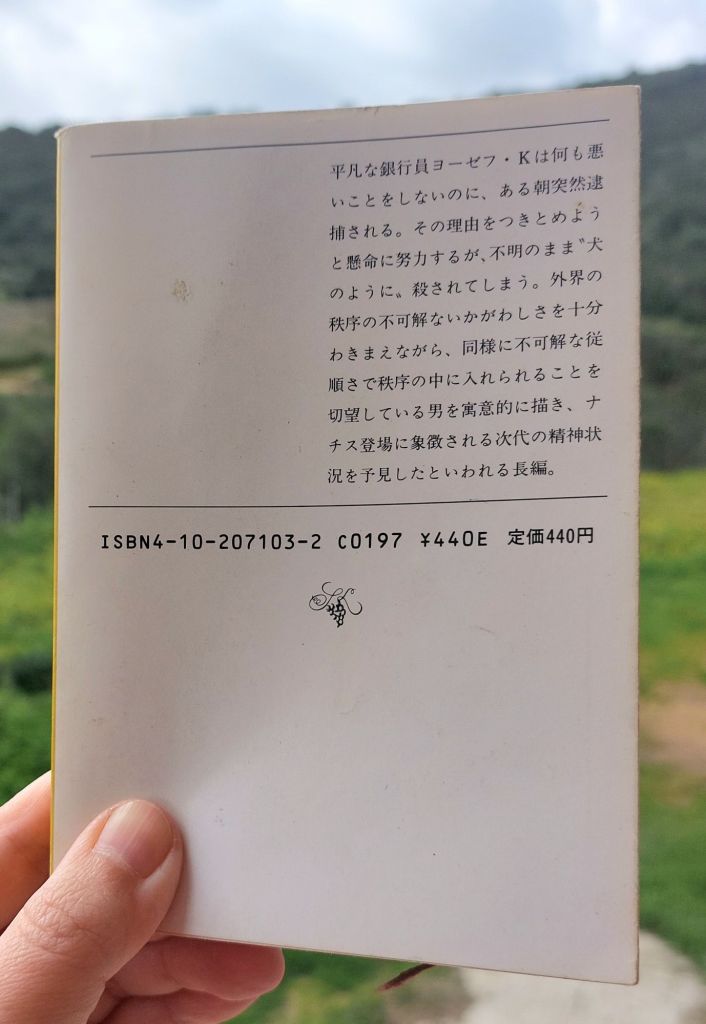
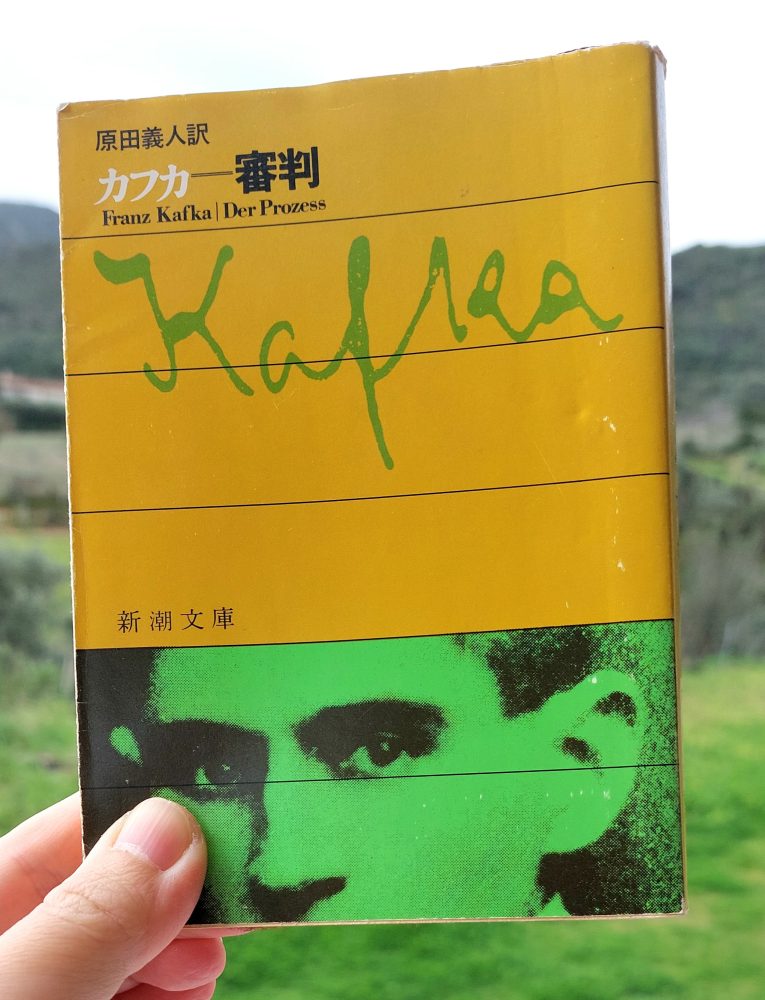
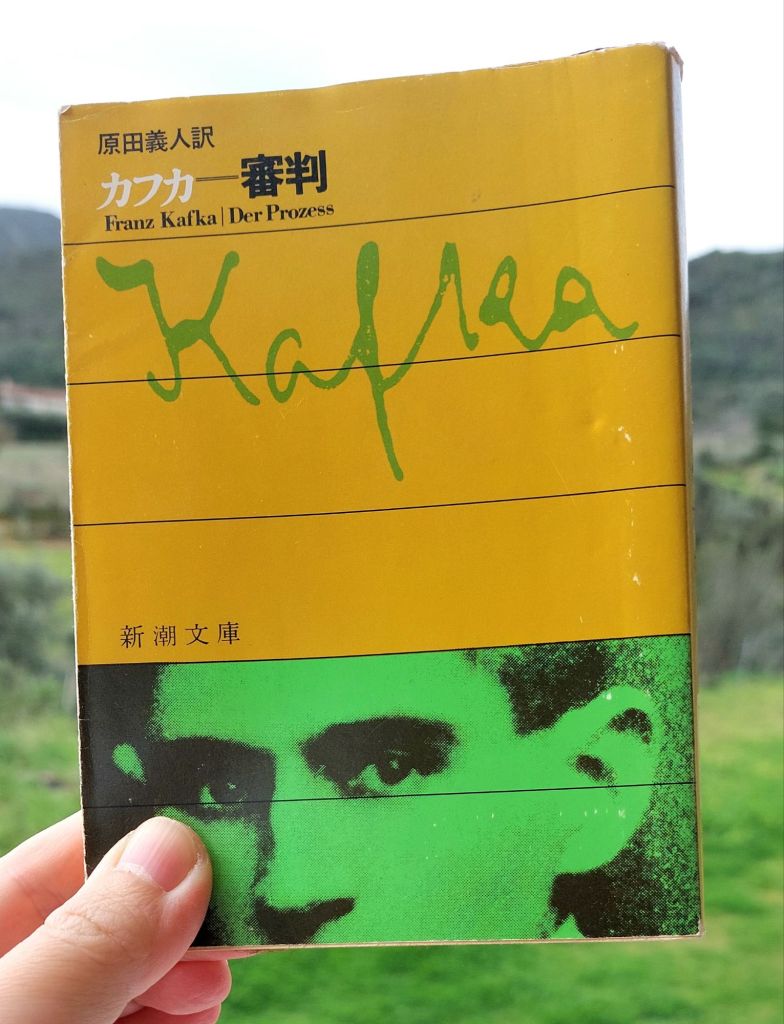
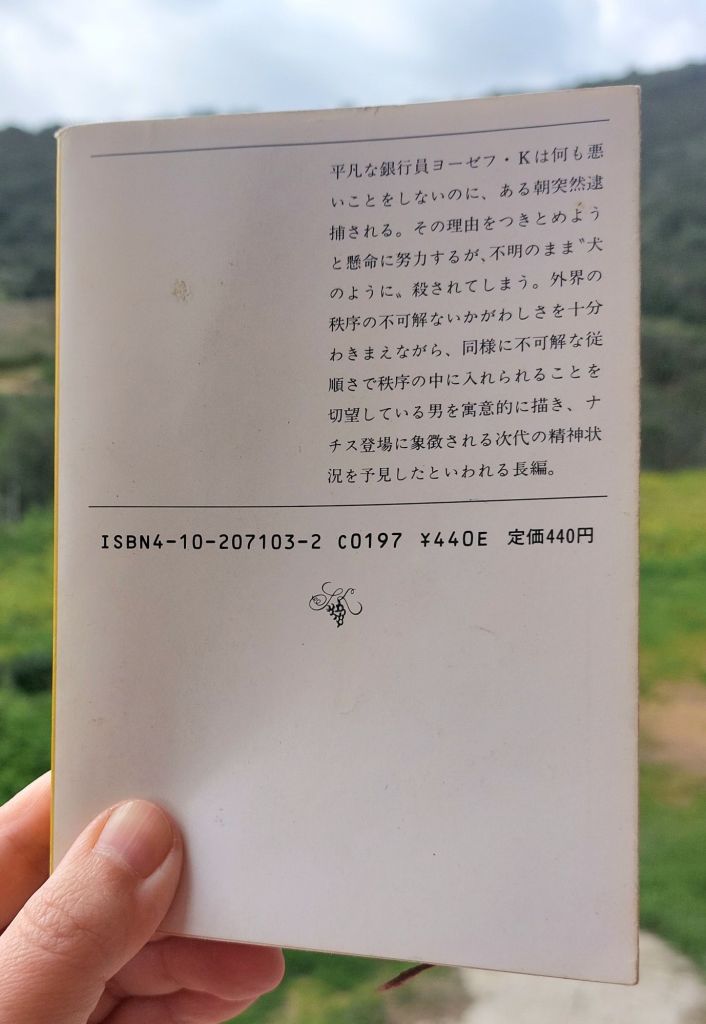
★★★★☆ Absurdity, humiliation, resistance, Kafka’s world. We get little explanation throughout. Death is unceremonial, his death is nothing but a humiliation.
🔽 log 🔽
The Trial
Franz Kafka, 1914
Der Prozess
Read in 2020.05
I only read Metamorphosis when I was a student, but I do remember it's the same absurdity. Out of blue he's arrested, out of blue he's turned into an insect. He suffers from the humiliation and irrational world around him.
The protagonist is a serious man, he struggles to accept illogical thinking, but we don't get to know where the court would be, or even why he was arrested, we get little explanation throughout. Death is unceremonial, his death is nothing but a humiliation.
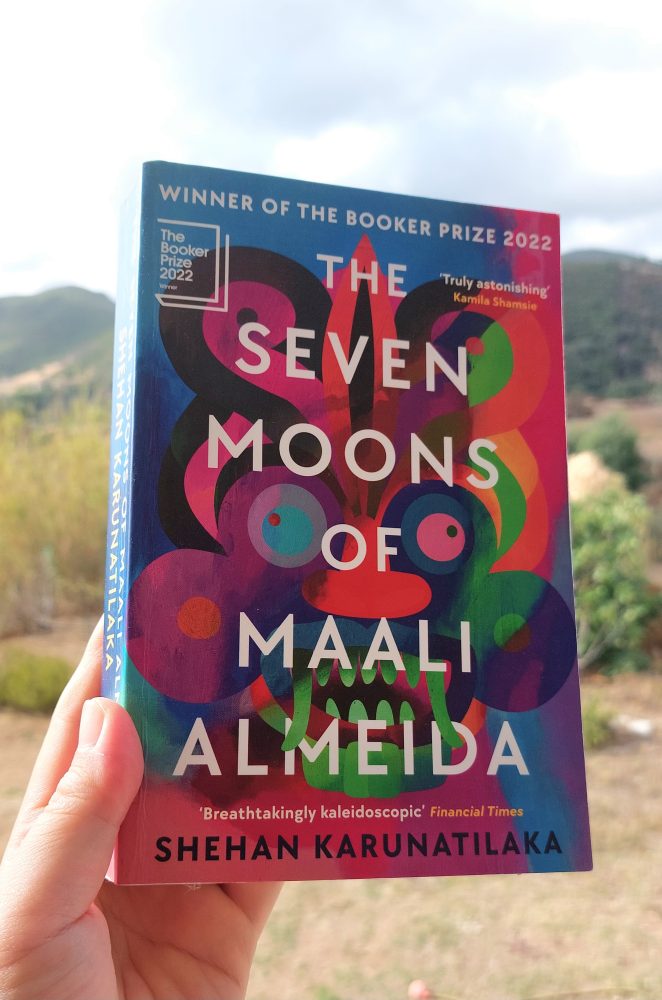
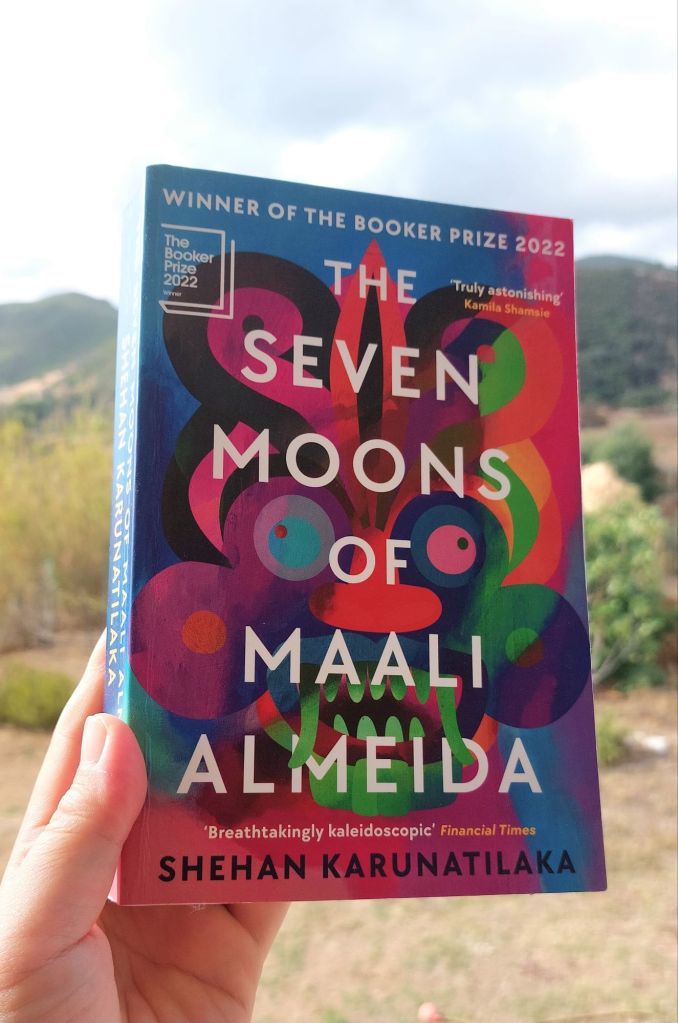
★★★★★ Provocative and rock and roll. It’s a fantasy, a magical realism that really tells the reality of Sri Lanka, through the eyes of this dead unreliable photographer/lover/gambler. It’s a loud music in a book.
🔽 log 🔽 The Seven Moons of Maali Almeida Shehan Karunatilaka, 2022 368 pages Read 2024.09
🔽 Book review and notes 🔽 The book I've been looking forward to read, though I tried not to know the plot in advance. So if you don't want to know anything else, just know that you will love it, and don't read further, even if you do, it'll be beyond your imagination anyway though.
So, first you are dead, and you need to find out why and who did it. There are ghosts and monsters, it's a mystery, in modern Sri Lanka, in a messy war - you can have these key words and still it's way over what you might expect.
It's difficult to get into the story without some knowledge of Sri Lanka but it slowly takes you to its world.
It addresses the protagonist as "you" so it feels like you're discovering it all with him. Him being a lousy war photographer, gambler and a unfaithful lover who's gay; he is an anti-hero who is rather hateful, but, somehow becomes not so hateful after you spend 7 moons with him.
It's provocative, anything can happen here. It's a fantasy as much as it's the reality in Sri Lanka. Non stop greatness that you can't pigeon hole it, a reading experience that's similar to being in a room with loud rock music, or whatever your favourite music is.
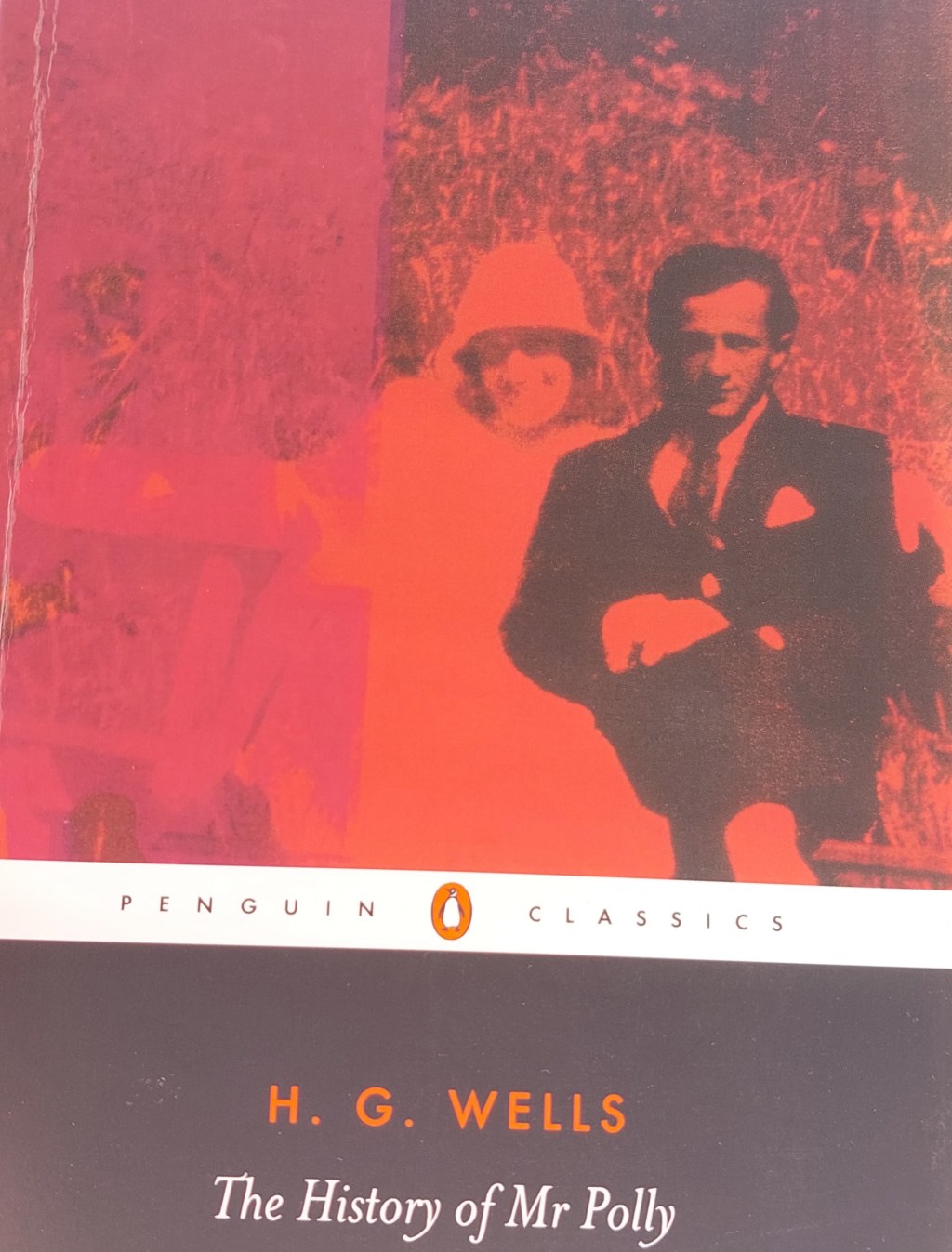
★★★★☆ Midlife crisis. Mr. Polly was tired, he wanted to change his life but too tired to try any more so he decided to end it all… that’s when his good life really started.
🔽 log 🔽 The History of Mr. Polly H. G. Wells, 1910 Herbert George Wells 318 pages Read 2024.10
🔽 Book review and notes 🔽 It was mentioned in the mid life crisis book (my review here), and yes it is exactly about that.
You have a boring life, you don’t make decisions but things just get decided and time passes and one day, you want to end it all. You want to “change it” but you are so tired that you just want to end it – but THAT is when the life starts again.
The first half of this book is boring to read because his life was boring, but weirdly when he tries to end it the words in the book also gets more exciting and enjoyable, just as he enjoys the view of the countryside – then comes the tranquility of life, satisfaction, of letting it all go.
It was worth reading the boring bits because that is life, it’s unpredictable.
Also worth knowing that the author is actually a popular SF writer.
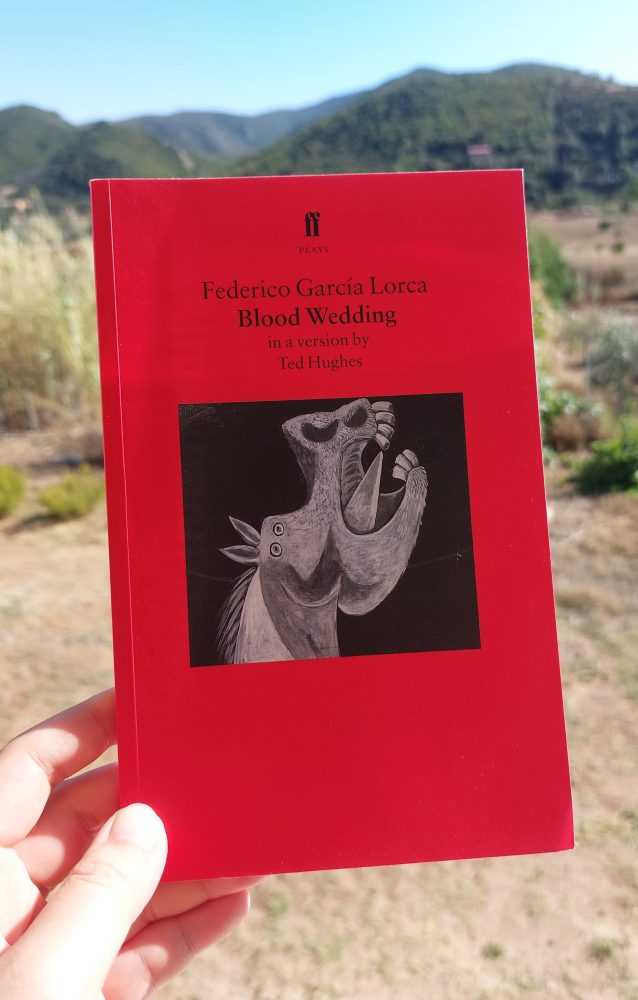
★★★★☆ A very Mediterranean story. Struggle of lovers and mothers, and the men who live and die for honour and revenge. One day hopefully on a stage.
🔽 log 🔽
Blood wedding
Federico García Lorca, 1932
Bodas de sangre
80 pages
Read 2024.09


🔽 Book review and notes 🔽
It's a lot shorter than I thought, it's a play that's considered the classic and has powerful emotions.
It's the wild emotions of the lovers and mother, it's the cry of those who lost loved ones in the Mediterranean countryside where honour and revenge are the purpose of living, and worth dying for.

It's most definitely to be enjoyed as a theatre piece so reading it might not be the best experience of it and of course translation might lose its true colour, but being so short it felt like I needed more for me to go deeper into it.
So yes on a stage one day.
★★★★★ 5 Partitions, not just one. From Yemen to Myanmar, The British India was one entity where cosmopolitan people had lived in a sort of harmony. An important history that was until now “forgotten”, and an important book.
🔽 log 🔽
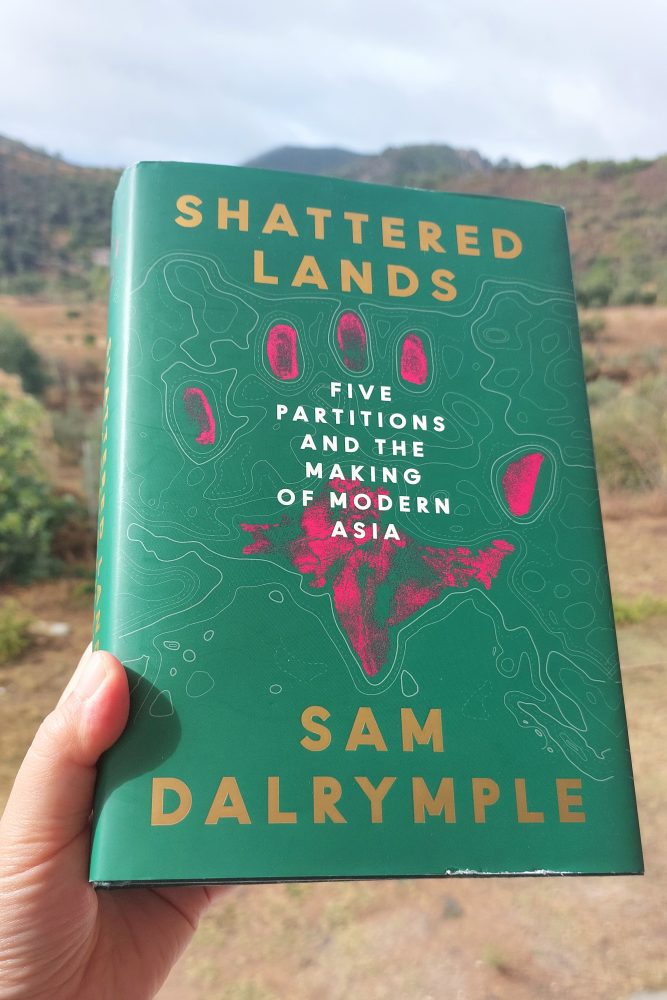
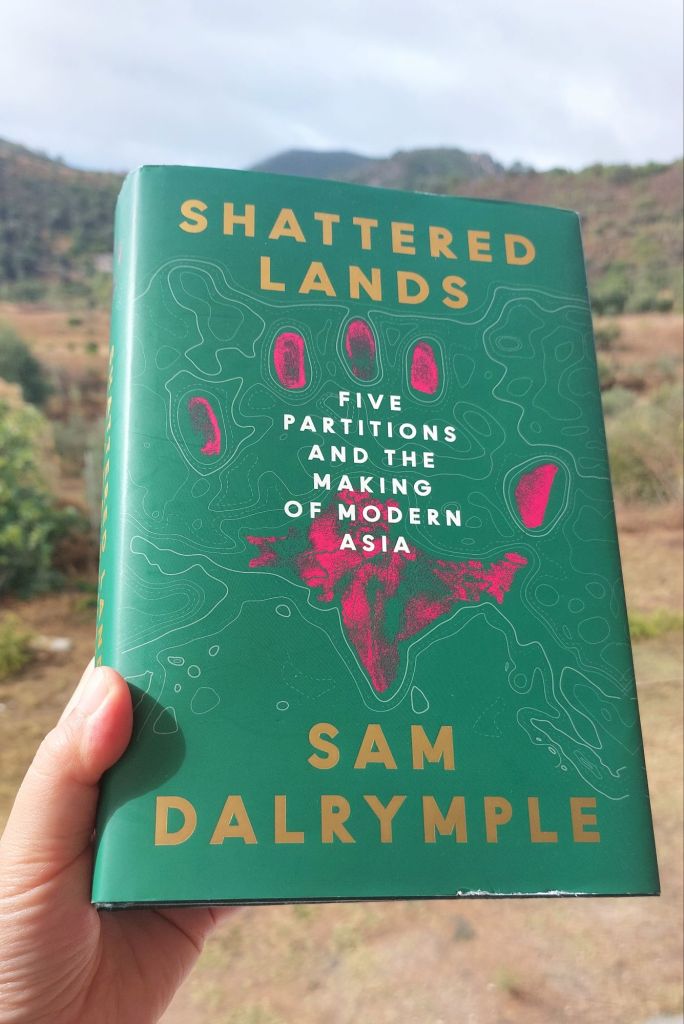
Shattered Lands
Five Partitions and the Making of Modern Asia
Sam Dalrymple, 2025
UK
528 pages
Read 2025.09


🔽 Book review and notes 🔽
A great book on the topic that is shamefully unknown to a lot of us, even though it's not so long time ago and even though it totally shaped Asia today.
All the problems in Asia that we see on the news today are not simply because the local people are "naturally" violent, of course not, there is always a cause.

And the cause is, this. The British Empire had ruled and gained much from the British India and local Princely States (so very wide, from modern day Yemen to Burma, to Qatar. Qatar! And British Empire had 25% of the world population back then) until one day they couldn't financially support it so they dropped the ball, without thinking of the very probable consequences, namely, the shattered lands and shattered people.

The book carefully follows 5 Partitions, rather than only the more widely known THE Partition between today's India and Pakistan.
Myanmar, Arabian peninsula, India-Pakistan, Princely States, and Bangladesh.
People like me who knew so little would be surprised at how everything fell apart quickly, and be utterly shocked how millions of people crossed newly drawn borders each time. And every one experienced some horror; the violence, looting, rape, and many killing.
The consequences of the relocation, the migration, and of course of refugees like Rohingya people still remains as huge problems.
Stereotypically, British officers’ works were full of lies and betrayals, their selfishness with their strong interesting in keeping their hands clean. As a predicable result, people who lived in cosmopolitan societies, were suddenly put in various corners of Shattered Lands, and they turned against their neighbours because they now became their enemies.
What got me thinking most throughout my reading was how pre Partitions era things were more secular, and as the lands got divided it firmly became a matter of religions and ethnicity, it was all about nationalism, of the new nations that were born out of the shattered lands – again and again in the each phase of the Partitions. Not that the colonisation era was good, but you cannot stop wondering, if we now want to end the fighting in Asia would we have to eliminate the notions of religion and ethnicity? Letting go of the sense of community or tradition? The peace of mind it provides? Is it really a dangerous thing to have a tradition?
I heard somewhere that people who experienced the Partitions, probably just like our grandfathers in Japan who were sent to the war, have preferred to keep quiet. They chose to take the horror, errors and shame to their graves, and their children also kind of hesitated to insist. However, now that it’s their grandchildren’s generation, things are now becoming uncovered and dusted off because they are finally opening their mouths to tell us. And this might be one of the reasons why this book is written now at this moment in time, by this brilliant author who is in his 20s, and this is one of the reason this book will remain in the history to come.
The book has great details with wonderful storytelling skills, and most notably it has the marvelous sense of humanity, just like his father, Sam Dalrymple is such a humane human full of compassion and passion, with giggles – but he is already on his own feet, and how exciting is it that two Dalrymples are on the chart? Very.
★★★★☆ Life is not fair. A tragedy but also a sad comedy. Russian literature is bottomless. A man saves money for ages and buys a new coat, and it gets stolen. Regardless of time and society we live in, we share the anger and desperation.
🔽 log 🔽
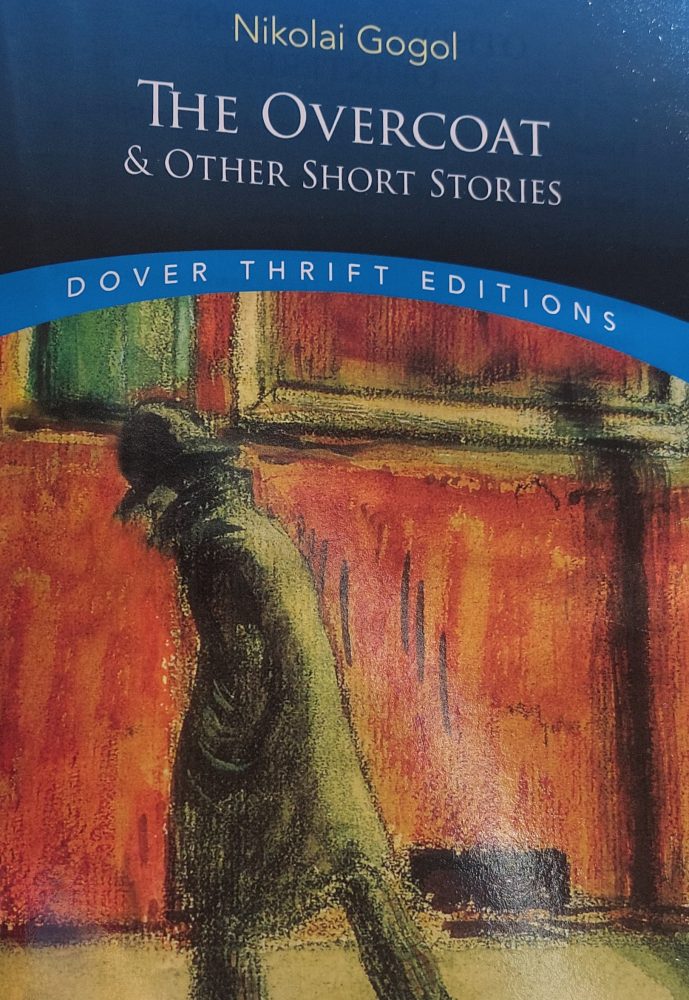
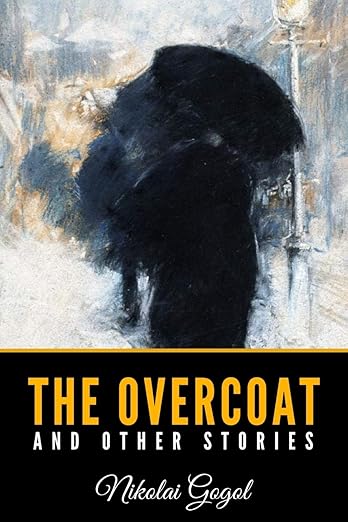
The Overcoat
Nikolai Gogol, 1842
Шине́ль
Russia
112 pages
Read 2024.10


🔽 Book review and notes 🔽
Short stories of the famous Gogol.
You do see a lot of Dostoyevsky in his stories, that the life is unfair, and stories are tragedies yet sadly comical.

Written in this period in Russia, the stories are critical of the bureaucracy and of higher ranked officials.
A regular official saves up to get an overcoat and gets robbed, it's simple as that, and though it's keeping it subtle it is fully miserable, and universal, we totally understand how the protagonist is feeling at every stage of the story.

The story is ridiculous yet believable, and again universal.
Russian literature is bottomless.
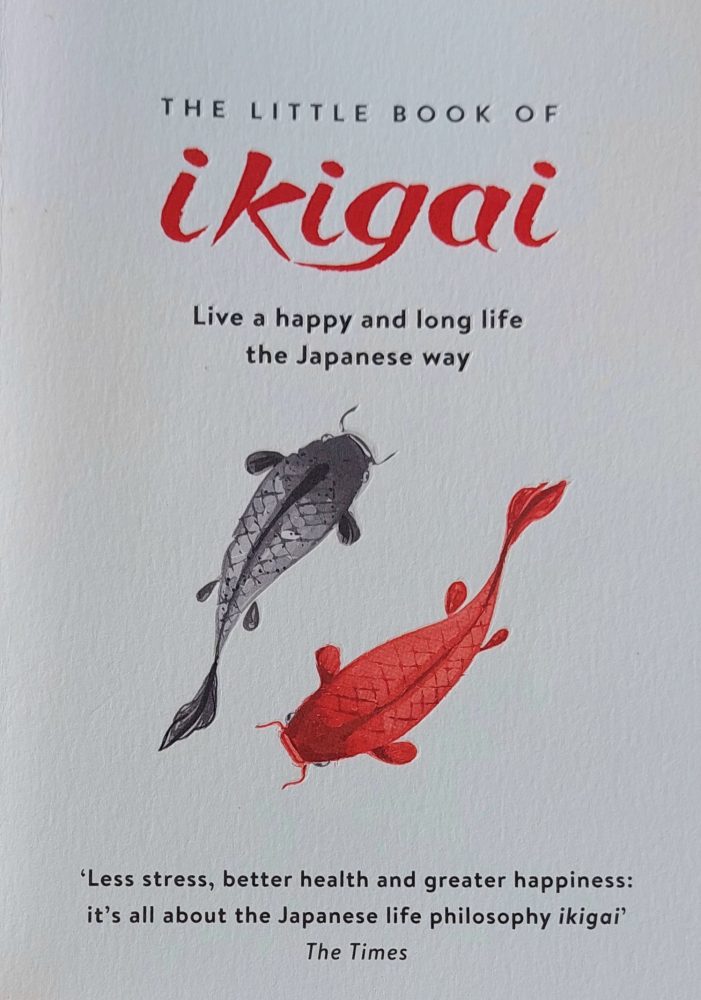
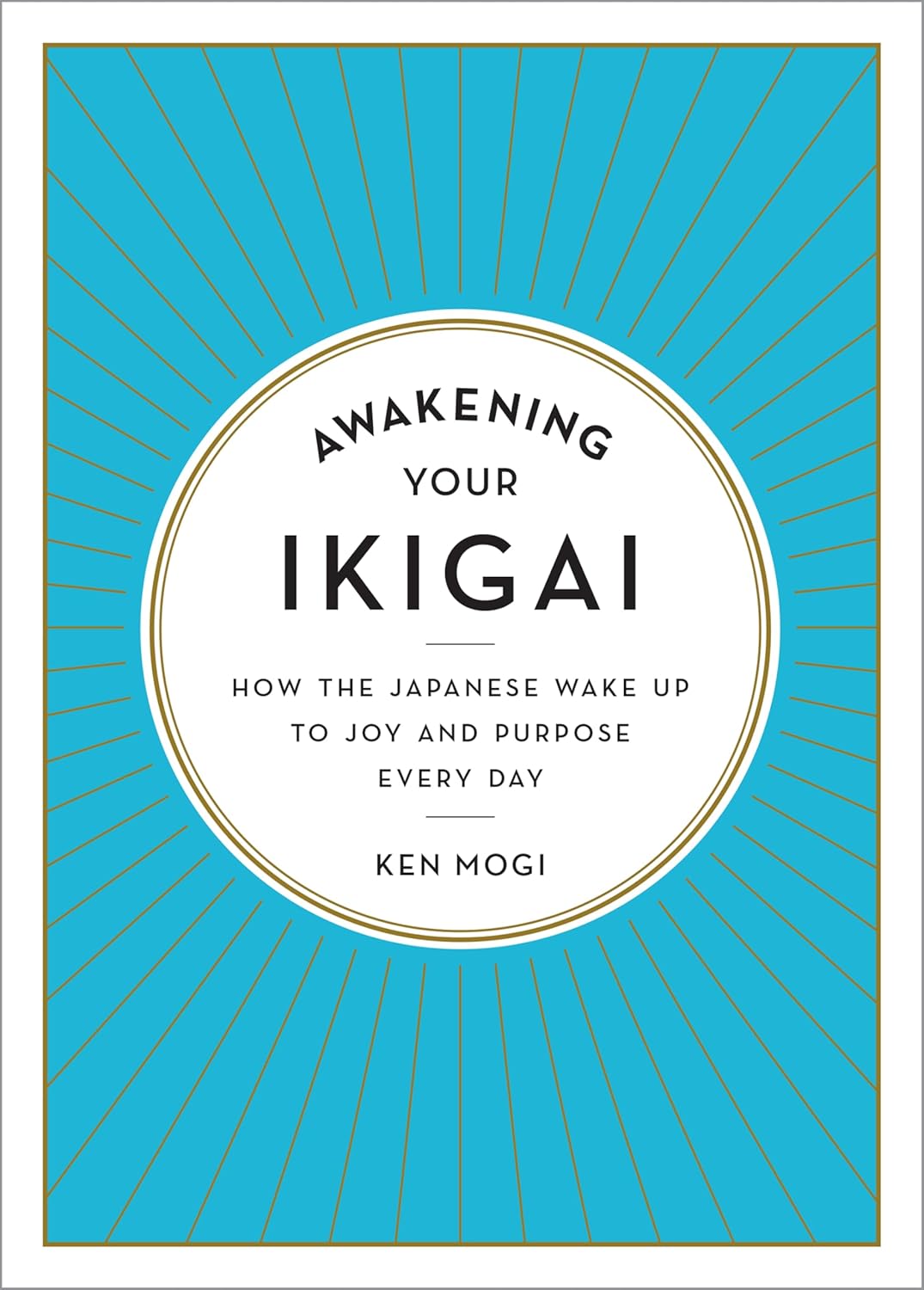
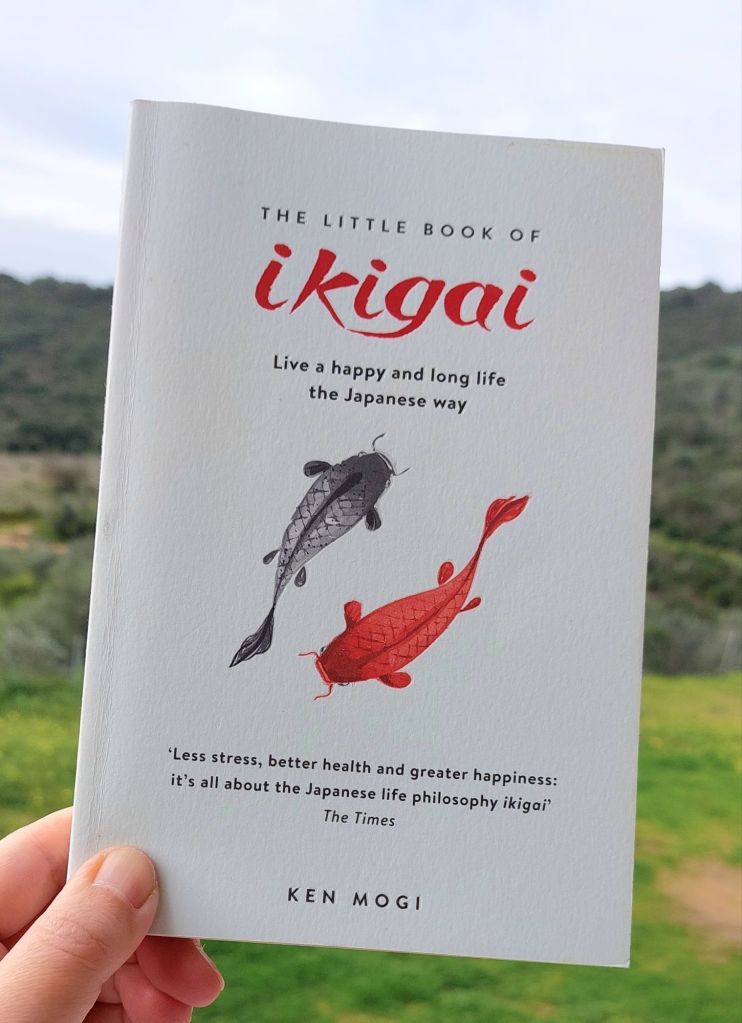
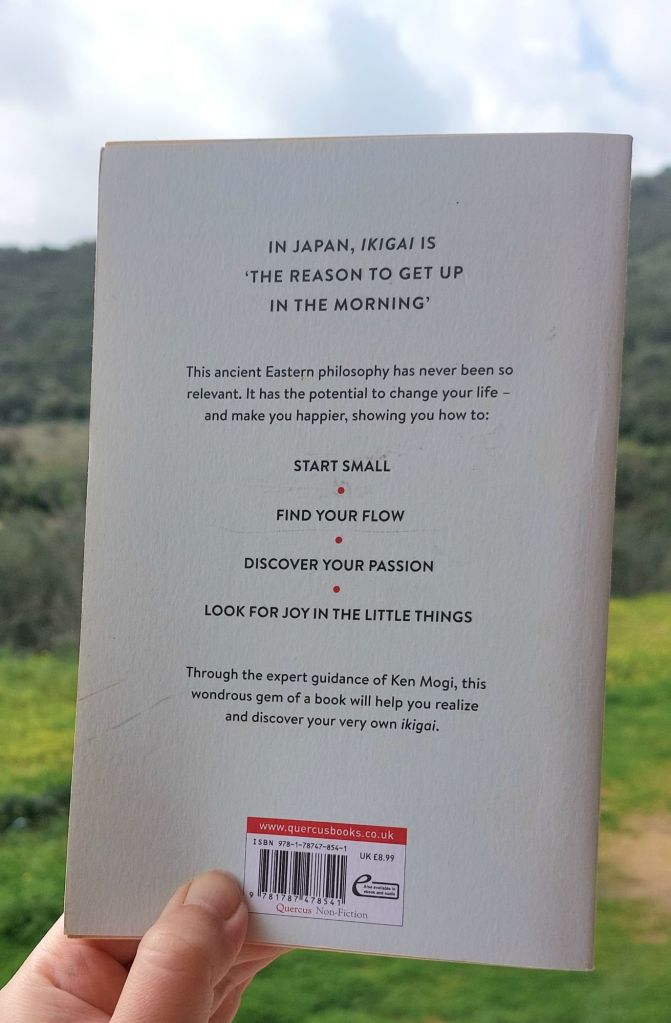
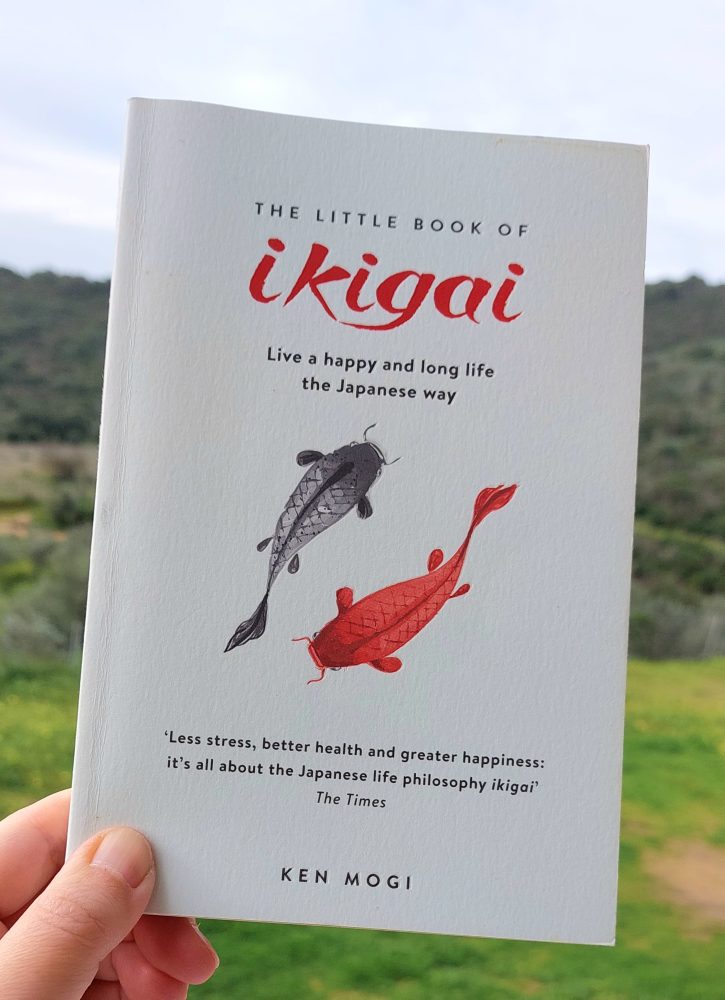
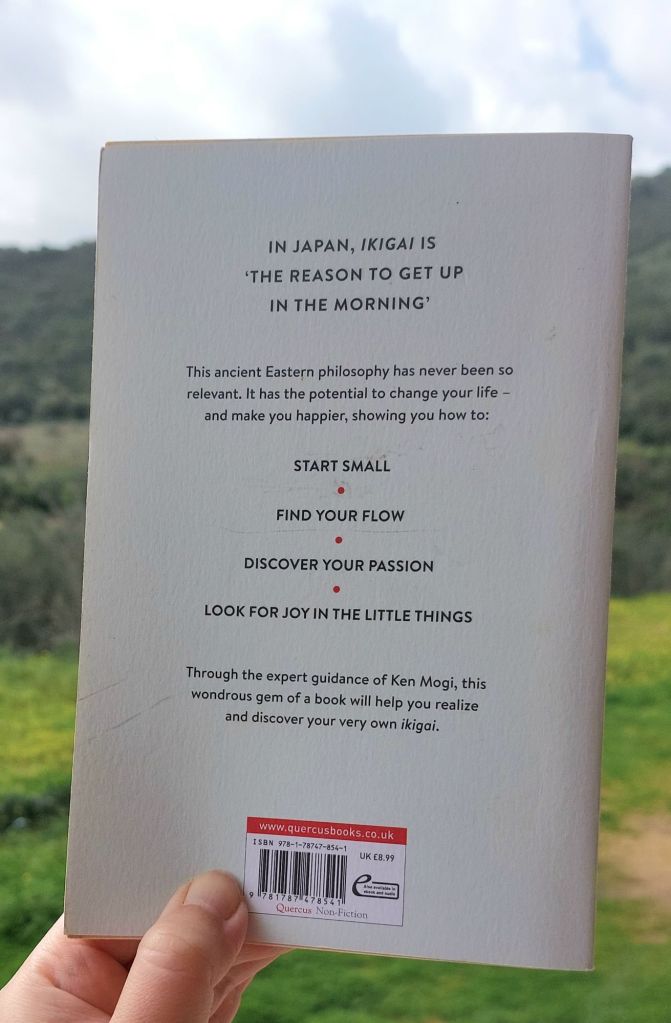
★★★★☆ A book about how to live a life with “ikigai” which is a Japanese notion of “little happiness”. Written by Japan’s favourite neuroscientist, it’s both logical and entertaining.
🔽 log 🔽
Ikigai
Ken Mogi, 2017
茂木健一郎
208 pages
Read in 2020.05
🔽 Book review and notes 🔽

A book about how to live a life with "ikigai" which is a Japanese notion of "little happiness" in a very broad sense.

It was originally published for UK readers, so it's a lot about introducing Japanese culture and traditions while showing how the notion of "ikigai" is born and appreciated there.

It'd help non-Japanese to solve mystery of the mindsets of Japanese people.
Ridiculously detailed work by craftsmen and (apparently) uniformed lifestyle of salarymen - behind all that there is the "ikigai" to keep them going.

After reading this people would definitely like Japan more.
It is in a way a PR for Japan, but because it is written by Japan's favourite neuroscientist, it's both logical and entertaining.

p.s.
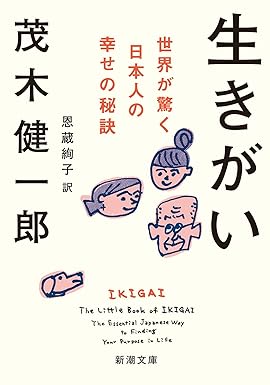
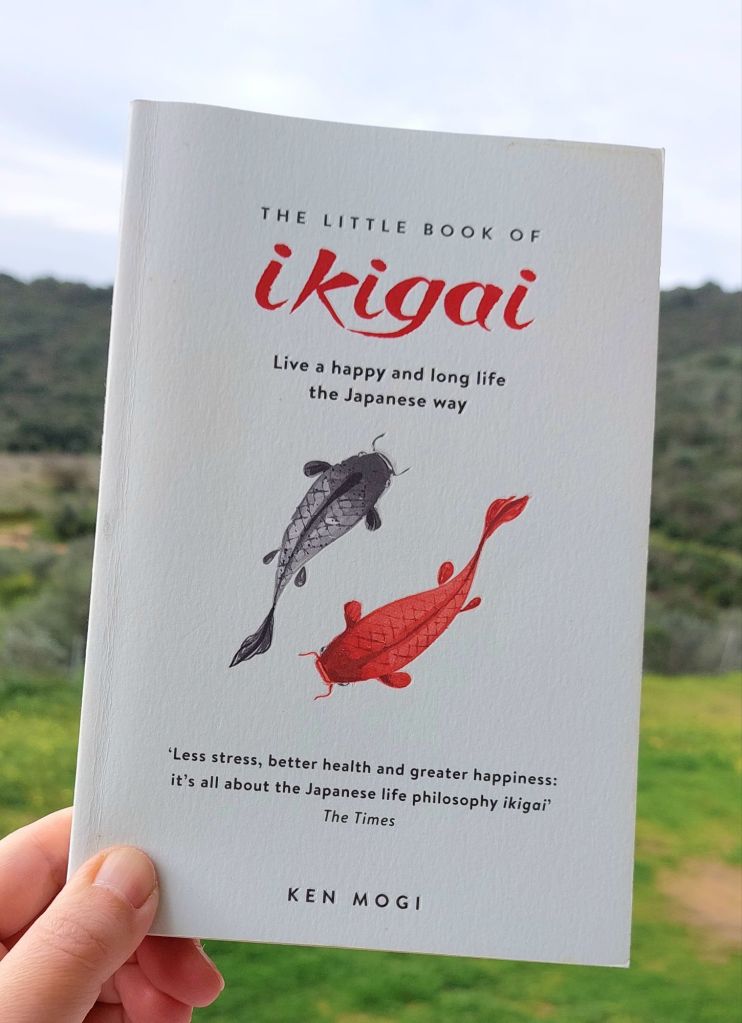
I love how US title is different from the UK title, American version focuses more on purposes, while British more on "little" happiness.
★★★★★ I still cannot watch the Ghibli film. Guilt disappears, but your hunger doesn’t. You can visualise the horrible views the kids are seeing, and smell the death. They cannot live without help and death is too familiar.
🔽 log 🔽
Grave of the Fireflies
Akiyuki Nozaka, 1968
アメリカひじき
火垂るの墓
野坂明之
Japan
Read 2024.10


🔽 Book review and notes 🔽
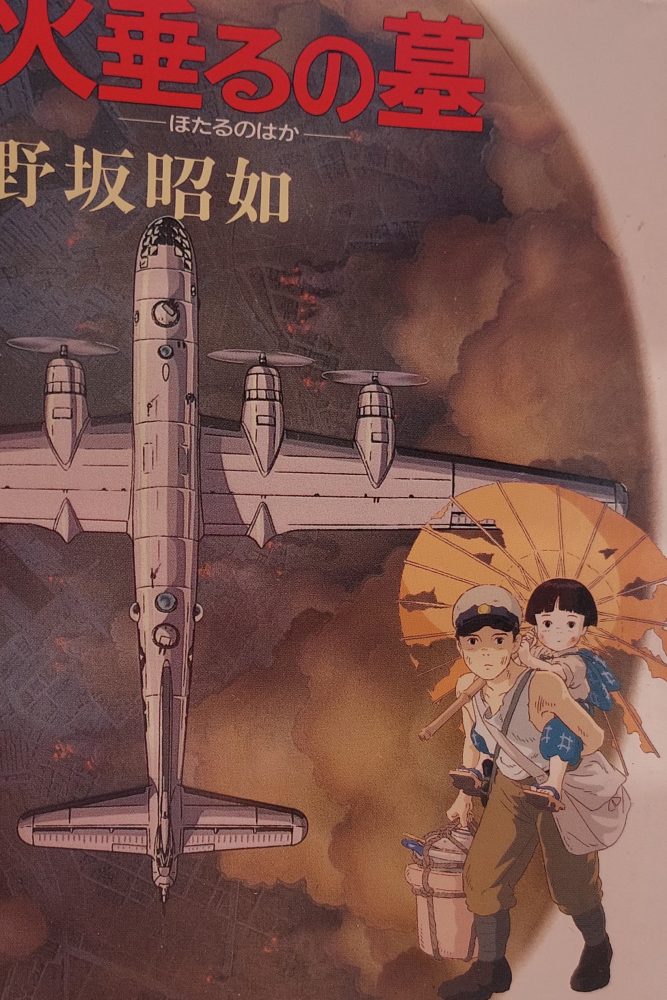
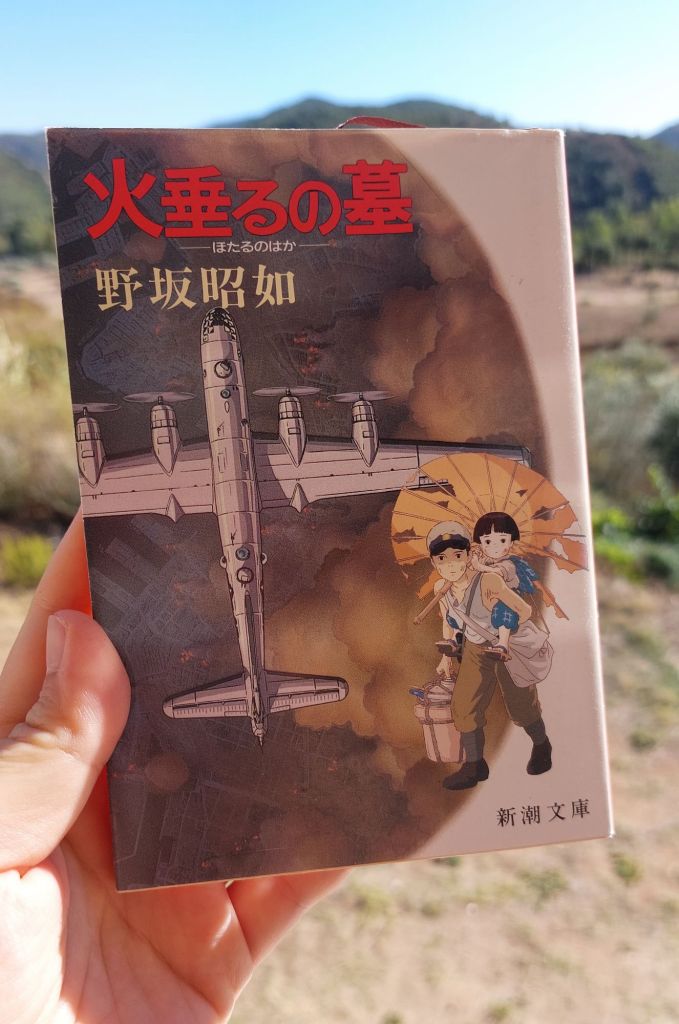
The Ghibli film is too well known, but I still cannot watch it and even less now that I have kids of my own.

Poverty, but extreme poverty where the war took everything and there's no other way than eventually die.
There are no beautiful things like family or childhood, it's about how to survive that day, and if possible saving the little sister also.

The book also contains other short stories, about kids who did survive - but it doesn't mean they are not struggling.
A vivid complex about the victorious Americans, or the guilt they carry because you are the only survivor among the siblings, or their will to do anything to live in the post war period.

Guilt disappears, but your hunger doesn't.
What would you do to survive the day, or what can you do if you are only a child?

The most unexpected thing about the book is the description of sex and female body. America Hijiki talks about sex shows, yes that's an obvious one, but in one of the stories it talks about menstruation that starts even if your whole body is burned and wrapped, or they talk about removing ovary, or about pregnancy and raising children in general during the war.
All the things that's absolutely normal, especially if you are a woman, but never talked about in the history, which is more often written by men.
🔽 Where to buy 🔽
●●● Amazon.com (US) ●●● Grave of the Fireflies Steelbook (bluray) I couldn't find English book link so adding a link to the Ghibli film
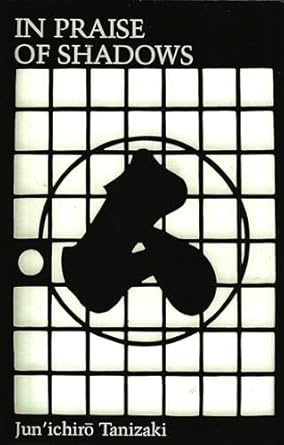
★★★★★ Obsessively white tiles cannot give the warm beauty that old wood could. Japanese sentiments find beauty in shadows and in old. Masterpiece essay from Tanizaki, I mean he even writes beautifully about toilet.
🔽 log 🔽
In Praise of Shadows, 1933
Junichiro Tanizaki
Jun'ichirō Tanizaki
陰翳礼讃
谷崎潤一郎
288 pages
Read 2024.11


🔽 Book review and notes 🔽
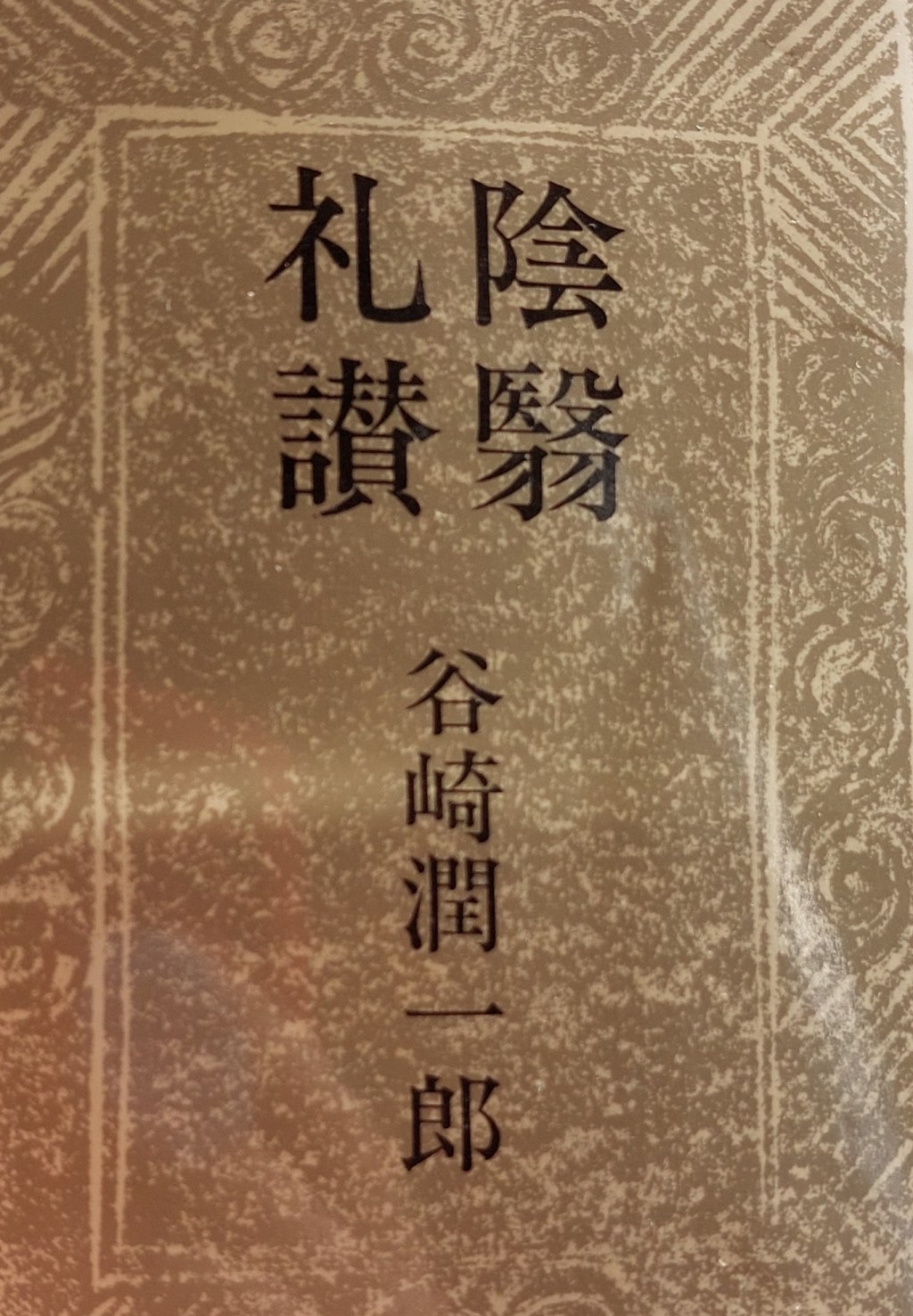
A masterpiece essay from Tanizaki to praise the shadow, darkness and old.

He's not just saying how darkness is good; he talks about the sentiment Japanese people have to feel that the cleanliness of white tiles cannot give the beauty that the old brown wooden board could give.

Japanese are used to living in the dark rooms and they don't force the room to be brighter but they find beauty in the darkness.
Women's clear skin is beautiful because the room is dark, and the custom of ohaguro (women paint their teeth black) also emphasises the pale skin.
Same for some Japanese traditional art, like kabuki, the costumes are so bright, because back then the stage was darker.

Now, almost 100 years on, I'm not sure the Japanese living today still have the same feeling towards darkness.
But it's not completely gone, so hopefully this very Japanese sentiments stay with us.

The book is a collection of his essays, so it talks about various things like traveling and how he hates guests, or about toilets.
It's fun reading the grumpy Tanizaki whining about how he hates having guests, the book overall is not too serious.
When he goes on and on about toilet, in his wonderful way of writing, you just have to smile - ah granddad!
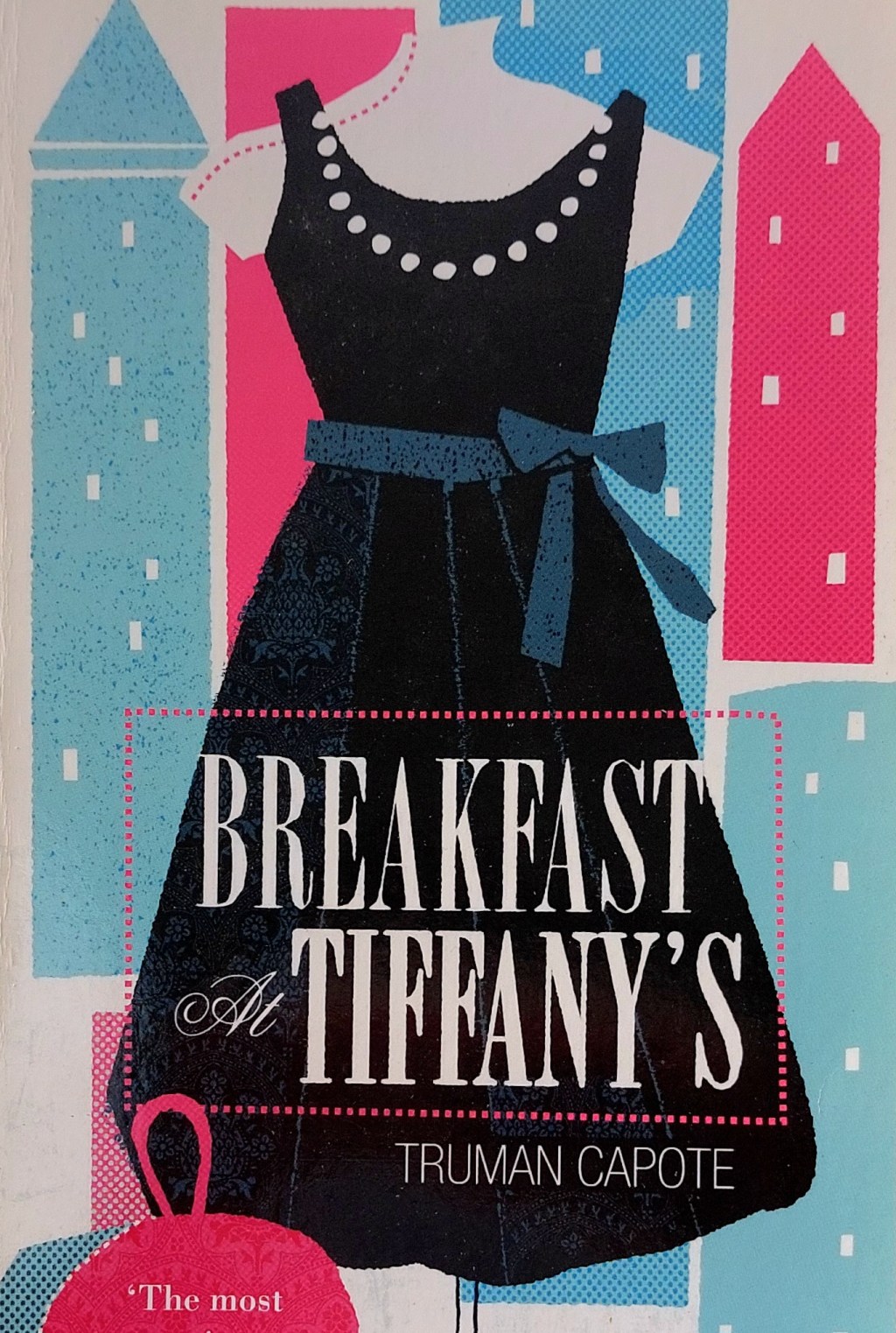
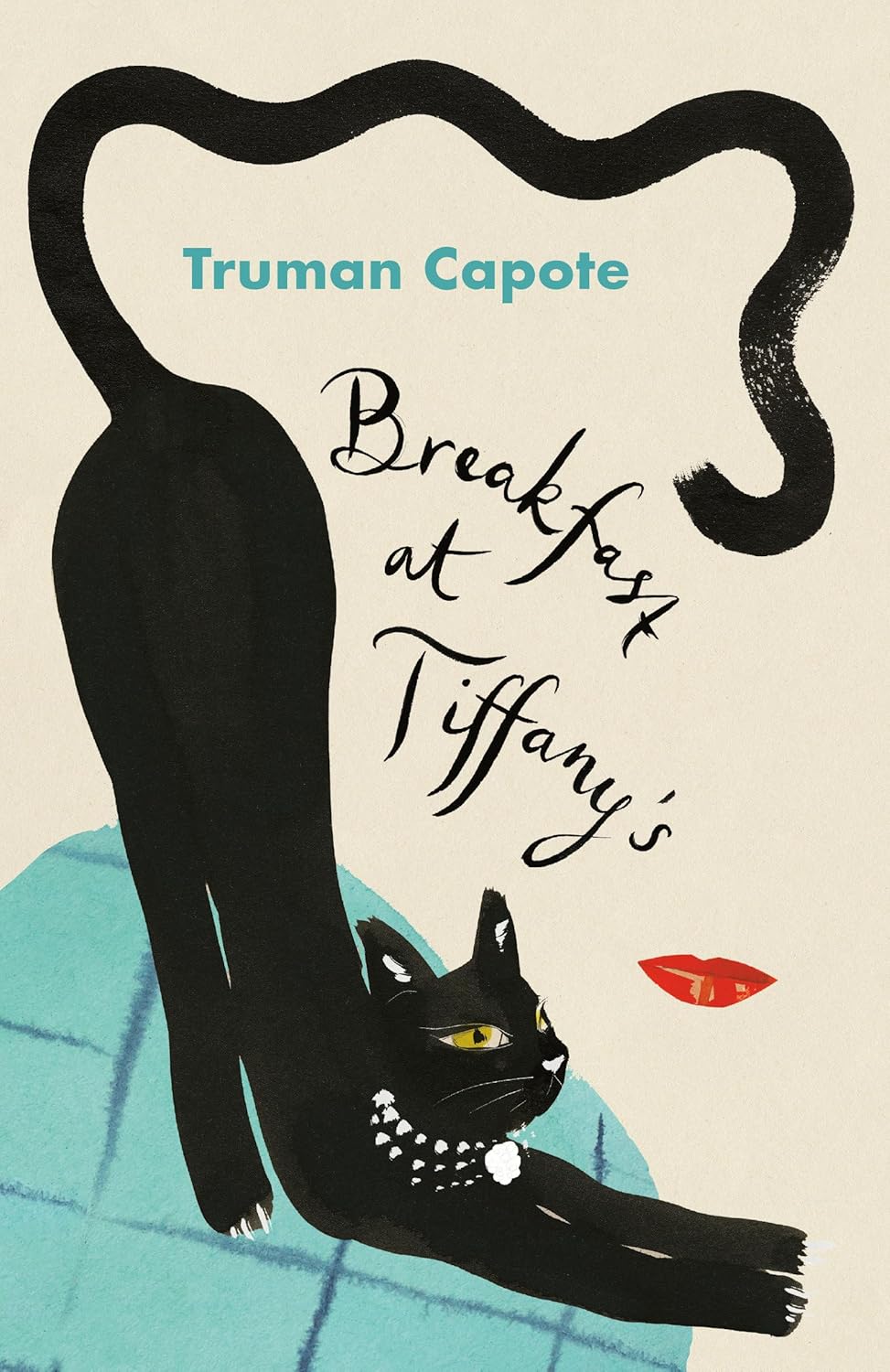
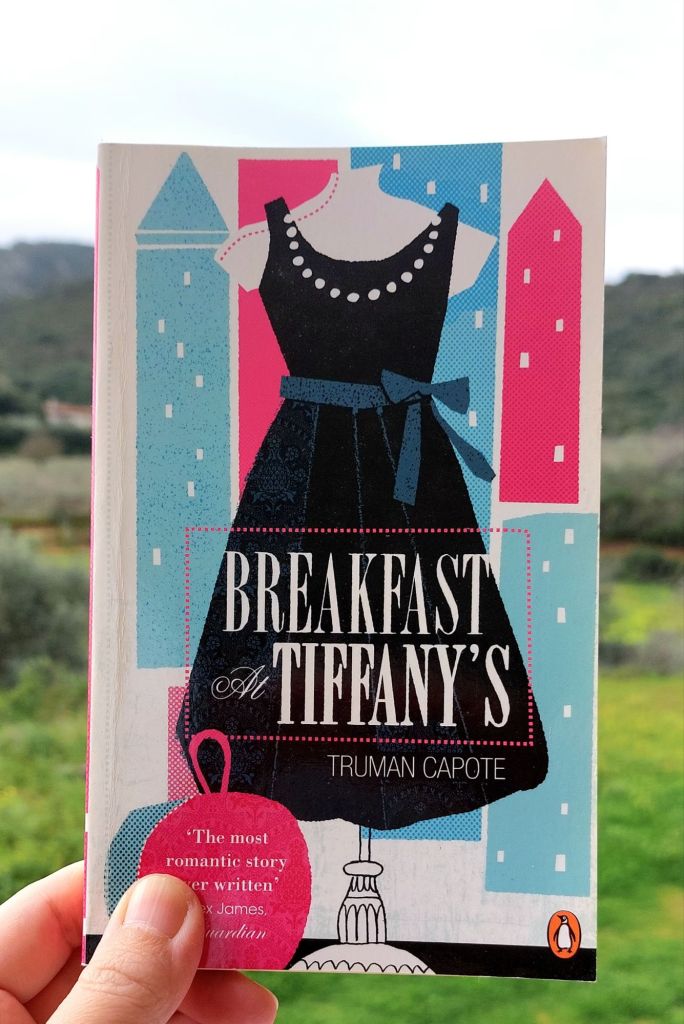
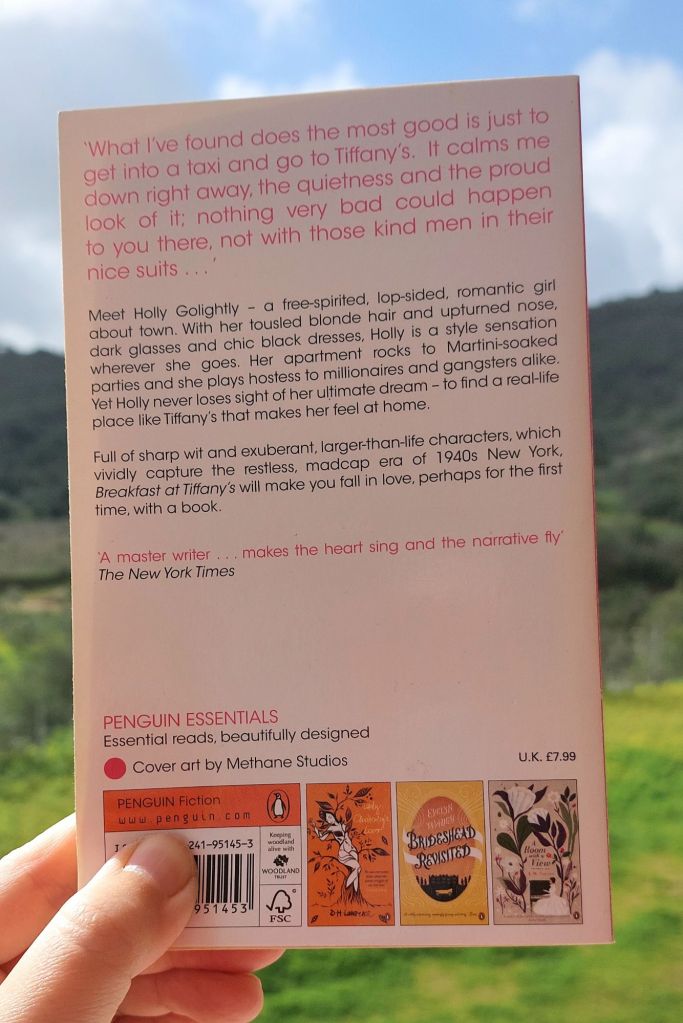
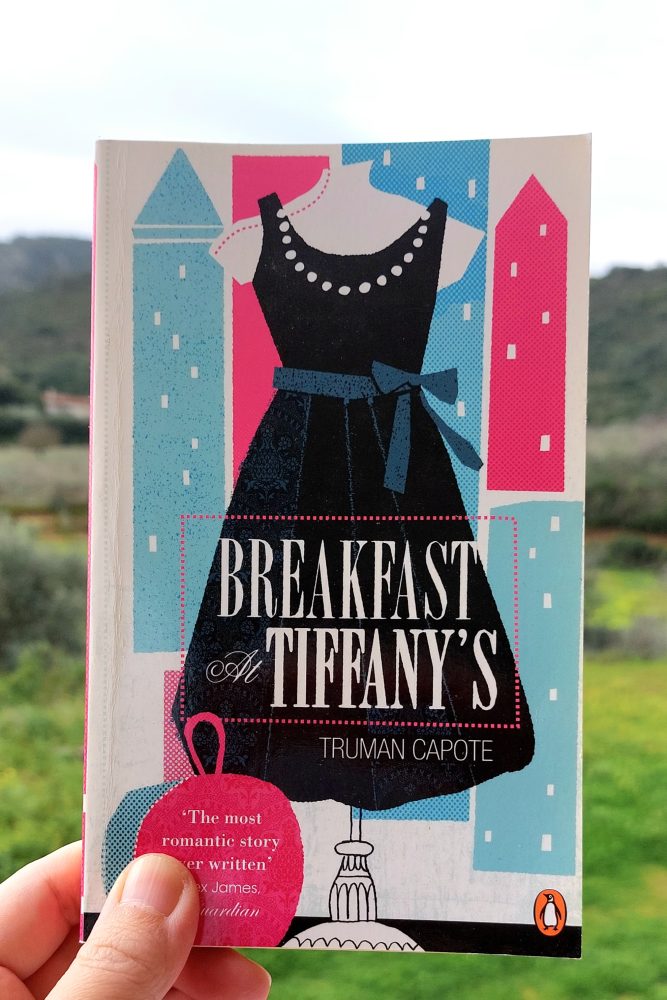
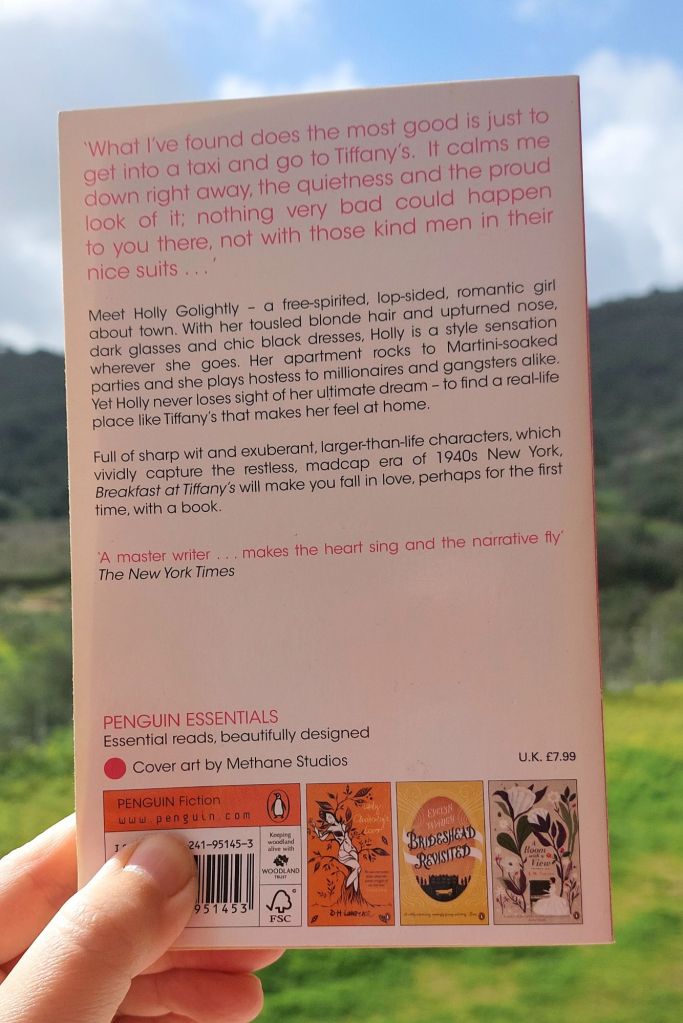
★★★★☆ Everyone has seen the film, or at least recognise when they see a picture or scene. The free spirited Holly is fragile, she’s only 20. Everyone loves her but does anyone care about her?
🔽 log 🔽
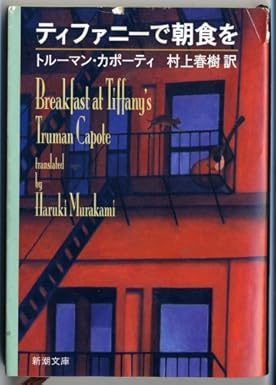
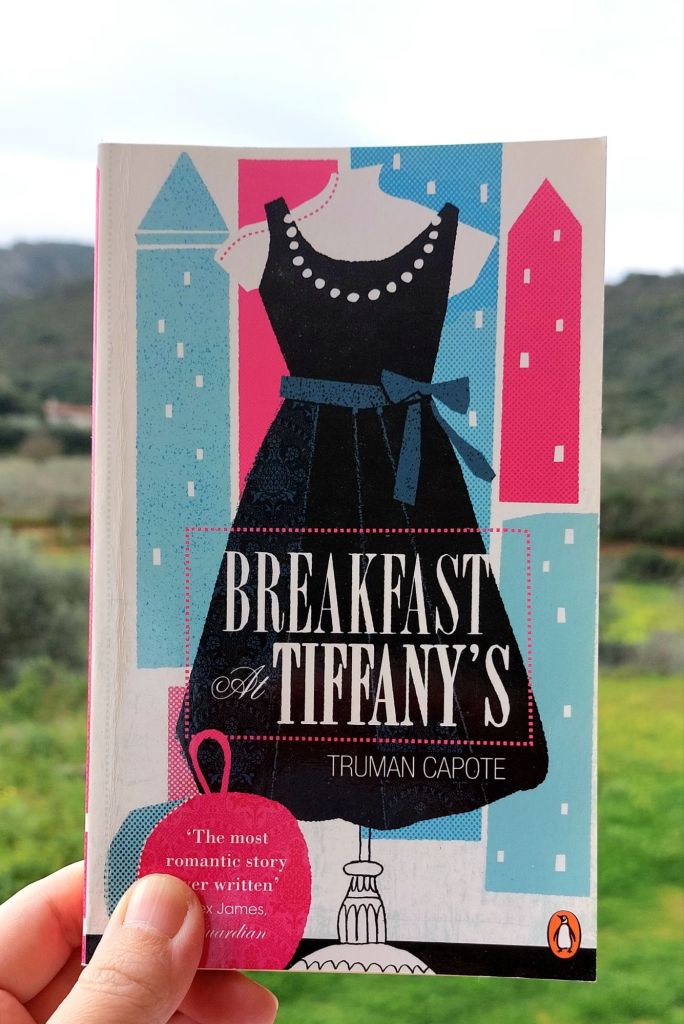
Breakfast At Tiffany's
Truman Capote, 1958
176 pages
Read in 2020.05
🔽 Book review and notes 🔽

Everyone has seen the film, or at least recognise when they see a picture or scene.

But I didn't remember it being so dark towards the end?
Probably it isn't in the film.
As many reviews say "you will fall in love with the book", and yes you do.
The free spirited Holly is actually fragile, especially in the book, she's 20.
She makes mistakes, yes, but she moves on, quickly.

Everyone loves her but nobody really cares about her.
The iconic romantic story.

There are 3 more short stories and they kind of share the same feeling of bitter romance.
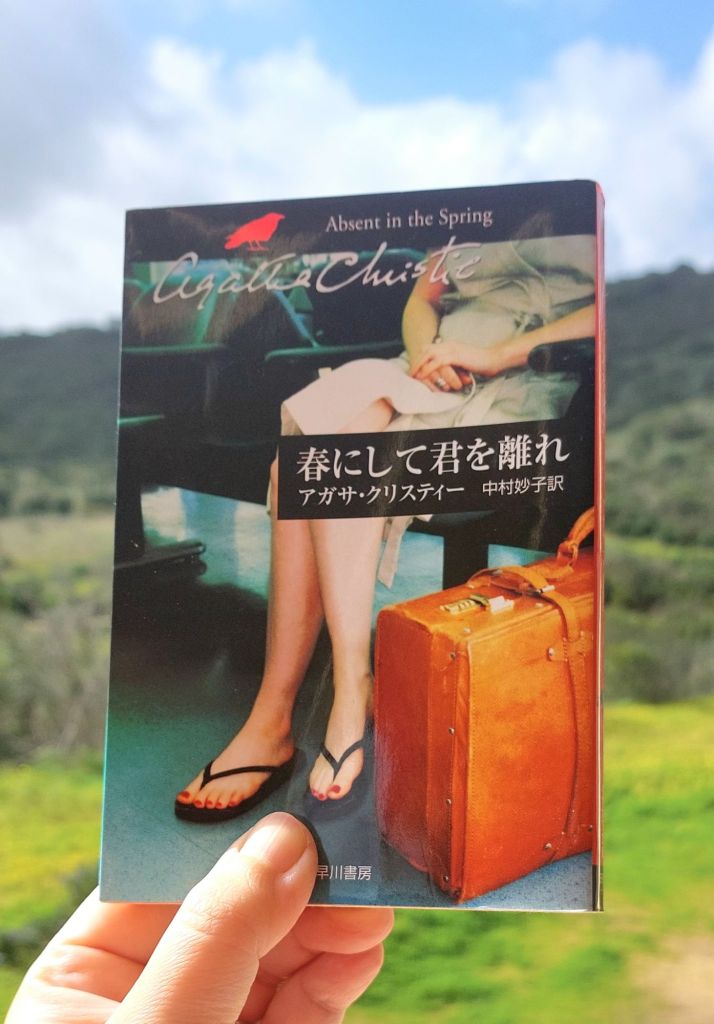
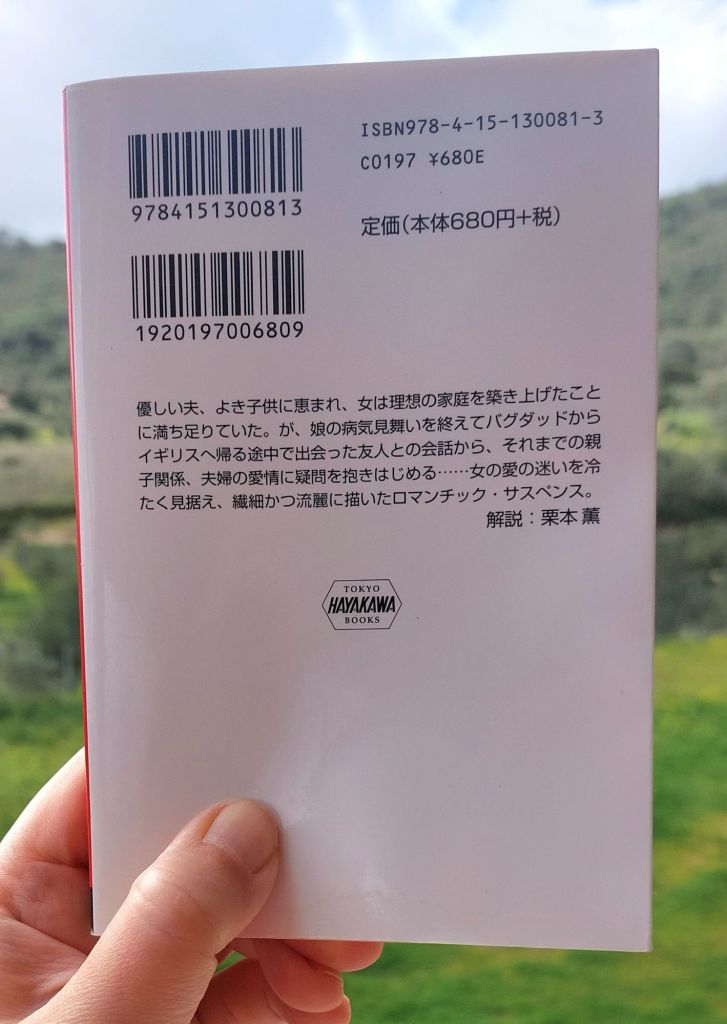
★★★★☆ It’s the struggle we all go through, especially if you are a mother, imagining that you are a victim. I sacrifice my life for the family, I prepare everything for you so you don’t have to make a mistake.
🔽 log 🔽
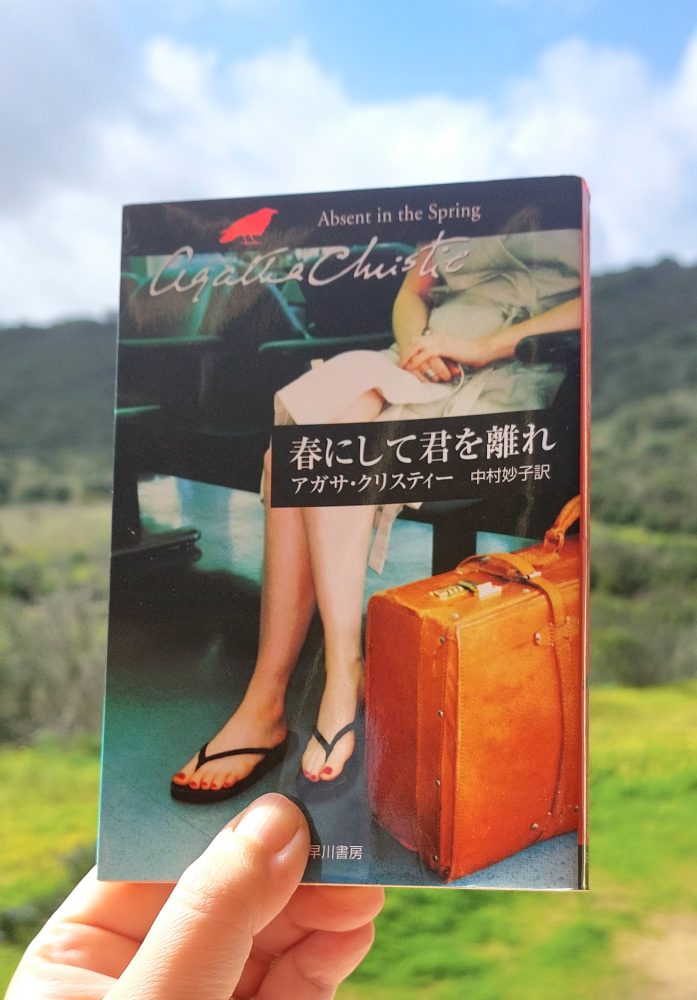
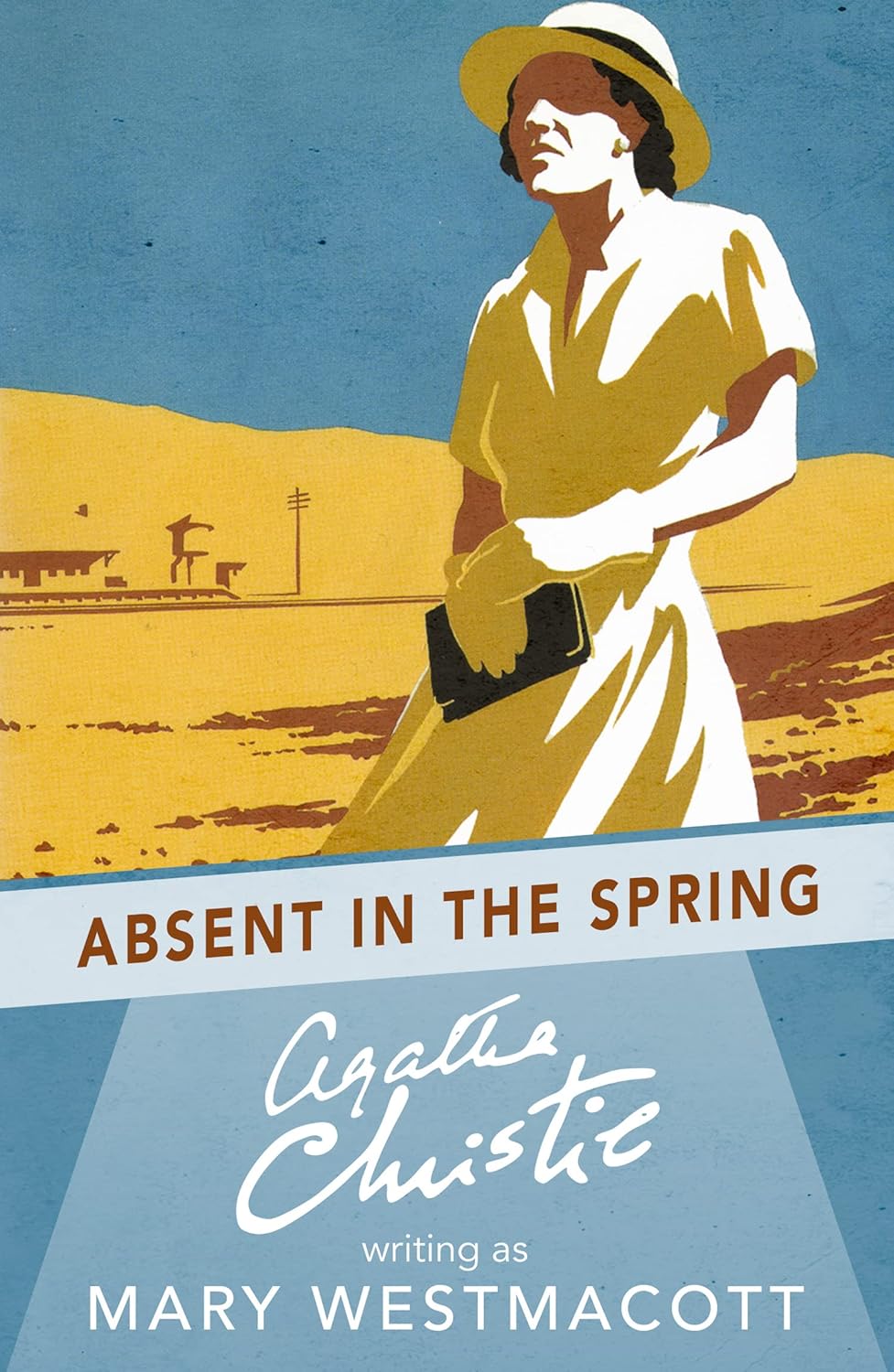
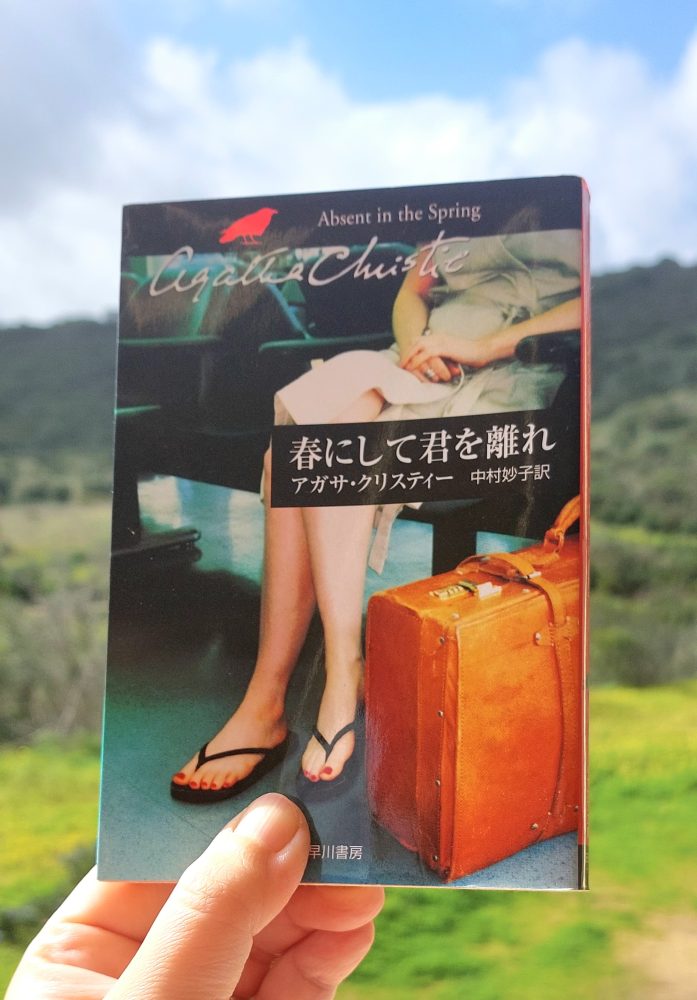
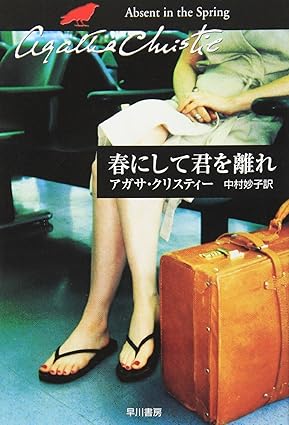
Absent in the Spring
Agatha Christie, 1944
Mary Westmacott
UK
Read in 2020.04
🔽 Book review and notes 🔽

Agatha Christie writing as Mary Westmacott.
I didn't really know about this when I read it, though it's not a crime story, the brilliance of her writing is there.

On her way back from Baghdad, she thinks back about her family.
It's the struggle we all go through, especially if you are a mother, imagining that you are a victim.
I sacrifice my life for the family, I prepare everything for you so you don't have to make a mistake.
Her husband is kind so he lets her do her way, that is, do what she thinks he wants, which is, what he really wants.
But that, is her happiness.
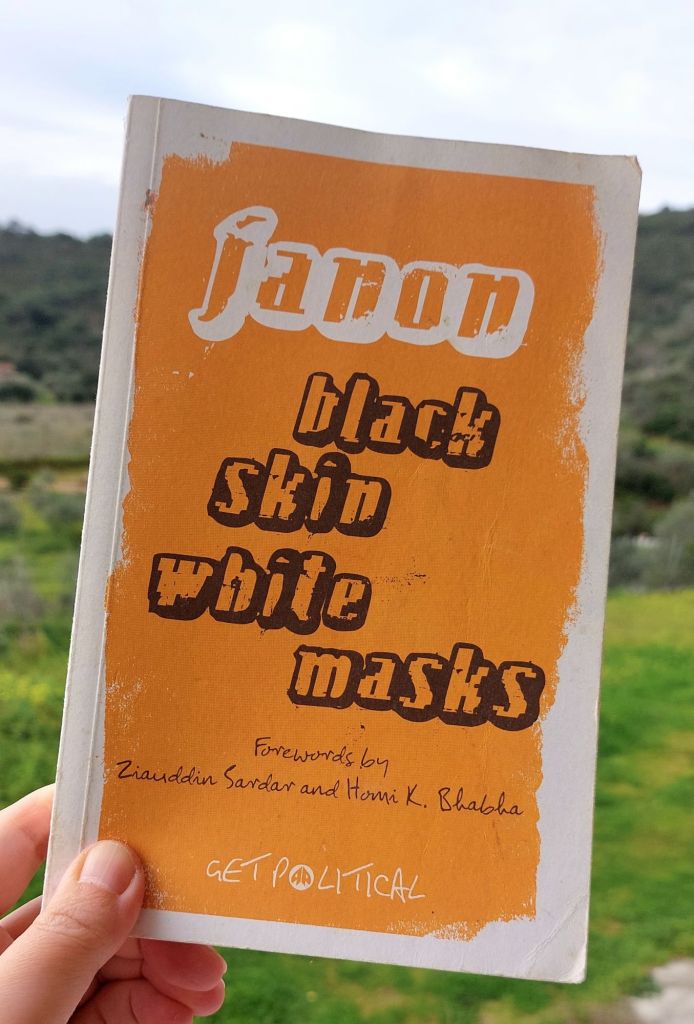
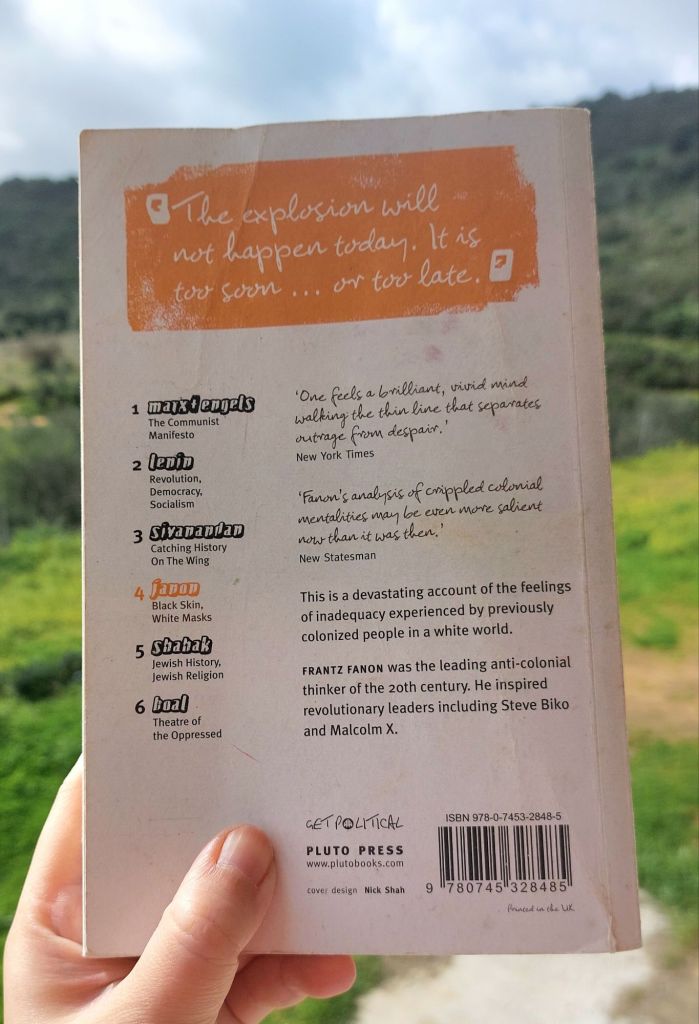
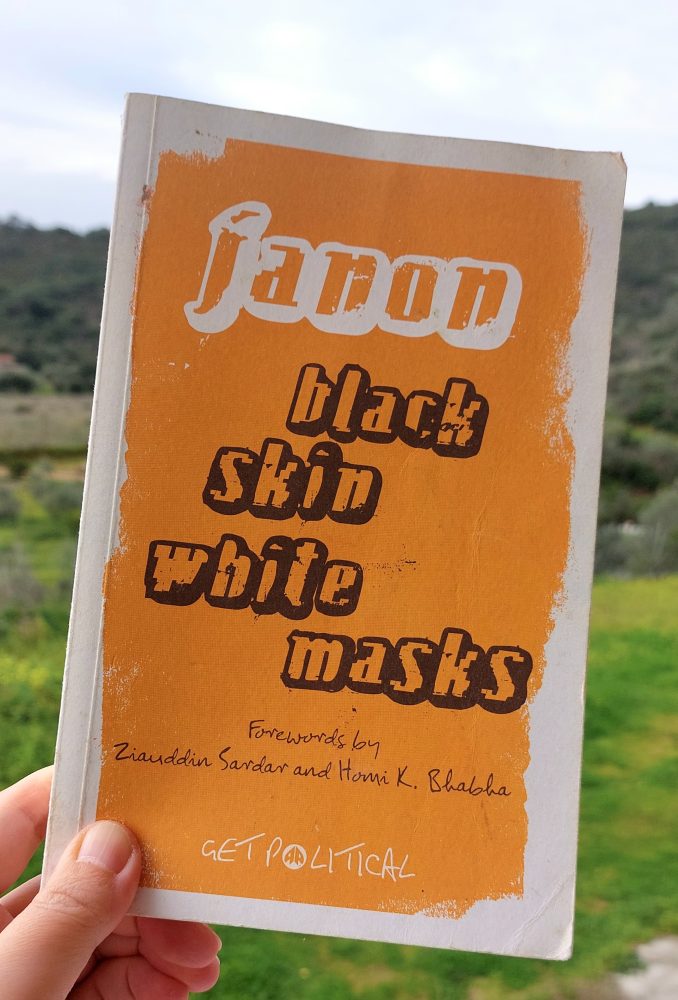
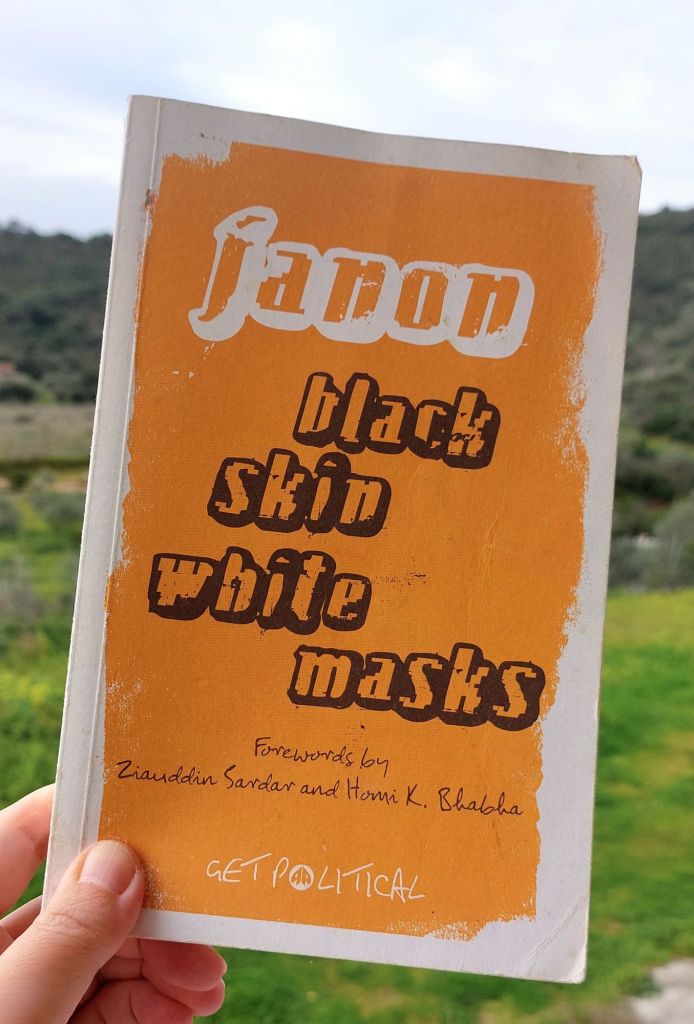
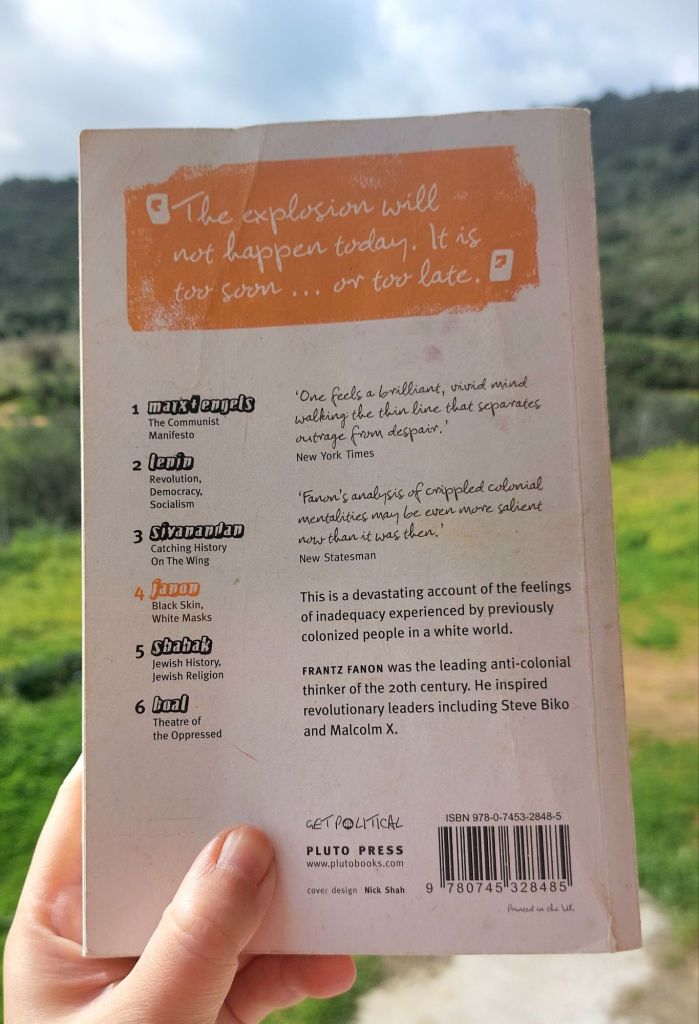
★★★★★ What does it mean to have black skin and live as if you were a white? Or better, live wanting to be white, eternally? Today the racism is regarded with contempt. But are we free?
🔽 log 🔽
Black skin white masks
Frantz Fanon, 1952
Peau noire, masques blancs
224 pages
Read in 2020.05
🔽 Book review and notes 🔽

The classic on postcolonial psychology.
What does it mean to have black skin and live as if you were a white?
Or better, live wanting to be white, eternally?

Fanon is a psychiatrist, he deals with unconscious, that is, a suppressed desire, that is, sexual desire /fear.
A black person becomes black only when he encounters the white world and the white world equals the colonisation.
The black will always have to live in denial or at best reactionary. And the white will always have to live in fear of the image they collectively created - primitive black, who is always more sexually potent.
Because any phobia is actually an anxious fear, he suggests that a racist person has, deep inside, a desire to be invaded.

Another interesting point was that he talks of French only, for the slaves did not win their freedom through struggles with their blood, it was given by the kind white masters.

To a certain extent it can be said to people of other ethnicity, that as long as we live in the West we are conscious of the colour of skin, and the white remains the absolute superiority.
But, Japan was not colonised by the white.
The colour of our skin doesn't immediately remind them of sin.

The colour black constantly appears in the white culture as evil, and it's thus collectively imagined as evil.

He concludes saying that he would refuse to be colonised by the colonisation, and the black must be free from the inferior complex and the white from the superior complex, it must be both ways.

It was written over 70 years ago.
Today the inter-racial communications and relationships have become normal, and the racism is regarded with contempt.
But are we free?
Fanon was fully aware, that his intellectual discoveries will not make the life of 8 year old boy in cane field any easier.
For there are issues in different levels, those of middle class living in the West, and those who are facing the very survival.

It's complex, we might not find a way to truly free ourselves. But we should not look down, keep questioning, and reading this book is a path.
★★★★★ In the room, nothing seems to be happening but in their heads their worlds are turning. Things that happen in the day seem like unrelated but they are within their consciousness. Story about her mind ready to explode.
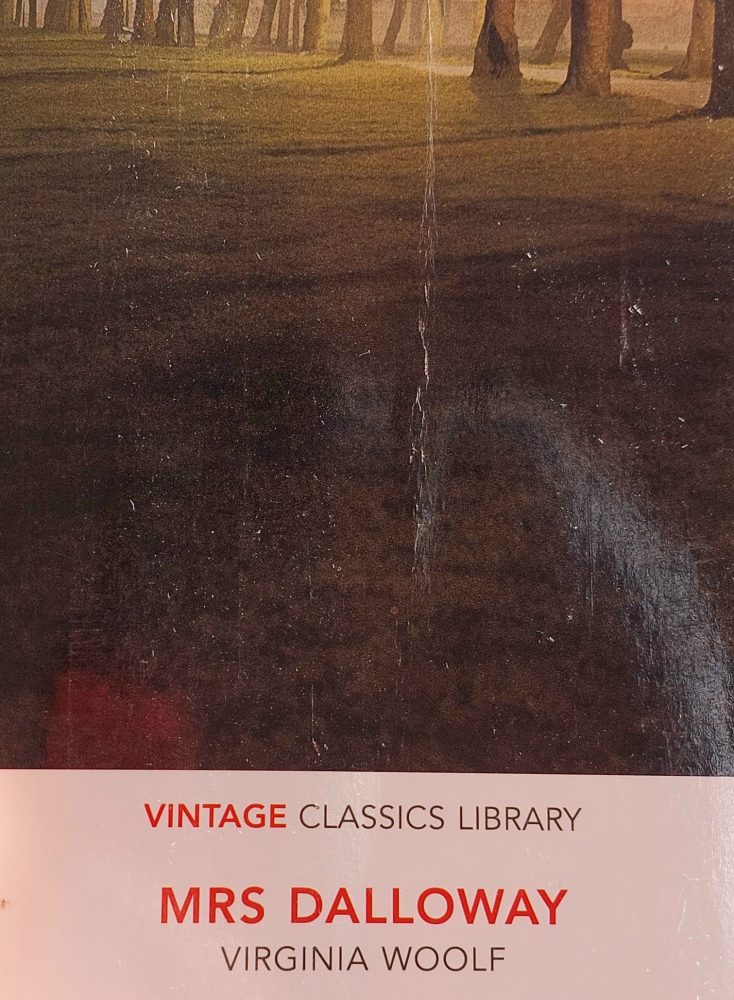
🔽 Book review and notes 🔽 My first ever Virginia Woolf.
As expected it was a hard read, in terms of the timeline it happens all in a day, but in the meantime the main characters think and remember a lot – ”Stream of Consciousness”.
It’s very internal, this is continuous flow of what they are really thinking while the time passes, and what they think is a lot more than what it appears in the very English society.
Nothing really happens in the day, but a lot happens in their heads.
(warning; revealing a bit of the plot, but I assume it’s well known after 100 years) Clarissa is at the verge, she’s physically unwell but holds it together, very well aware of potential mistake of letting go the man she truly loved but also her duty as a wife. and Septimus, who had little to do with the party until his name is mentioned, had been at the verge and he eventually crosses the line.
By showing his death and his tension that was accumulated to the point of death, the book shows the nervous environment, or the consciousness of Clarissa, of what seems to be a boring, pretentious evening. Definitely must read more of her books.
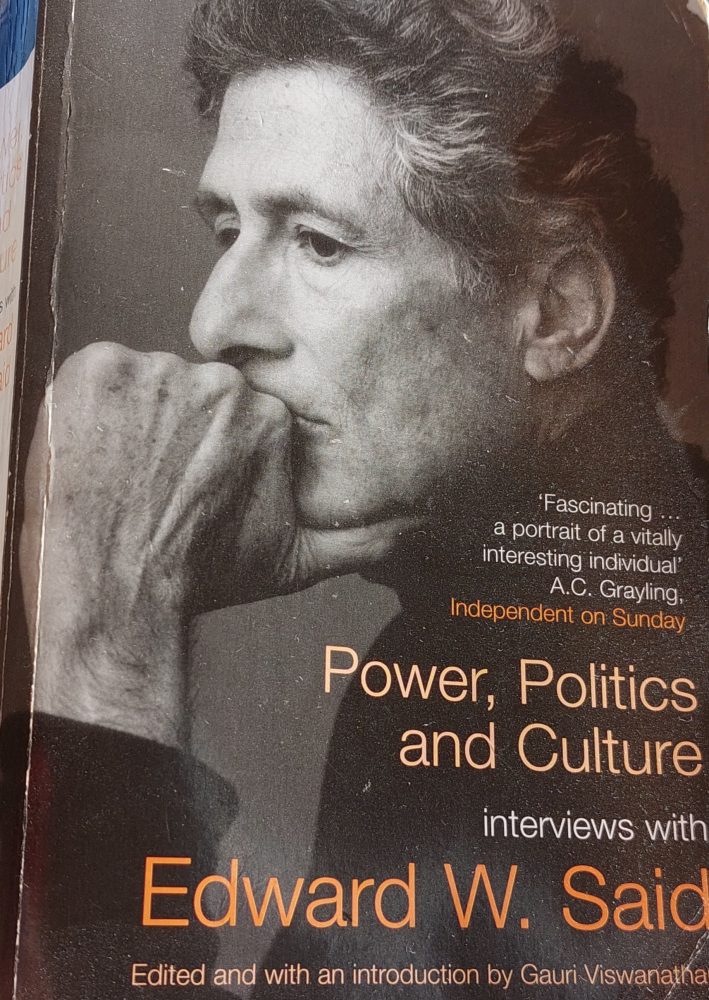
★★★★★ A Palestinian academic in the US, prof. Said. Many admire and are inspired by his passionate humanism. The second half is about political conversations. Two state solution. Geography rather than history or myth. So we should and can coexist.
🔽 log 🔽
Power, Politics and Culture
Interviews with Edward W. Said, 2001
US
512 pages
Read 2024.11


🔽 Book review and notes 🔽

Collection of interviews with 2 sections, first focuses on arts and culture, about literature, music or arts, then the second is more political.

I must be honest, the first part was difficult as I have little knowledge in the field, but the second part is something very, very real to us, who doesn't see what's going on in Gaza?
"They can't possibly eliminate us all" - what he and many thought impossible is happening today.
Genocide of Palestinians was out of question for anyone with common sense, yet, it's happening.

He calls himself an incurable optimist.
Some consider him an enemy or a terrorist.
Many admire and are inspired by his passionate humanism.

He was not an advocate for Islam, and was not rejecting the right of Jews.
What is clear and consistent is that he was interested in coexistence of contradictories, he detested the idea of "pure" he dismissed the myth and focused on the lives of people now.
Geography rather than history or myth. Two state solution.
He knows that people are more complicated than we seem, exactly as he argues in Orientalism where the Other is depicted in a simplified way, that is simply not true.
No, we are human, we live, we are complicated, and we must try.

The curse of the powerful U.S. is that it hates to admit the mistakes and misunderstanding of the past.
Rather than admitting their error they keep on depicting Arab as terrorist, probably as long as they physically can, because, as we all know, it brings a lot of money to a few in the US.

It's been more than 20 years since his death, since we lost the lighthouse of compassion and common sense.
He said, "Israel can't keep on kicking us, they have to admit we exist, not like they can kill off all Palestinians", well, the unimaginable is happening in front of our eyes.
Can't we hear the voices of calm and humane intellectuals any more?
Of common sense?
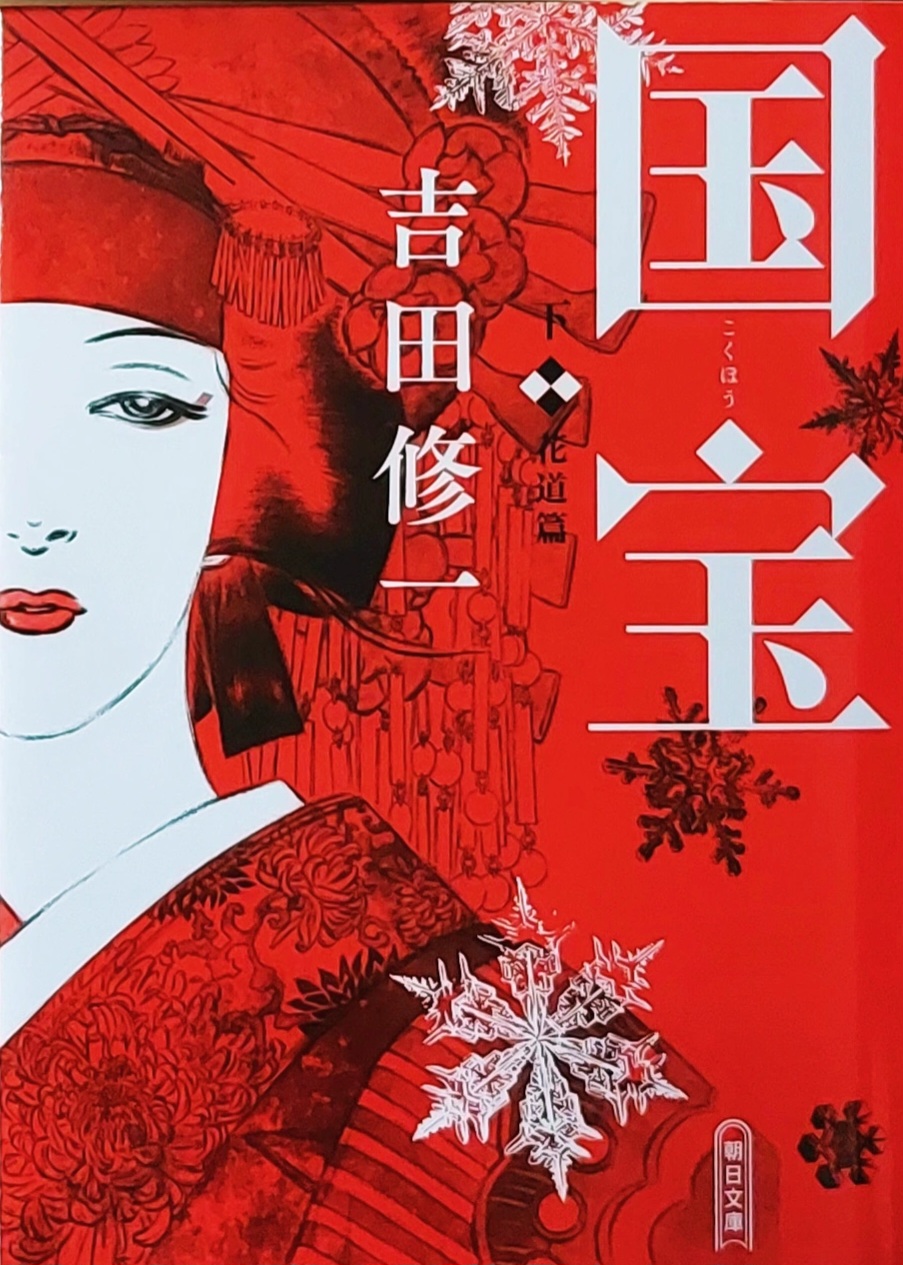
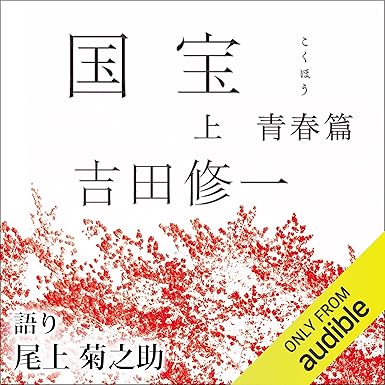
★★★★★+♥ The film was an instant blockbuster, so I had a very high expectation – and it blew it away. A story of a son of yakuza turned kabuki actor who is the beauty itself, a national treasure.
🔽 Book review and notes 🔽 The film had just come out and was an instant hit, the second highest-grossing live-action movie in history in Japan, so I had a very high expectation - and it blew it away.
Kikuo, a son of a dead yakuza boss in Nagasaki, becomes an apprentice in a kabuki family in Osaka where he spend his entire childhood learning the way of kabuki with their son, Shunsuke, a thoroughbred whose success and career guaranteed by bloodline. They are the best friends, the best partners and rivals - of course you know already from this setting that it'd be a good story.
But wait until you read the book, it's not that simple. Kikuo loves kabuki and has an usual talent, but that's not enough. He gets thrown into the dark pit of the destiny, and by random chance he gets saved, then fallen, then picked up and admired; he has no life of his own, but he has his genius, dedication and his beauty as an art.
This is a story of how one lives for an art, and as an art, as a "kokuho" living national treasure.
I hope to watch the film soon too, by Lee Sang-il, hands down everyone is praising it. As of now, it will be released in US and France. Of course Ryo Yoshizawa and Ryusei Yokohama will be beautiful, Ken Watanabe will be powerful, but I want to see Min Tanaka, 80 year old dancer/actor who has the strongest presence on screen in Japan today.


![[商品価格に関しましては、リンクが作成された時点と現時点で情報が変更されている場合がございます。]](https://hbb.afl.rakuten.co.jp/hgb/0755ac2b.e8fbcae9.0755ac2c.14c3d96f/?me_id=1213310&item_id=13898138&pc=https%3A%2F%2Fthumbnail.image.rakuten.co.jp%2F%400_mall%2Fbook%2Fcabinet%2F1018%2F9784167791018_1_5.jpg%3F_ex%3D128x128&s=128x128&t=picttext "[商品価格に関しましては、リンクが作成された時点と現時点で情報が変更されている場合がございます。]")
![[商品価格に関しましては、リンクが作成された時点と現時点で情報が変更されている場合がございます。]](https://hbb.afl.rakuten.co.jp/hgb/50ad15e2.f842bb96.50ad15e3.98577150/?me_id=1368547&item_id=10322428&pc=https%3A%2F%2Fthumbnail.image.rakuten.co.jp%2F%400_mall%2Fmottainaihonpo-omatome%2Fcabinet%2F06794721%2Fbkslwsmvjod1ngoh.jpg%3F_ex%3D128x128&s=128x128&t=picttext "[商品価格に関しましては、リンクが作成された時点と現時点で情報が変更されている場合がございます。]")
![[商品価格に関しましては、リンクが作成された時点と現時点で情報が変更されている場合がございます。]](https://hbb.afl.rakuten.co.jp/hgb/0755ac2b.e8fbcae9.0755ac2c.14c3d96f/?me_id=1213310&item_id=10104567&pc=https%3A%2F%2Fthumbnail.image.rakuten.co.jp%2F%400_mall%2Fbook%2Fcabinet%2F3824%2F9784003243824.jpg%3F_ex%3D128x128&s=128x128&t=picttext "[商品価格に関しましては、リンクが作成された時点と現時点で情報が変更されている場合がございます。]")



![[商品価格に関しましては、リンクが作成された時点と現時点で情報が変更されている場合がございます。]](https://hbb.afl.rakuten.co.jp/hgb/0755ac2b.e8fbcae9.0755ac2c.14c3d96f/?me_id=1213310&item_id=20636904&pc=https%3A%2F%2Fthumbnail.image.rakuten.co.jp%2F%400_mall%2Fbook%2Fcabinet%2F9556%2F9784101299556_1_3.jpg%3F_ex%3D128x128&s=128x128&t=picttext "[商品価格に関しましては、リンクが作成された時点と現時点で情報が変更されている場合がございます。]")


![[商品価格に関しましては、リンクが作成された時点と現時点で情報が変更されている場合がございます。]](https://hbb.afl.rakuten.co.jp/hgb/0755ac2b.e8fbcae9.0755ac2c.14c3d96f/?me_id=1213310&item_id=13088795&pc=https%3A%2F%2Fthumbnail.image.rakuten.co.jp%2F%400_mall%2Fbook%2Fcabinet%2F5089%2F9784102095089.jpg%3F_ex%3D128x128&s=128x128&t=picttext "[商品価格に関しましては、リンクが作成された時点と現時点で情報が変更されている場合がございます。]")
![[商品価格に関しましては、リンクが作成された時点と現時点で情報が変更されている場合がございます。]](https://hbb.afl.rakuten.co.jp/hgb/0755ac2b.e8fbcae9.0755ac2c.14c3d96f/?me_id=1213310&item_id=11255804&pc=https%3A%2F%2Fthumbnail.image.rakuten.co.jp%2F%400_mall%2Fbook%2Fcabinet%2F1513%2F15130081.jpg%3F_ex%3D128x128&s=128x128&t=picttext "[商品価格に関しましては、リンクが作成された時点と現時点で情報が変更されている場合がございます。]")


![[商品価格に関しましては、リンクが作成された時点と現時点で情報が変更されている場合がございます。]](https://hbb.afl.rakuten.co.jp/hgb/0755ac2b.e8fbcae9.0755ac2c.14c3d96f/?me_id=1213310&item_id=20061940&pc=https%3A%2F%2Fthumbnail.image.rakuten.co.jp%2F%400_mall%2Fbook%2Fcabinet%2F9506%2F9784622089506.jpg%3F_ex%3D128x128&s=128x128&t=picttext "[商品価格に関しましては、リンクが作成された時点と現時点で情報が変更されている場合がございます。]")


 赤パンの本棚