Hotarugawa, Doro no Kawa
Teru Miyamoto
螢川
宮本 輝
208 pages
Read in 2025 .01
(Not Published in English)


✔ Post war in Japan
✔ Children's views of poverty


🔽 Review summary 🔽
★★★★☆  What is means to live in the post war Japan, to live at the bottom of the society, and to be awaken to the bitter sweet but honest self discovery. It's a layer of emotions, that blossoms in the end with fireflies.


🔽 Book review and notes 🔽
Short stories, Doro no Kawa "muddy river" won Dazai Osamu Award and Hotarugawa "River with fireflies" won Akutagawa Award.
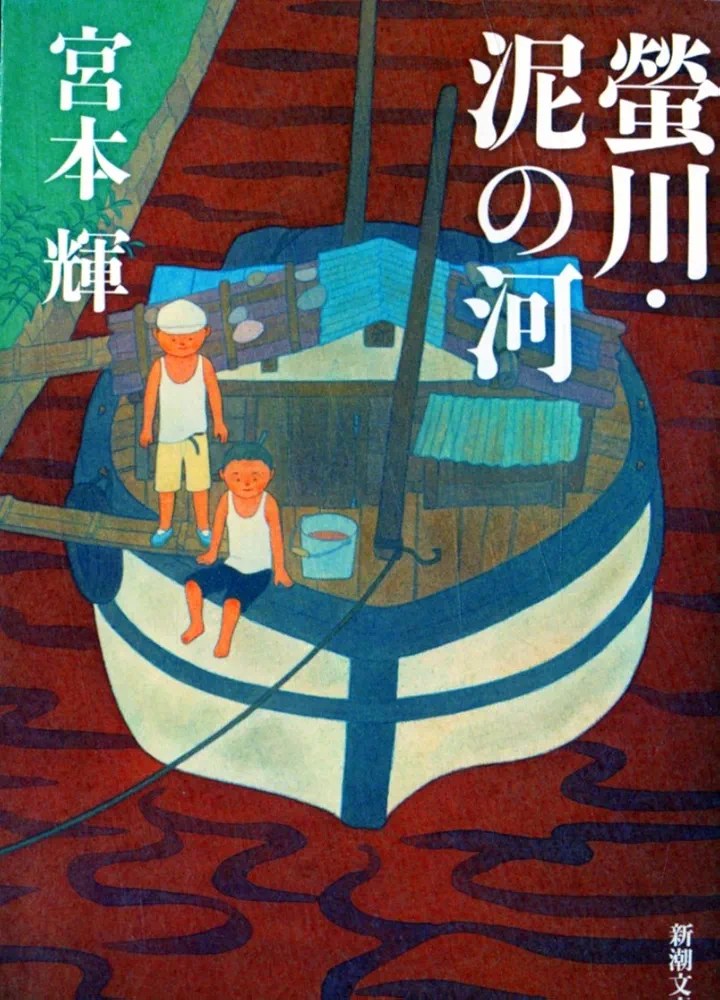
Doro no Kawa tells a story of post war Osaka. A boy from a modest family befriends with a family one summer; a girl, her younger brother and her mother who is a prostitute, who live on a boat floating on the muddy river.
What is means to live at the bottom of the society during the post war, where everyone was poor, and a delicate momories of growing up. It's so calm and subtly unforgettable.

Hotarugawa is about an adolescence. The protagonist is already big enough to know love.
His detest towards his old father whose business got busted, and his frustration towards the fact that his best friend fell in love with the same girl he loved - the messed up adolescence, the tangled up layers of emotions that everyone experience, but one day, your life will flourish, the cloud of the post war will clear.

what is amazing is the description of the scenes the characters are watching, you experience the post war Japan together, and in a weird way you feel nostalgic of the past you didn't experience.
🔽 Where to buy 🔽

●●● Amazon.com (US) ●●●
螢川 (角川文庫) Paperback Bunko
Amazon.co.uk (UK)
蛍川・泥の河 (新潮文庫) Paperback Bunko

Amazon.it (Italy)
螢川 (角川文庫) Paperback Bunko


コメントを残す