タグ: History_ENG

  • “Smash and Grab” Sunanda K. Datta-Ray (1984) Review | A dynamic history of Sikkim

    “Smash and Grab” Sunanda K. Datta-Ray (1984) Review | A dynamic history of Sikkim

    ★★★★★ A dynamic history of the kingdom of Sikkim that got annexed by India. I love this area of the east of Himalaya, it's a total mix of cultures. Soon after gaining an independence from Britain, India "colonised" a small kingdom, a dark page of history that nobody should talk about.
    🔽 log 🔽
    Smash and Grab
    Annexation of Sikkim
    Sunanda K. Datta-Ray, 1984
    433 pages
    Read 2025.01
    🔽 Book review and notes 🔽
    The book I had to look for everywhere but couldn't find as a physical book as it was practically banned as soon as it was published.

    And, no wonder it was banned (well not banned, as that would be too scandalous, they just did not allow to print any more) it is by a journalist who personally knew the Chogyal, the king, so it's detailed and it's what he saw, heard, conversed and felt, as well as collection of newspaper articles.

    And it doesn't look good for India.
    India, who had until recently suffered the Imperialism is now putting Imperialism on Sikkim.
    Lies, manipulations, false promises, guaranteeing personal gains, not to mention violence. Anything you can think of that is morally wrong, was done to Sikkim.
    Cleverly manipulating the media to make people believe the Chogyal was the bad guy. They then tricked the modest simple people - you don't like the monarchy, this bad guy, then vote to be annexed by India.
    The Indian officer in Sikkim already had all the power he wished, and the last blow was easy, just lie.

    As mentioned in this book, the snap referendum was based on manipulations and physically impossible to run it in the remote area so quickly. Of course, if you vote against the annexation you'd likely beaten up, too.

    It's very detailed and was difficult to follow for me who had no basic understanding of Indian politics.
    But what was happening was clear, you cannot believe what you are reading with your eyes, it's incredibly similar to what British did to India; concentration of power in the hands of foreigners and dirty politics.
    Yes the Chogyal was hostile towards Nepali, but there was certainly a room for compromise and he probably would have been the Chogyal for all.
    It could have been a republic, also.
    But no, India wanted it, the perfect location at the border, and took time to absorb it slowly but surely.
    Now I'd like to know how Indian people think if this today, or maybe first of all if they are at least taught everything.

    🔽 Where to buy 🔽

    ●●● Amazon.com (US) ●●●
    SMASH AND GRAB:ANNEXATION OF SIKKIM
    SMASH AND GRAB:ANNEXATION OF SIKKIM Kindle Edition


    ●●● Amazon.co.uk (UK) ●●●
    SMASH AND GRAB:ANNEXATION OF SIKKIM
    SMASH AND GRAB:ANNEXATION OF SIKKIM Kindle Edition


    ●●● Amazon.it (Italia) ●●●
    -


  • “Mary Seacole” Ron Ramdin (2005) Review | Determination to help her “sons”

    “Mary Seacole” Ron Ramdin (2005) Review | Determination to help her “sons”

    ★★★★★ Jamaican British nurse whom British and Nightingale rejected for being non-White, but she pushed her way through serve her mother country in Crimea regardless and was loved.
    🔽 log 🔽
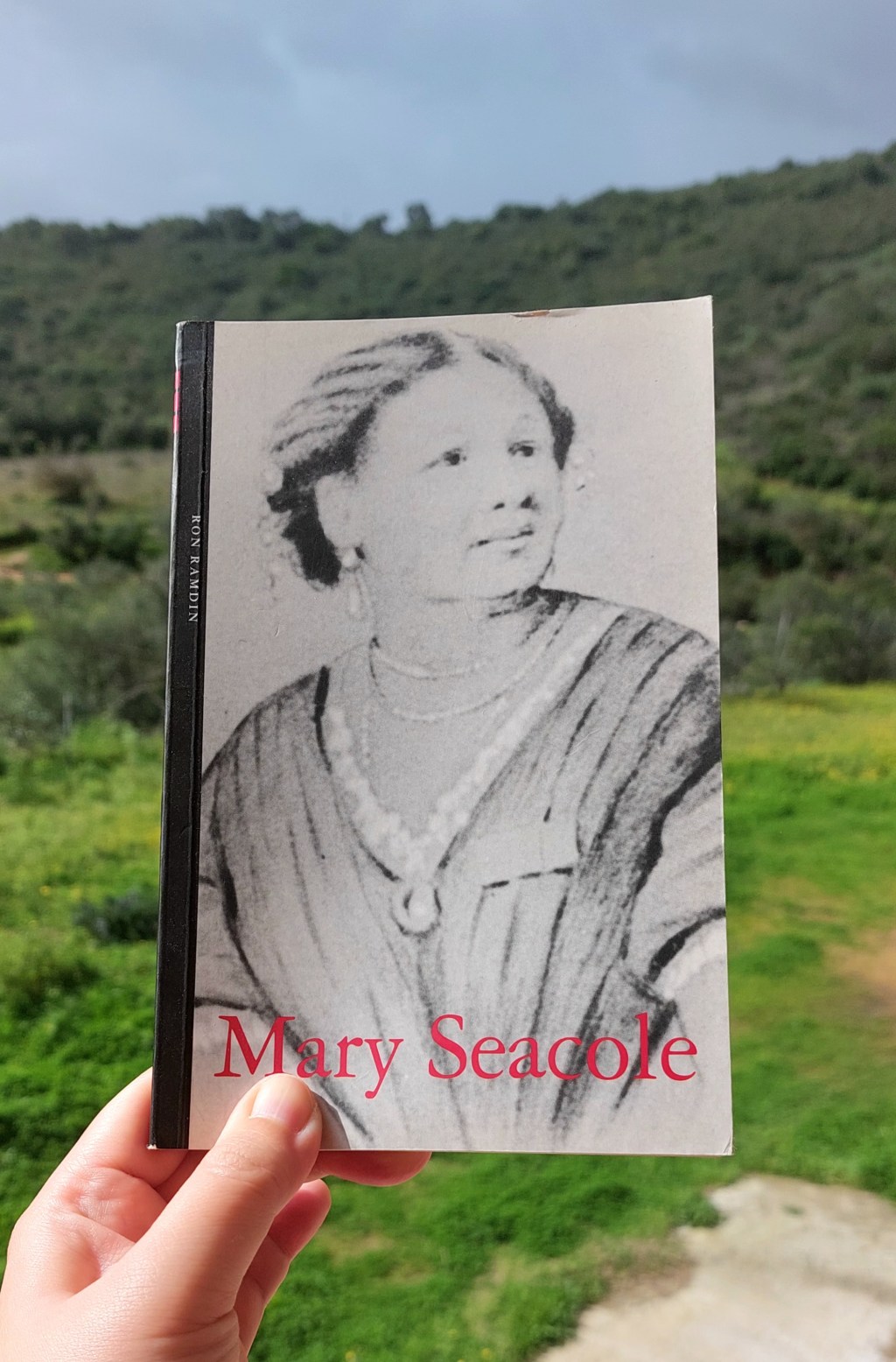
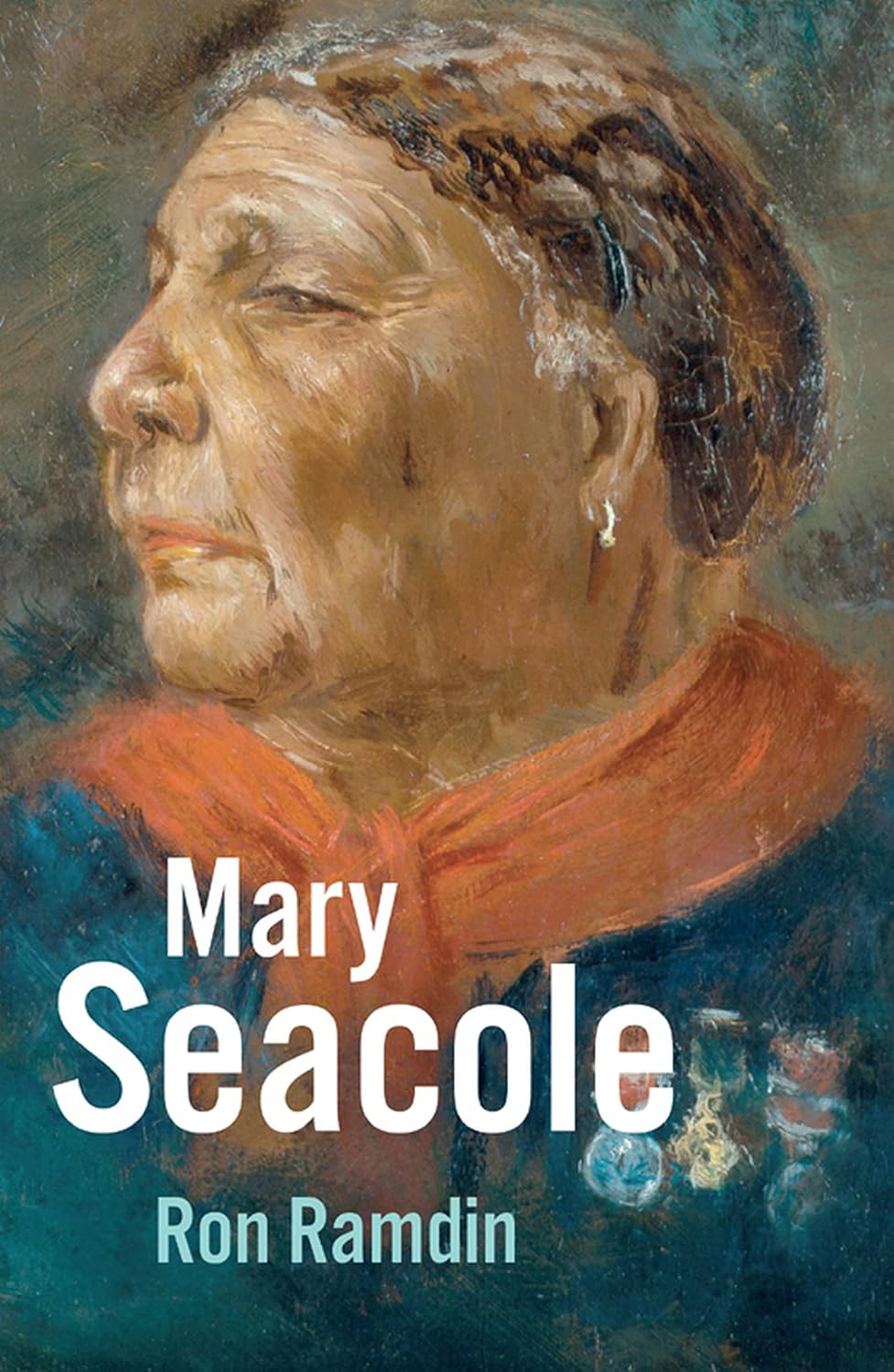
    Mary Seacole
    Ron Ramdin, 2005
    190 pages
    Read in 2020.07
    🔽 Book review and notes 🔽

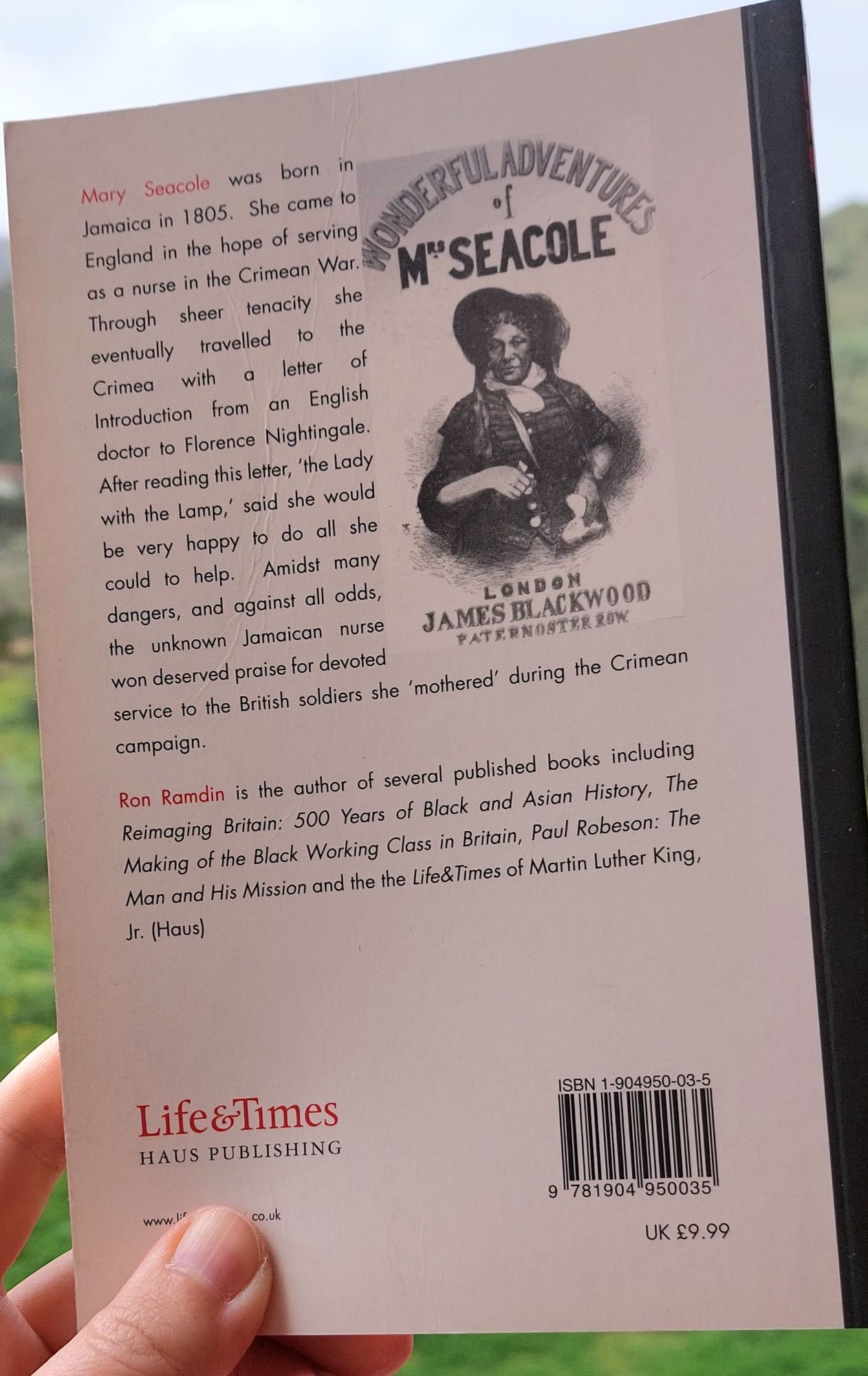
    Biography of a Jamaican British nurse who pushed her way through to Crimea to serve her mother country.

    Contemporary to Florence Nightingale, Seacole chose to be closer to the battlefield, not only financially funded her way through to the battlefield, she established a sort of restaurant business to support herself while working as a nurse.

    Why did she have to make her money to help the wounded British soldiers?
    Because the British government and Nightingale rejected her, precisely for being non-White.

    It's a revelation of the dark side of Nightingale, as well as the determination of the mixed race woman, who paid little attention to the colour of her skin but more to serve the Britain and her dying and wounded "sons" (she called soldiers sons).

    But Britain did not show the gratitude she well deserved.
    As it's been said many times elsewhere, it's not correct to refer to her as "a black Nightingale", they were very different and the impression we get today from the record is, a very strict Nightingale didn't appreciate Seacole much who gave not only care to the wounded but also joy.

    🔽 Where to buy / Summary and more info 🔽

    ●●● Amazon.com (US) ●●●
    Mary Seacole
    Mary Seacole


    ●●● Amazon.co.uk (UK) ●●●
    Mary Seacole (Life & Times)

    ●●● Amazon.it (Italy) ●●●
    Mary Seacole (English)
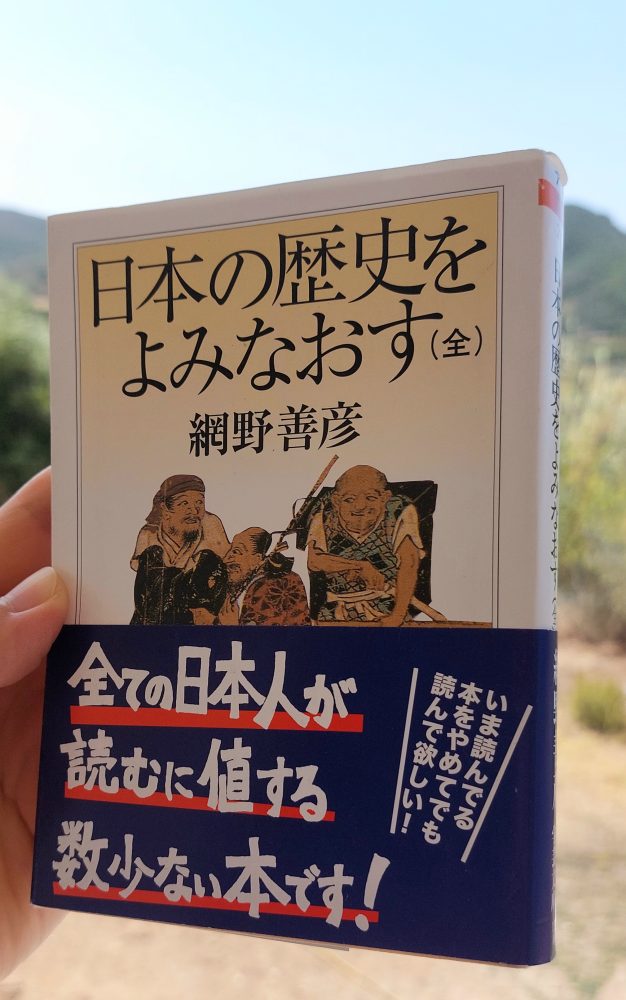
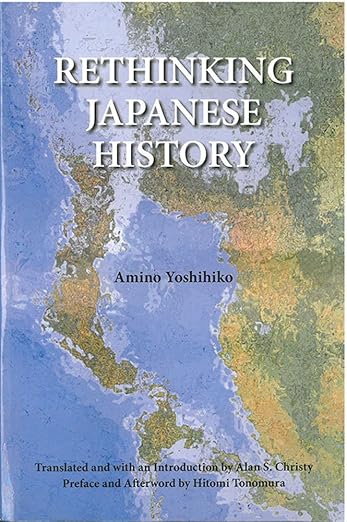
  • “Rethinking Japanese History” Yoshihiko Amino (2005) Review | “Common sense” was wrong

    “Rethinking Japanese History” Yoshihiko Amino (2005) Review | “Common sense” was wrong

    ★★★★★ Also in Japan, they teach you that "Japan was always isolated and agriculture was the main industry". This book teaches you instead that how that "common sense" is wrong.


    🔽 log 🔽
    Rethinking Japanese History
    Yoshihiko Amino
    日本の歴史をよみなおす(全)
    網野善彦 2005 (1991-)
    Read 2024.3


    🔽 Book review and notes 🔽
    I started reading this thinking it's just another history book.
    How wrong I was.
    This book is actually about how you should forget what they taught you as "common sense"

    We have always been taught in Japan that it's made up of islands, thus isolated, and we only focused on agriculture.
    But when you stop and think about it, how is it possible that Japan was surrounded by the sea but we only ever made rice and vegetables?
    And of course, Japan had culture and technology to go beyond the sea to have trades.
    Japanese culture (or cultures, anyway it was only recently united) was complicated, very liberal with sophisticated technologies and commercial power.
    Oh yeah.
    🔽 Where to buy 🔽

    ●●● Amazon.com (US) ●●●
    rethinking
    Rethinking Japanese History (Michigan Monograph Series in Japanese Studies) (Volume 74)
    ●●● Amazon.co.uk (UK) ●●●
    Rethinking Japanese History: Volume 74 (Michigan Monograph Series in Japanese Studies)

    ●●● Amazon.it (Italy) ●●●
    Rethinking Japanese History: Volume 74 (Michigan Monograph Series in Japanese Studies) (English)


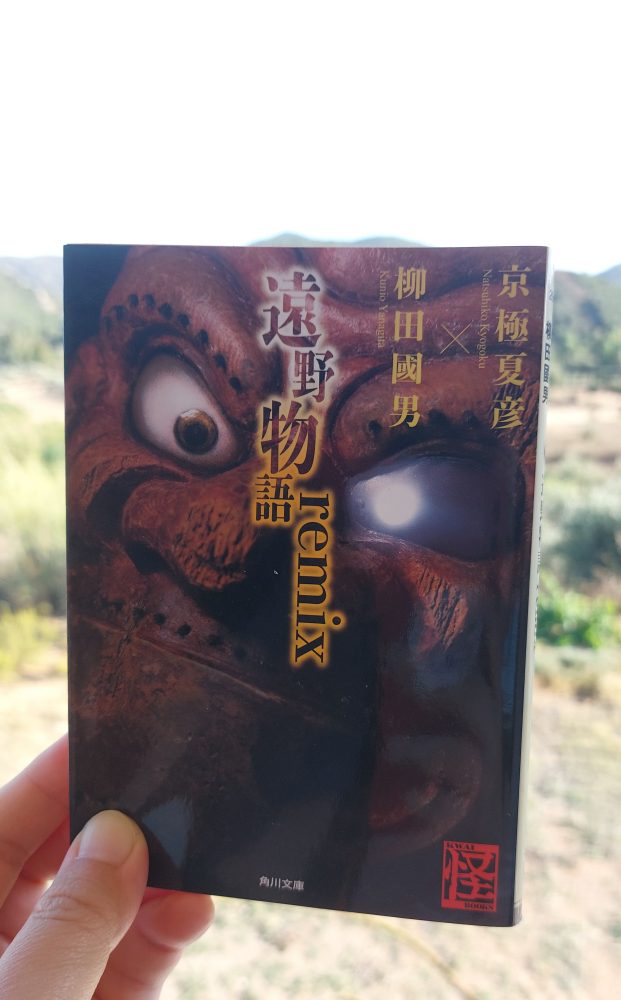
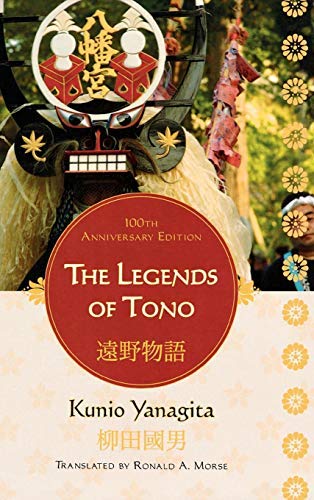
  • “The Legends of Tono” Kunio Yanagita, Natsuhiko Kyogoku, (2013) Review | Japanese legends

    “The Legends of Tono” Kunio Yanagita, Natsuhiko Kyogoku, (2013) Review | Japanese legends

    ★★★★☆ Tono, a small area in Tohoku, is well known by Japanese for their memorable legends, thanks to this book. If you are interested in local or Japanese ghost and yokai stories, this is where you should begin your quest. 

    🔽 log 🔽
    The Legends of Tono REMIX
    Kunio Yanagida
    Natsuhiko Kyogoku
    Read 2024.4


    🔽 Book review and notes 🔽
    The original version by Kunio Yanagita was written in 1910, this version I read was "remixed" in 2013 by a mystery writer Natsuhiko Kyogoku.

    Tono is in Tohoku region in the north of Japan, not far from the area destroyed by tsunami.
    It's not a vast area geographically, but incredibly rich in folklores and probably the only village associated so strongly with their local legends, because of this book.
    In other words, we must consider ourselves lucky that Tono's legends are preserved by the folklorist Yanagita, and can't help but wonder how many hundreds of thousands of local stories and legends have been wiped out in history, disappeared like they had never existed.

    Even kids outside of Japan know words like "yokai" thanks to a popular anime, and if you are familiar, you recognise many "characters" or concepts in this book.
    Monsters or ghost in the mountains, or by the river - you find similar themes in stories of the brothers Grimm, because it is universal.
    Anything outside of your village is dangerous, so is any wider knowledge than what they give you.

    It's not written to scare you, it's just a collection of the legends... but I admit it's pretty scary. It doesn't help the fact that I live in a countryside.

    The original book was written in 1910, since then there have been many versions, including a manga by Shigeru Mizuki but this version I read was "remixed" by Kyogoku, using more modern Japanese language for today's readers.
    When you think about it, Yanagita also collected folklores that were already pretty old then, so it's not unusual that it gets modernised or re-translated time to time, especially if what you are interested in is the actual stories from centuries ago and not the language of 100 years ago.

    🔽 Where to buy 🔽

    ●●● Amazon.com (US) ●●●

    The Legends of Tono


    ●●● Amazon.co.uk (UK) ●●●
    The Legends of Tono

    ●●● Amazon.it (Italy) ●●●
    The Legends of Tono (English)
    
    
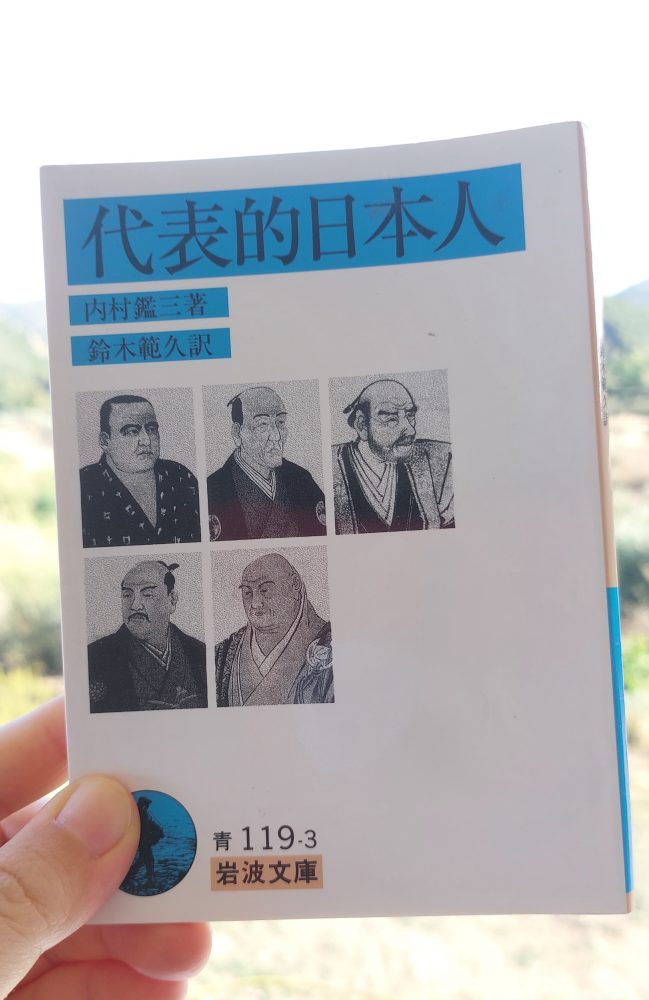
  • “Representative men of Japan” Kanzo Uchimura, 1908 Review | A resistance from this Christian Japanese author

    “Representative men of Japan” Kanzo Uchimura, 1908 Review | A resistance from this Christian Japanese author

    ★★★★☆ At the turn of the century the wave of Westernisation was unstoppable. This book was a resistance from this Christian Japanese author, to claim that Japan was also great. A bit too subjective but the real value of this book is the intention of the author.

    🔽 log 🔽
    “Representative men of Japan” from Japan and the Japanese
    Kanzo Uchimura, 1894 and 1908
    Read 2024.4


    🔽 Book review and notes 🔽
    It was originally written under the title of “Japan and the Japanese” in 1894, then released again as “Representative Men of Japan in 1908.
    You get the idea how nationalistic the intention was.

    At the turn of the century, the West has ruined Asia and the wave of Westernisation was unstoppable.
    This book was a resistance from this Christian Japanese author, to claim that Japan was also great.

    As it turns out, a lot in this book is subjective.
    Each chapter starts off by introducing how Japan is doing in the particular field, and goes on to say how each man is great and Japanese are wonderful.
    The first man in the book is Takamori Saigo, and the book goes a bit extreme to praise his idea that Japan should conquer Korea, Seikanron, which I felt uncomfortable, but then I read in the afterword that Uchimura soon later became anti-war so those comments were just left over from his older belief.
    Today he is remembered as a pacifist (so it feels weird he had agreed on seikanron, but there you go people can change)

    So, it is a bit too subjective and very specific to this particular period of time in Japan to actually learn any history of Japan or these Japanese men.
    However what’s more important and interesting, indeed the value of this book, is the intention of the author, why he wrote it in this way, how he wished Japan to be equal to European powers and how that was the aim of many intellectuals from this period.

    🔽 Where to buy 🔽

    ●●● Amazon.com (US) ●●●

    Representative men of Japan


    ●●● Amazon.co.uk (UK) ●●●
    Representative Men of Japan Kindle Edition

    ●●● Amazon.it (Italy) ●●●
    --


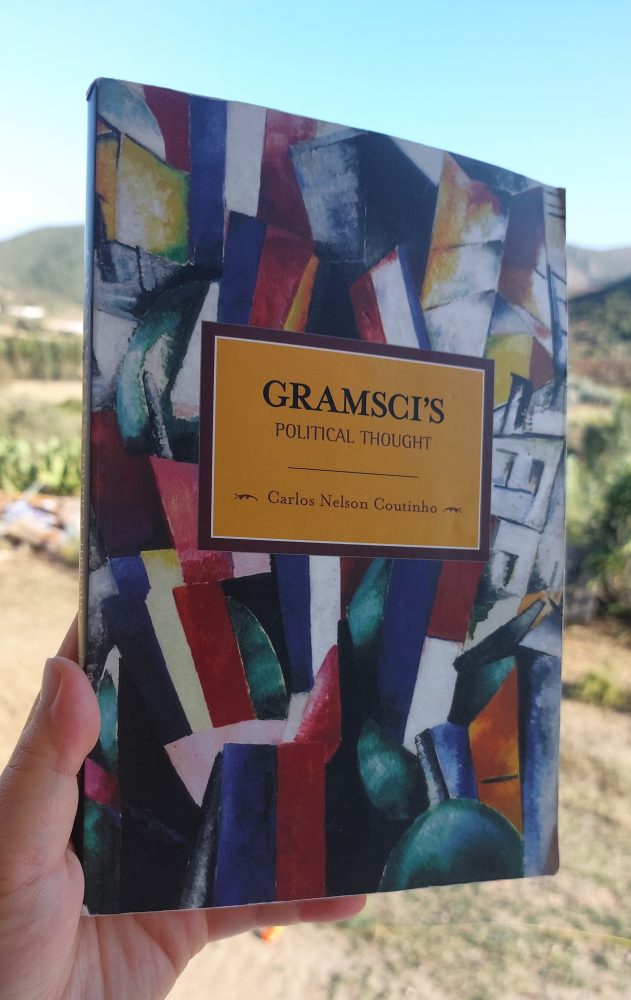
  • “Gramsci’s Political Thoughts” Carlos Nelson Coutinho, (2012) Review | Fascist government couldn’t stop him

    “Gramsci’s Political Thoughts” Carlos Nelson Coutinho, (2012) Review | Fascist government couldn’t stop him

    ★★★★☆ "We must prevent this brain from working for twenty years" but even after arrested by Fascist government, he didn't stop writing. A book about his life, from poverty in Sardinia, student life in Turin, exile in Russia, prison and death. 
    🔽 log 🔽
    Gramsci's Political Thoughts
    Carlos Nelson Coutinho, 2012
    198 pages
    Read in 2024.04

    🔽 Book review and notes 🔽
    It follows his life from when he was a child, lost father early, poor, physical disability, scholarship to Turin, involvement in politics, forms Communist party, arrest, life in prison, non stop writing even in the prison, even with malnutrition and torture. His insistence on the power of workers.

    Difficult read as I had little background to Gramsci, and naturally, it keeps referring to his Prison Notebooks, and of course no true knowledge in Marxism.
    He’s a back-to-basic Marxist.

    “We must prevent this brain from working for twenty years”
    “Domination without leadership.
    Dictatorship without hegemony”

    🔽 Where to buy 🔽

    ●●● Amazon.com (US) ●●●

    Gramsci's Political Thought (Historical Materialism)


    ●●● Amazon.co.uk (UK) ●●●
    Gramsci's Political Thought: Historical Materialism, Volume 38

    ●●● Amazon.it (Italy) ●●●
    -
    
    
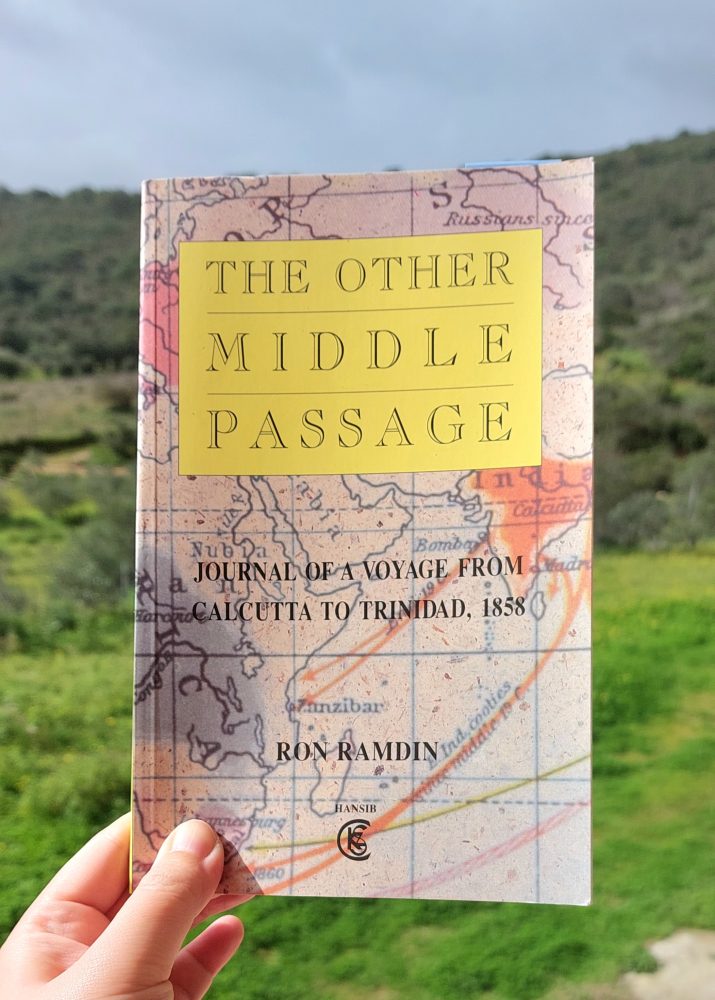
  • “The Other Middle Passage” Ron Ramdin, (1994) Review | Another slave trade

    “The Other Middle Passage” Ron Ramdin, (1994) Review | Another slave trade

    ★★★★★ Though the slavery from Africa was by then banned the labour was much needed in the Caribbean. Written by a friend who is a descendent. Slave trade has only changes the name.
    🔽 log 🔽
    The Other Middle Passage:
    Journal of a Voyage From Calcutta to Trinidad 1858
    Ron Ramdin, 1994
    62 pages
    Read in 2020.06
    🔽 Book review and notes 🔽
    
    Written by a friend, who himself is a descendent of the emigrant of Coolie Trade, the system established by Europe after abolishing the Slave Trade, though they are very similar.
    
    The first part is written by Ron to introduce the background and go through the conditions of these journeys that the Indian emigrants had to make were.
    He focuses on this particular ship that lost 124 lives out of 324 during the 108 day journey in 1858. 
    
    Though the slavery from Africa was by then banned the labour was much needed in the Caribbean, so it continue to be a very important "trade", to eradicate the freedom from fellow human beings and the Europe solely focused on the profit.
    
    And the second part is the actual journal and writing from his wife. Every day somebody died. 
    Not a surprise for anyone, as the physical conditions and the distress made them prone to be sick and eventually die.
     
    If you are interested in getting a copy, I might be able to help as they are not easily available.
    
    🔽 Where to buy / Summary and more info 🔽

    ●●● Amazon.com (US) ●●●
    The Other Middle Passage: Journal of a Voyage From Calcutta to Trinidad 1858
    The Other Middle Passage: Journal of a Voyage from Calcutta to Trinidad, 1858


    ●●● Amazon.co.uk (UK) ●●●
    The Other Middle Passage: Journal of a Voyage from Calcutta to Trinidad, 1858 (Coolie Odyssey)

    ●●● Amazon.it (Italy) ●●●
    --

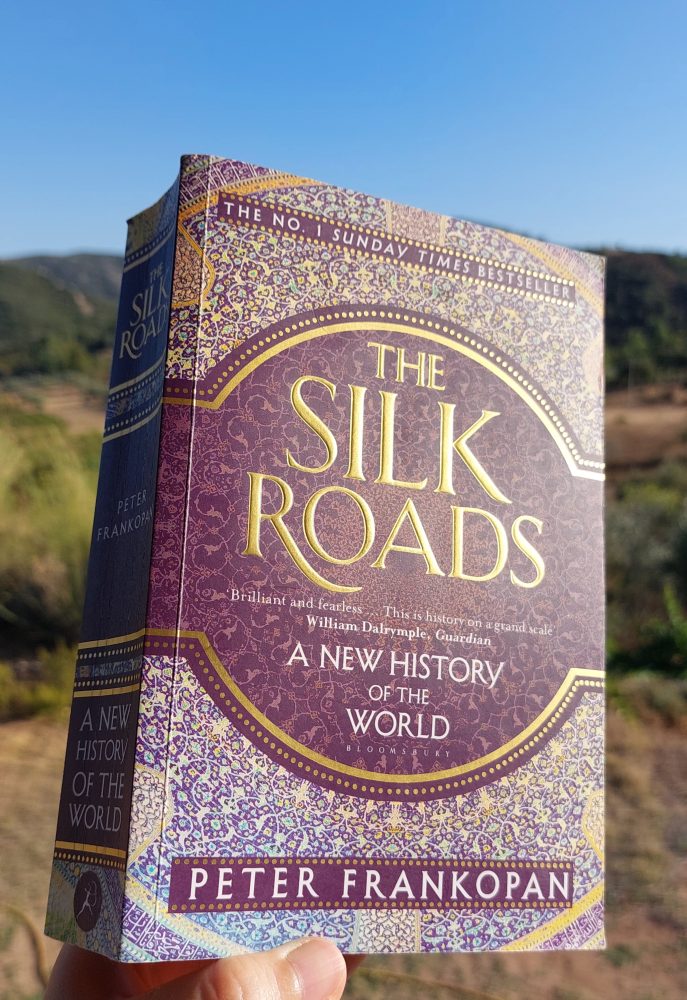
  • “The Silk Roads” Peter Frankopan (2015) Review | History book that changed my history

    “The Silk Roads” Peter Frankopan (2015) Review | History book that changed my history

    ★★★★★+♥️ This got me interested in history. How the Middle East had a wonderful history and traditions, and how Europe has always been greedy. Frankopan is so serious that it's funny.
    
    
    🔽 log 🔽
    The Silk Roads: A New History of the World
    Peter Frankopan, 2015
    657 pages
    Read 2024.6


    🔽 Book review and notes 🔽
    An epic.
    This got me interested in history, a lot more than before, it has that charm, it doesn't just give you knowledge, it is entertaining.

    It is a book about the whole history of the silk roads (plural, because it's not just one road) but surprisingly it's not boring, it is very entertaining and exciting as a book, like a big intertwined story.
    It illustrates the magnificent and rich history of the Middle East, and how greedy Europe has been using the religion as an excuse, and how Europe faded and in came the US, the new Empire, with its selfish democracy as their weapon.

    And after reading this, you know why the Middle East being rich is not a new thing, it's not merely the quick money as the West wants to portrait it.
    They have a looong history, long and rich.

    Maybe it's just the end of the European and American empires, and could be just the return of the Silk Roads.

    🔽 Where to buy 🔽

    ●●● Amazon.com (US) ●●●

    The Silk Roads: A New History of the World


    ●●● Amazon.co.uk (UK) ●●●
    The Silk Roads: A New History of the World (Bloomsbury Paperbacks)

    ●●● Amazon.it (Italy) ●●●
    Le vie della seta. Una nuova storia del mondo (Italiano)

  • “The Prince” Niccolò Machiavelli (1532) Review | Focus, be cruel, rule

    “The Prince” Niccolò Machiavelli (1532) Review | Focus, be cruel, rule

    ★★★☆☆ A “quintessentially Renaissance man”. This is a guidebook on how to be a good ruler in 1500s Italy. Focus, be cruel, rule. Scary this is still loved by many.


    🔽 log 🔽
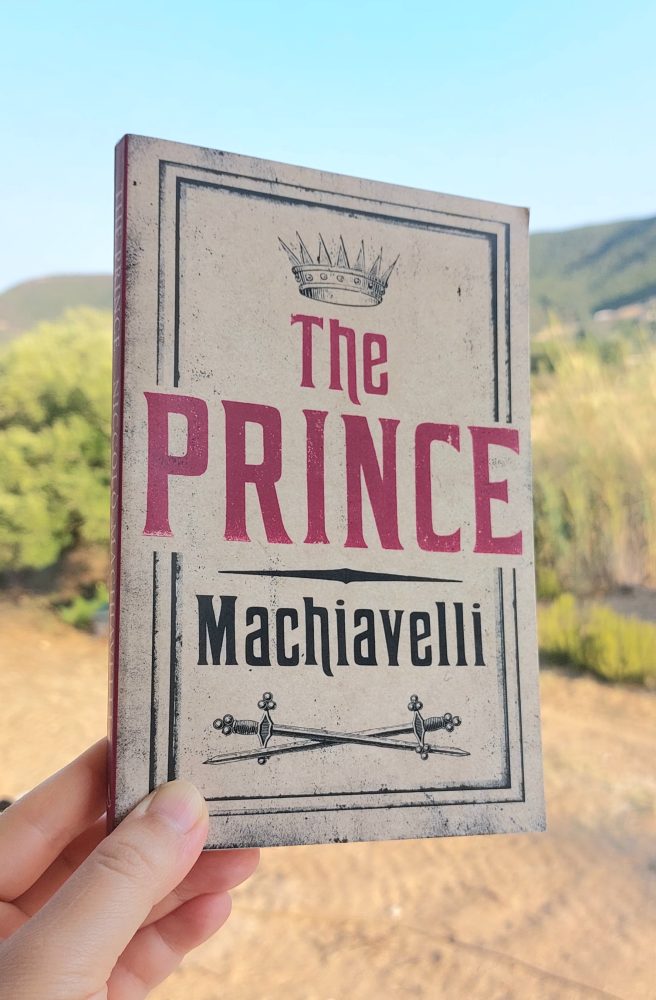
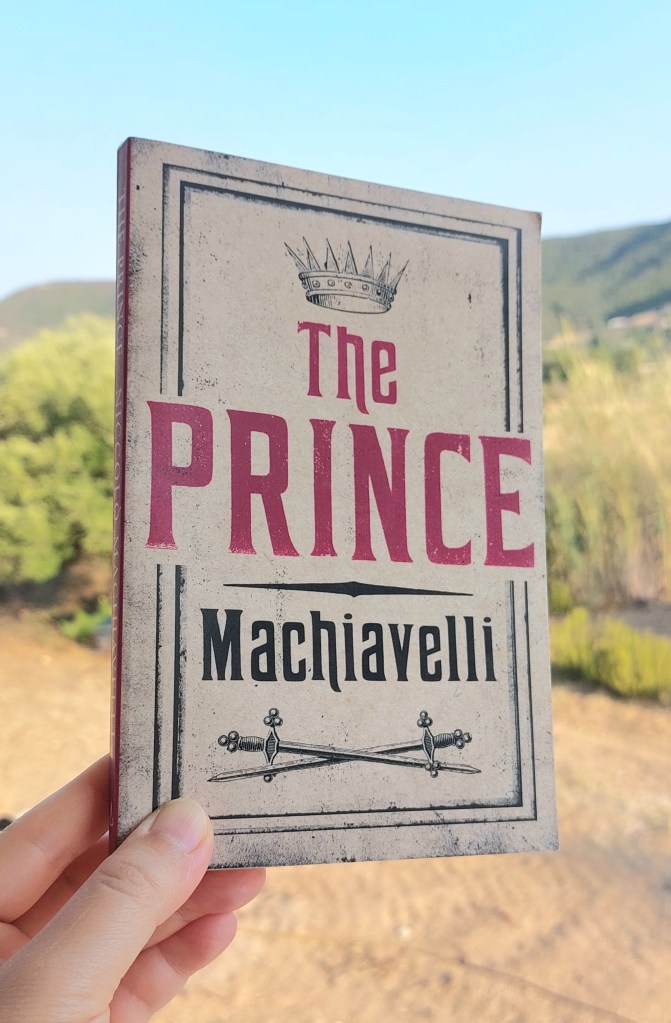
    The Prince
    Niccolò Machiavelli, 1532
    Il principe
    128 pages
    Read 2024.11

    🔽 Book review and notes 🔽

    Alma classics, a version that was translated and published in 2009

    So this is a guidebook on how to be a good ruler in 1500s Italy.
    It has many connotations but clearly it is wrong to try to apply this to all leaders or all societies.

    It does recommend to focus on the ruling and go cruel, but it was probably what was needed back then.
    And the words are straightforward, and references a lot to the history especially the Roman empire.
    And gives practical advices on how to behave.
    As they say, a quintessentially Renaissance man.

    🔽 Where to buy / Summary and more info 🔽

    ●●● Amazon.com (US) ●●●

    The Prince | Niccolò Machiavelli

    ●●● Amazon.co.uk (UK) ●●●
    The Prince: Niccolo Machiavelli

    ●●● Amazon.it (Italy) ●●●
    Il principe

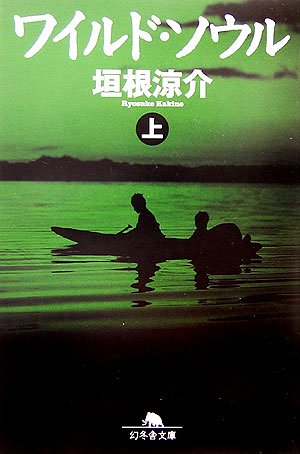
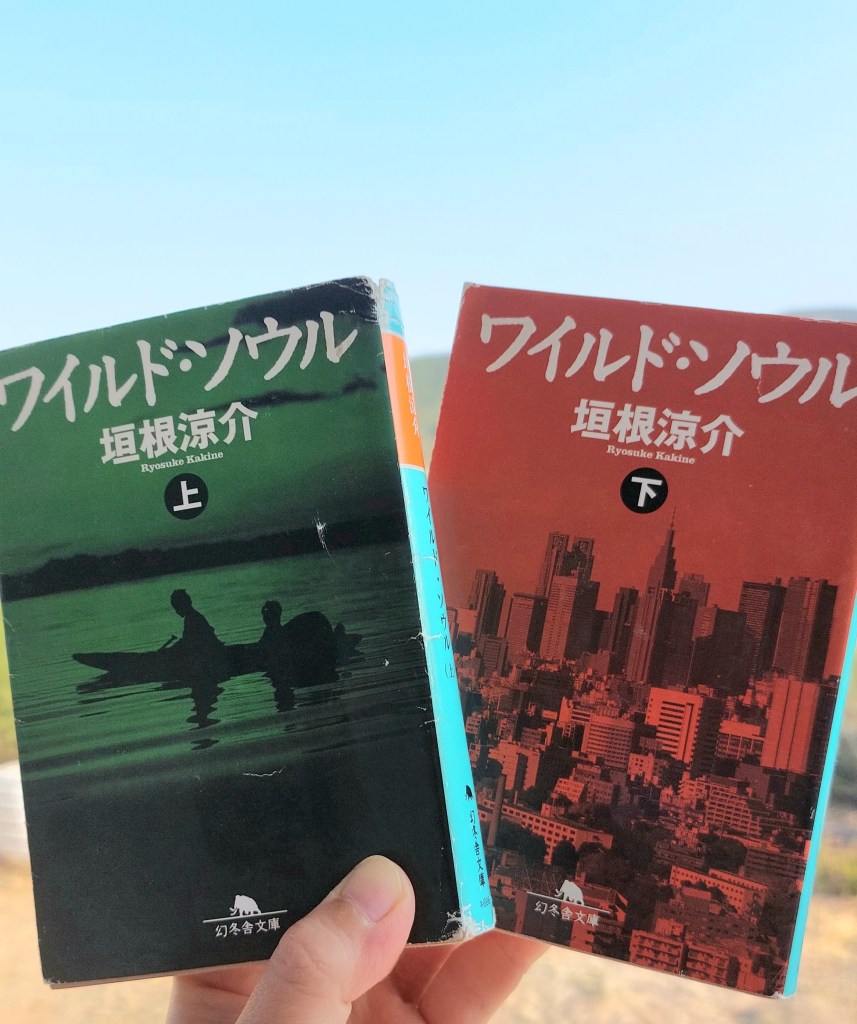
  • “Wild Soul” Ryosuke Kakine, (2006) Review | Let the revenge begin from Brazil

    “Wild Soul” Ryosuke Kakine, (2006) Review | Let the revenge begin from Brazil

    ★★★★★ After WW2, 40,000 Japanese people crossed the ocean to Brazil to start better lives promised by Japanese government. Instead, they lived and died at the bottom of the society and jungle. Let the revenge begin.


    🔽 log 🔽
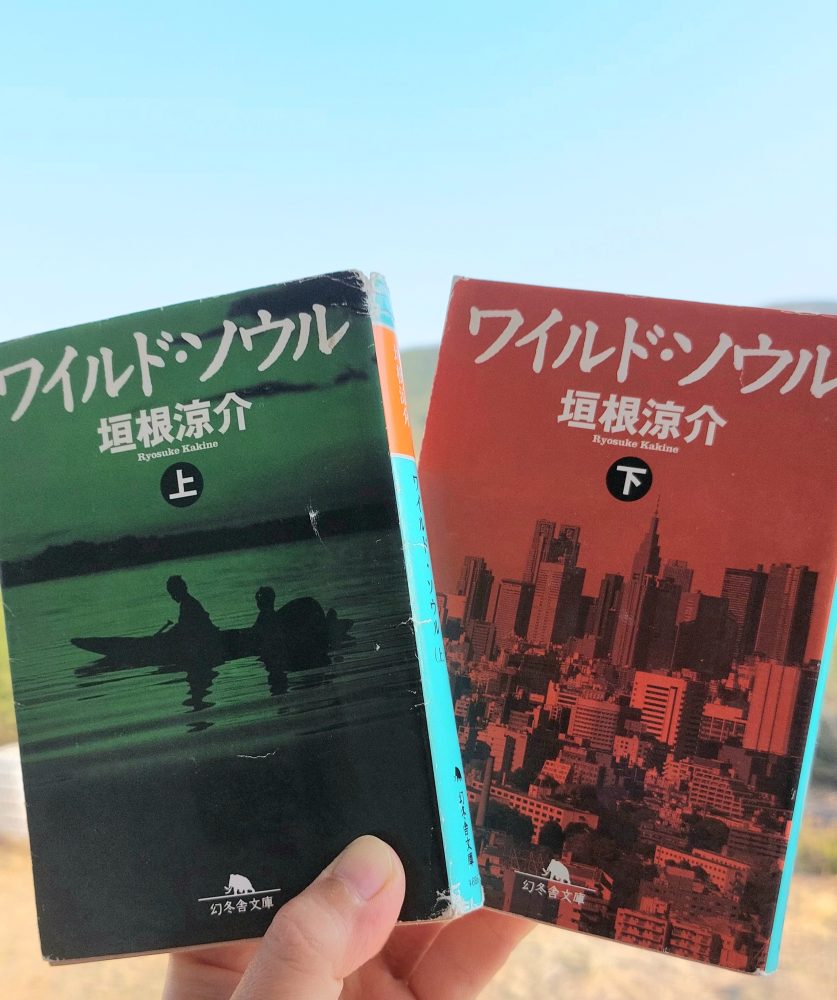
    (Wild Soul)
    Ryosuke Kakine, 2006
    ワイルド•ソウル
    垣根涼介 2006
    1040 pages (512 + 528)
    Read 2024.6
    (Not available in English)


    🔽 Book review and notes 🔽
    1000+ pages in Japanese, but it's nonstop explosion of excitement that you can't put the book down.

    After the second world war, Japanese government encouraged people in villages to move to Brazil, assuring them they would have land and work guaranteed.
    Instead the 40,000 people were left in the amazon forest to survive alone.
    Those who did survive and escape, lived at the bottom of various south American towns and cities.

    That's the first book, then, we move on to the second book where they start their revenge.

    Today's Japan, you meet 3 wild men, their faces look like Japanese but their eyes are dangerously bright; they have one mission, one target, the Japanese government.

    You spent one chunk of a book following their horrible lives so you are 100% on the side of these men, and you've also learned that this really was how many of those Japanese lived in Brazil.

    The book also reminds you how small we are in the huge endless nature of the amazon, one person is nothing. The nature would easily swallow you.
    Yet, we still live, we still regret the actions we did in the past, we still love.

    It's an epic and 1000 pages full of drama, action and love. A must read (if it becomes available in English!)

    🔽 Where to buy 🔽

    ●●● Amazon.com (US) ●●●

    Wild Soul [1] [In Japanese Language]


    ●●● Amazon.co.uk (UK) ●●●
    --

    ●●● Amazon.it (Italy) ●●●
    --
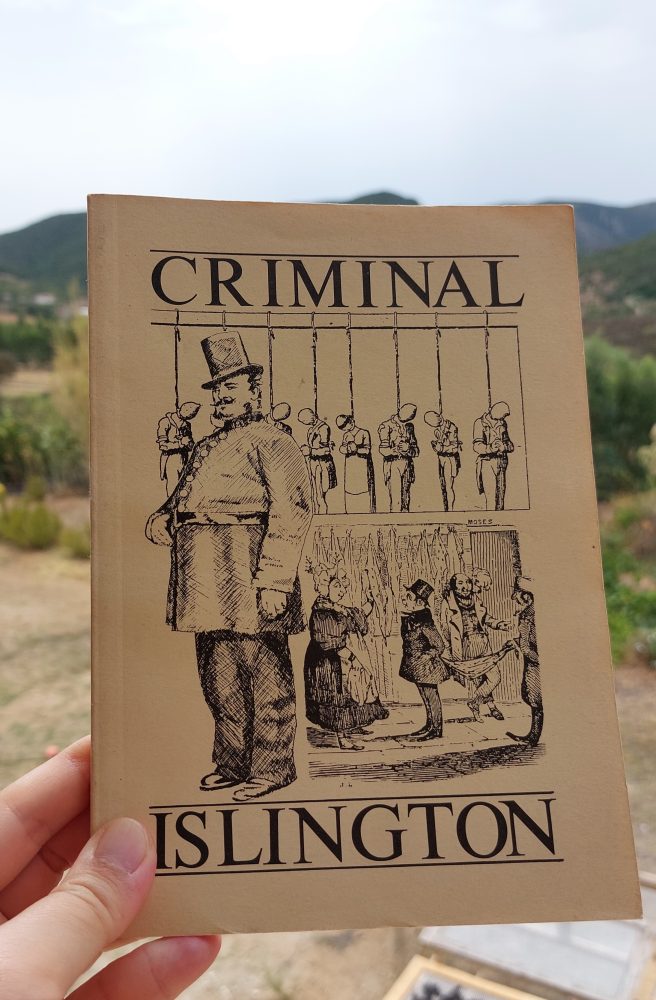
  • “Criminal Islington” Islington Archeology & History Society, (1989) Review | Crimes, policing and prisons

    “Criminal Islington” Islington Archeology & History Society, (1989) Review | Crimes, policing and prisons

    ★★★★☆ Record of crimes, policing and prisons in Islington, my home in London. This is when British Empire was at its peak, yet, citizens of London lived in poverty. Hypocrisy.


    🔽 log 🔽
    Criminal Islington
    The Story of Crime and Punishment in a Victorian Suburb
    Islington Archeology & History Society, 1989
    90 pages
    Read 2024.7


    🔽 Book review and notes 🔽
    Collection of essays related to criminals, policing and prisons.
    Being so closed to the City, Islington, especially Clerkenwell had a pretty bad history.
    It’s interesting that there was no “police” outside of the City, and at the same time people realised that the petty crimes are born out of poverty so the policing and the housing improved the situation.

    Crazy to think that the alleys in London were so poor yet they had the Empire.

    In any case, interesting to know the area I know so well has such an interesting (but not very proud) history.

    🔽 Where to buy 🔽

    ●●● Amazon.com (US) ●●●
    Criminal Islington, The Story of Crime and Punishment in a Victorian Suburb

    ●●● Amazon.co.uk (UK) ●●●
    Criminal Islington: The story of crime and punishment in a Victorian suburb

    ●●● Amazon.it (Italy) ●●●
    --
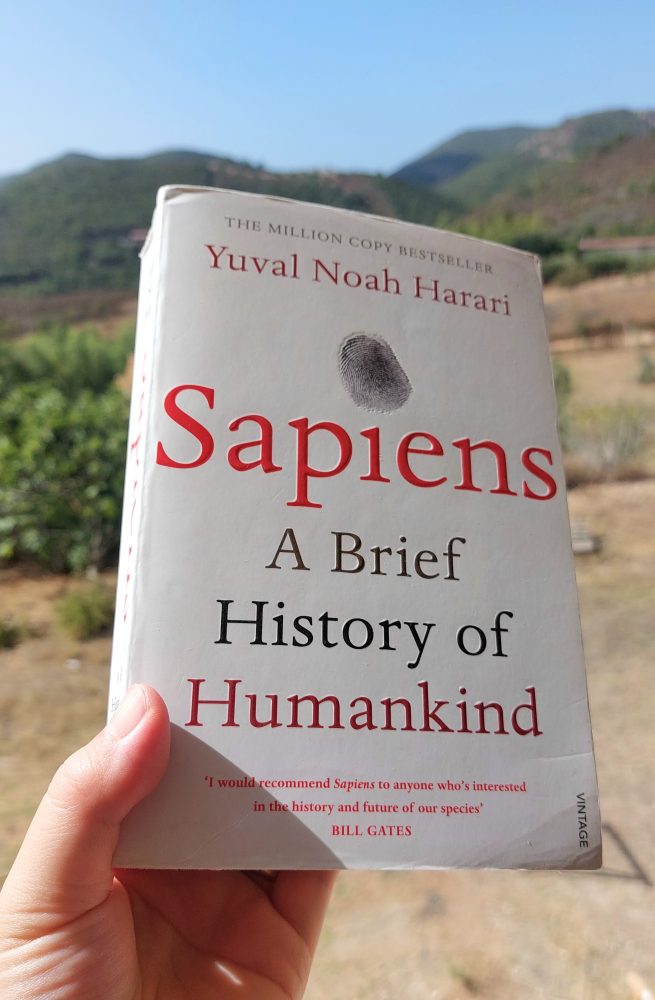
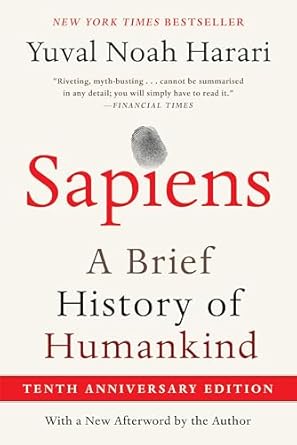
  • “Sapiens” Yuval Noah Harari (2011) Review | We demand to be stronger

    “Sapiens” Yuval Noah Harari (2011) Review | We demand to be stronger

    ★★★★☆ It is scary to think just how we continue to demand to be strong, stepping on all the other animal and the ecosystem that surrounds us – and, on other fellow human beings.


    🔽 log 🔽
    Sapiens
    Yuval Noah Harari  2011
    580 pages
    Read 2024.8


    🔽 Book review and notes 🔽
    One of the most talked about books in the last decade.

    As I was warned, it is interesting, clever, provoking but above all scary.
    It is scary to think just how we evolved to be the most powerful being on the planet, and how we continue to demand to be strong, stepping on all the other animal and the ecosystem that surrounds us - and, on other fellow human beings.
    If you stop and think, it's crazy how we're destroying our world by selfish.

    As he says, the earth is a big shopping centre.
    We love to consume and want more - but what exactly do we want?
    What is the happiness that we want?
    And in future, when we evolve to something new, what new things will we want?

    Another scary part is, he doesn't seem to criticise this aspect of our greed and seem to just speak about it, which might be alarming.
    So though interesting, I don't like it, and I kept it with 4 stars only.

    🔽 Where to buy 🔽

    ●●● Amazon.com (US) ●●●

    Sapiens [Tenth Anniversary Edition]: A Brief History of Humankind


    ●●● Amazon.co.uk (UK) ●●●
    Sapiens: A Brief History of Humankind: The multi-million copy bestseller

    ●●● Amazon.it (Italy) ●●●
    Sapiens. Da animali a dèi: Breve storia dell'umanità (Italiano)
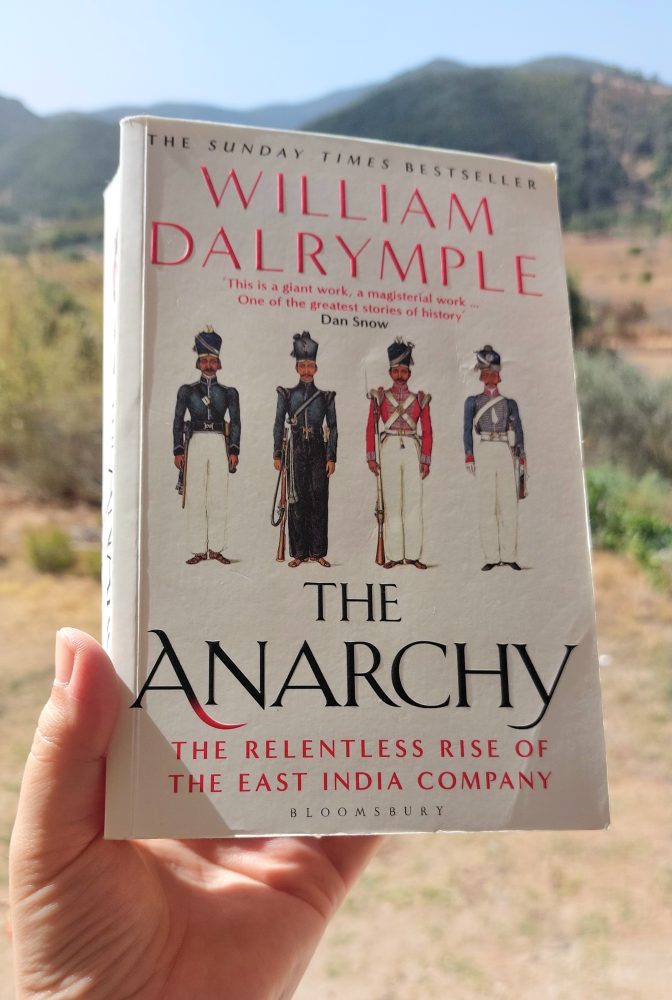
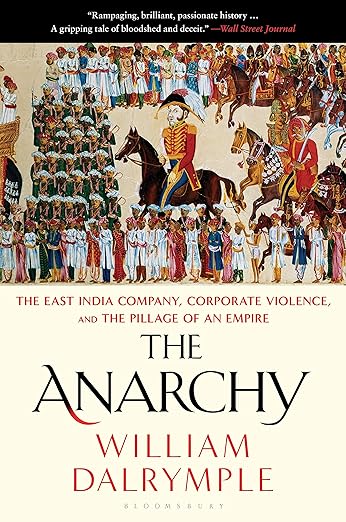
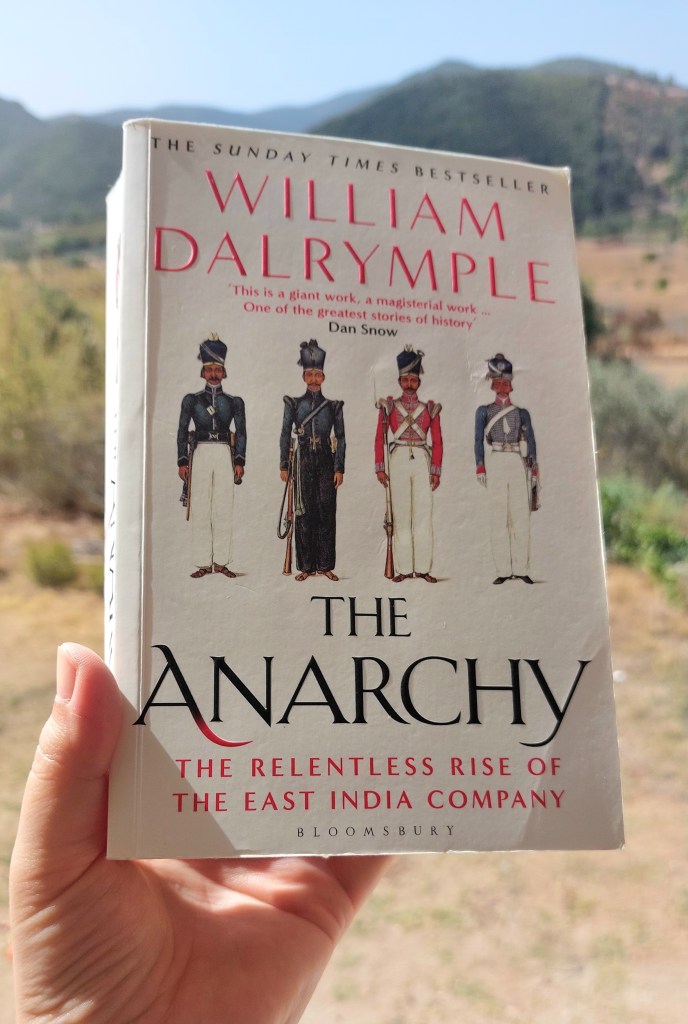
  • “The Anarchy” William Dalrymple(2019) Review | A gang of thugs

    “The Anarchy” William Dalrymple(2019) Review | A gang of thugs

    ★★★★★+♥  Why was the East India Company so successful? Well, because they were disrespectful, aggressive, opportunist, deceitful and selfish gang of thugs. The book is such a cultural heritage not only because it’s insightful but also passionate and humane.

    🔽 log 🔽
    The Anarchy
    The relentless rise of East India Company
    William Dalrymple, 2019
    576 pages
    Read 2024.08


    🔽 Book review and notes 🔽
    A great book, definitely the top, the best.
    It’s the topic I’ve always been interested in; how in the world could small England colonise India, a great power?

    So is it like, Mughal Empire was a lion, and EIC a hyena?
    A handful of gang, a mob, disrespectful, aggressive, opportunist, deceitful and selfish, who only thought of making quick money, took the gamble for their own profit.
    They were hardly truthful to their employer, government or Crown either.
    But East India Company was too big to fall, Britain was too dependent on the wealth India brought, so they nationalised it, and took over what EIC had, ie the power over the subcontinent, the start of the British India.

    History is definitely more interesting and exciting than fiction here, the facts are fascinating but then you have Mr Dalrymple writing about it with his compassion, passion and humane sensibility, it becomes such a force, it’s so powerful, and utterly important.

    This careful yet brave book focuses on the fall of Mughal Empire and how EIC took all the opportunities with aggression and lies, because that is what it was, and it’s hardly to do with the ability of EIC as merchants.
    It contains endless anecdotes and references taken from the writing of the time that had been buried in the cluster of materials in India, so they are the facts that we were never aware of.
    And facts are scary, truth hurts, historical facts almost always hurt Britain.
    No wonder, sadly, some people don’t like Dalrymple’s books, history hurts them.

    One particularly interesting character that I didn’t know about was Warren Hastings who loved and cared about India, unusual for EIC employee but had nasty enemies.

    Again a great book, I’d even go as far as saying an important cultural treasure, and an instant classic.

    🔽 Where to buy 🔽

    ●●● Amazon.com (US) ●●●

    The Anarchy


    ●●● Amazon.co.uk (UK) ●●●
    The Anarchy: The Relentless Rise of the East India Company

    ●●● Amazon.it (Italy) ●●●
    Anarchia. L'inarrestabile ascesa della Compagnia delle Indie Orientali (Italiano)
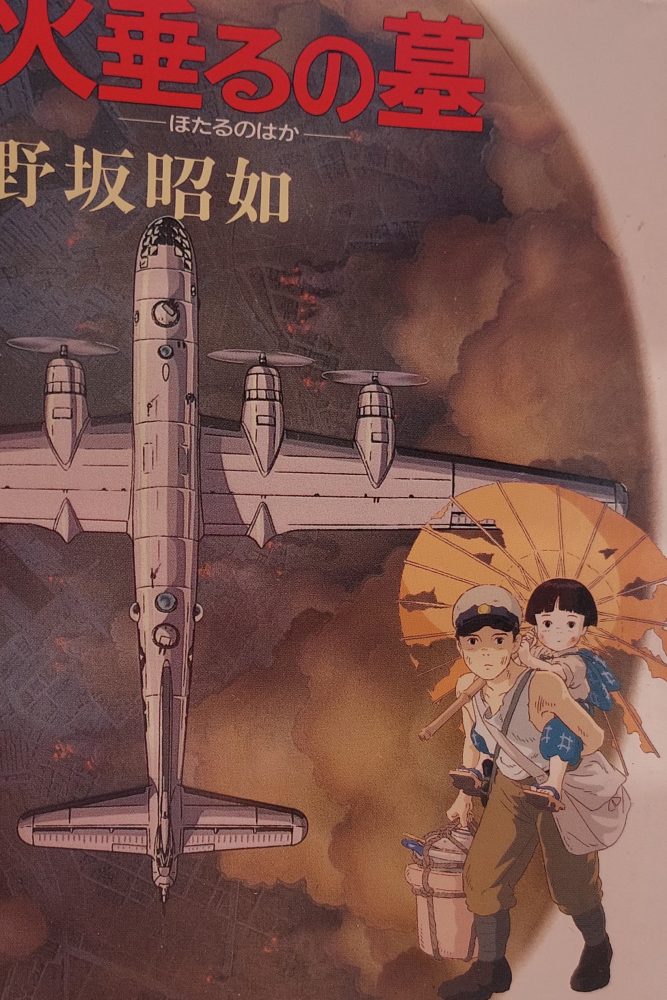
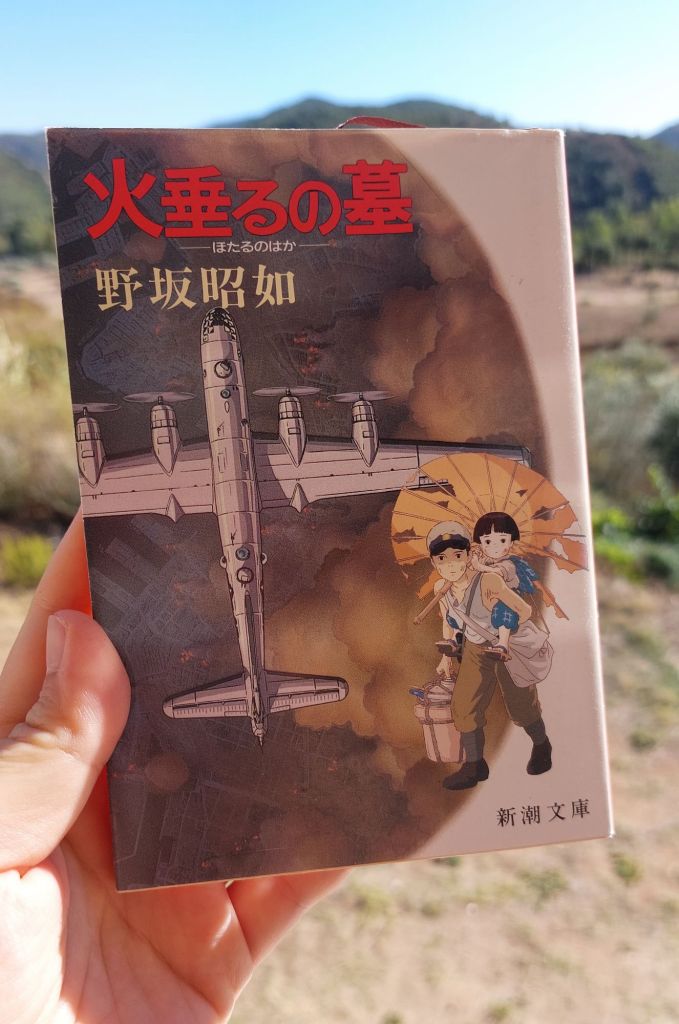
  • “Grave of the Fireflies” Akiyuki Nozaka (1968) Review | Guilt disappears

    “Grave of the Fireflies” Akiyuki Nozaka (1968) Review | Guilt disappears

    ★★★★★ I still cannot watch the Ghibli film. Guilt disappears, but your hunger doesn’t. You can visualise the horrible views the kids are seeing, and smell the death. They cannot live without help and death is too familiar.


    🔽 log 🔽
    Grave of the Fireflies
    Akiyuki Nozaka, 1968
    アメリカひじき
    火垂るの墓
    野坂明之
    Japan
    Read 2024.10


    🔽 Book review and notes 🔽
    The Ghibli film is too well known, but I still cannot watch it and even less now that I have kids of my own.

    Poverty, but extreme poverty where the war took everything and there's no other way than eventually die.
    There are no beautiful things like family or childhood, it's about how to survive that day, and if possible saving the little sister also.

    The book also contains other short stories, about kids who did survive - but it doesn't mean they are not struggling.
    A vivid complex about the victorious Americans, or the guilt they carry because you are the only survivor among the siblings, or their will to do anything to live in the post war period.

    Guilt disappears, but your hunger doesn't.
    What would you do to survive the day, or what can you do if you are only a child?

    The most unexpected thing about the book is the description of sex and female body. America Hijiki talks about sex shows, yes that's an obvious one, but in one of the stories it talks about menstruation that starts even if your whole body is burned and wrapped, or they talk about removing ovary, or about pregnancy and raising children in general during the war.
    All the things that's absolutely normal, especially if you are a woman, but never talked about in the history, which is more often written by men.
    🔽 Where to buy 🔽

    ●●● Amazon.com (US) ●●●

    Grave of the Fireflies Steelbook
    (bluray)
    I couldn't find English book link so adding a link to the Ghibli film

    ●●● Amazon.co.uk (UK) ●●●

    Grave of the Fireflies: Akiyuki Nosaka

    book

    ●●● Amazon.it (Italy) ●●●
    Una tomba per le lucciole (Italiano)
    book
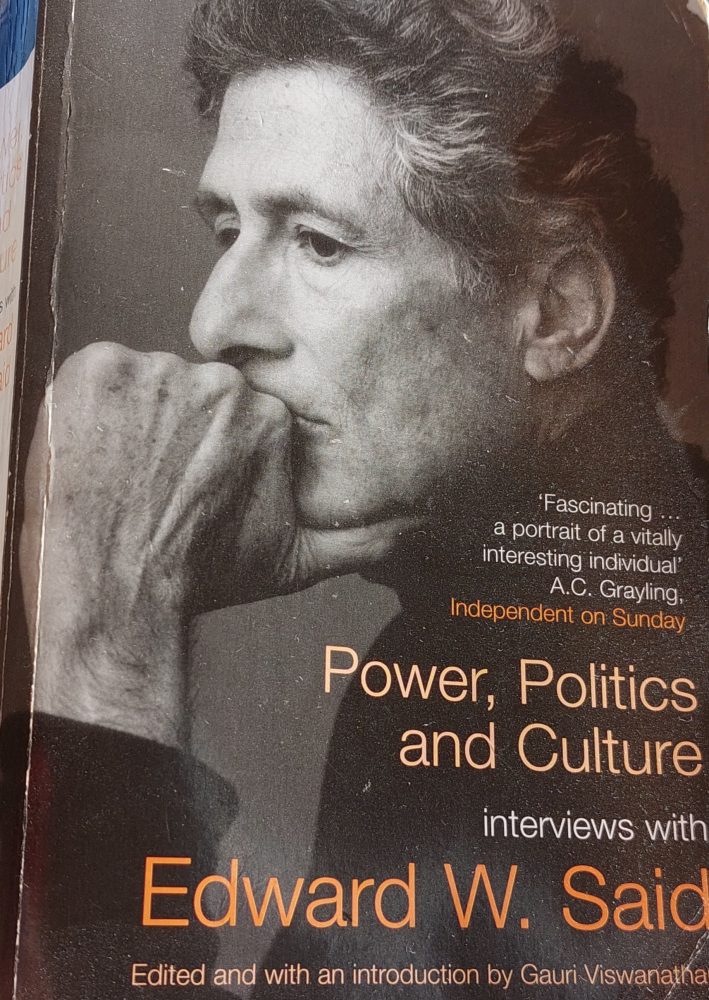
  • “Power, Politics and Culture, Interviews with Edward W. Said” (2001) Review | Coexist

    “Power, Politics and Culture, Interviews with Edward W. Said” (2001) Review | Coexist

    ★★★★★ A Palestinian academic in the US, prof. Said. Many admire and are inspired by his passionate humanism. The second half is about political conversations. Two state solution. Geography rather than history or myth. So we should and can coexist.


    🔽 log 🔽
    Power, Politics and Culture
    Interviews with Edward W. Said, 2001
    US
    512 pages
    Read 2024.11


    🔽 Book review and notes 🔽

    Collection of interviews with 2 sections, first focuses on arts and culture, about literature, music or arts, then the second is more political.

    I must be honest, the first part was difficult as I have little knowledge in the field, but the second part is something very, very real to us, who doesn't see what's going on in Gaza?
    "They can't possibly eliminate us all" - what he and many thought impossible is happening today.
    Genocide of Palestinians was out of question for anyone with common sense, yet, it's happening.

    He calls himself an incurable optimist.
    Some consider him an enemy or a terrorist.
    Many admire and are inspired by his passionate humanism.

    He was not an advocate for Islam, and was not rejecting the right of Jews.
    What is clear and consistent is that he was interested in coexistence of contradictories, he detested the idea of "pure" he dismissed the myth and focused on the lives of people now.
    Geography rather than history or myth. Two state solution.
    He knows that people are more complicated than we seem, exactly as he argues in Orientalism where the Other is depicted in a simplified way, that is simply not true.
    No, we are human, we live, we are complicated, and we must try.

    The curse of the powerful U.S. is that it hates to admit the mistakes and misunderstanding of the past.
    Rather than admitting their error they keep on depicting Arab as terrorist, probably as long as they physically can, because, as we all know, it brings a lot of money to a few in the US.

    It's been more than 20 years since his death, since we lost the lighthouse of compassion and common sense.
    He said, "Israel can't keep on kicking us, they have to admit we exist, not like they can kill off all Palestinians", well, the unimaginable is happening in front of our eyes.
    Can't we hear the voices of calm and humane intellectuals any more?
    Of common sense?

    🔽 Where to buy 🔽

    ●●● Amazon.com (US) ●●●

    Power, Politics, and Culture: Interviews with Edward W. Said


    ●●● Amazon.co.uk (UK) ●●●
    Power, Politics, and Culture: Interviews with Edward W. Said

    ●●● Amazon.it (Italy) ●●●
    --

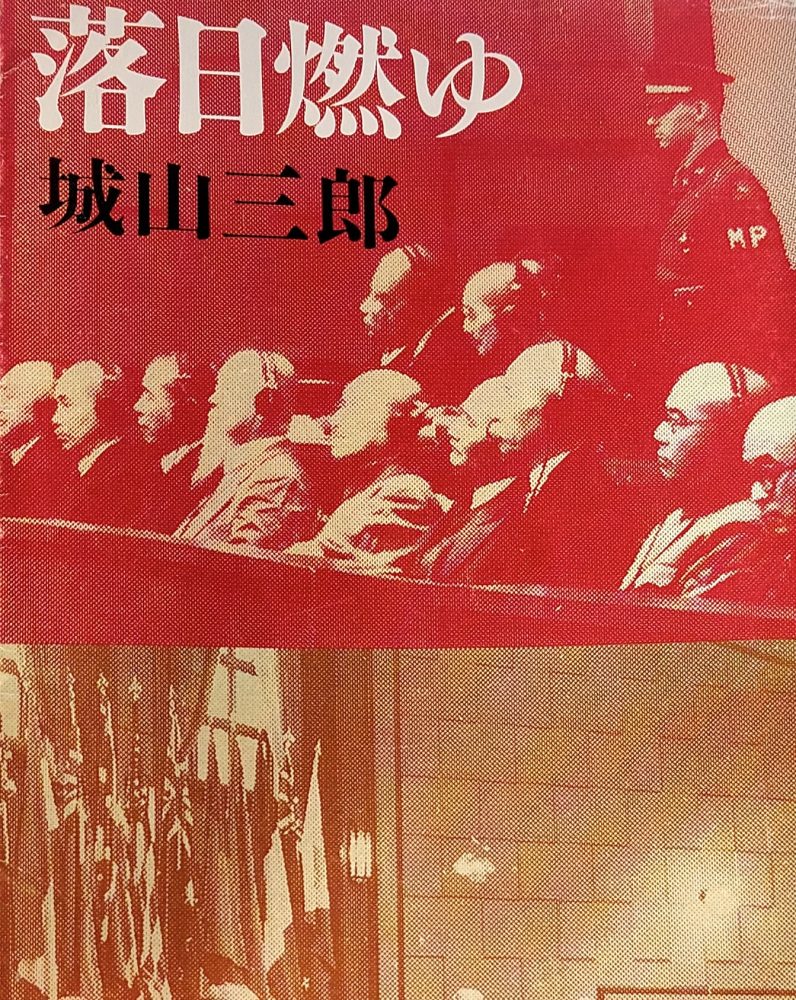
  • “War Criminal” Saburo Shiroyama (1974) Review | Tokyo Trial

    “War Criminal” Saburo Shiroyama (1974) Review | Tokyo Trial

    ★★★★☆  Ex-PM Hirota, the only politician who received the death sentence at Tokyo Trial who was not a military person. This ex diplomat tried not to start the war, but the history is always written by the victors.


    🔽 log 🔽
    War Criminal: The Life and Death of Hirota Koki
    Saburo Shiroyama, 1974
    落日燃ゆ
    城山三郎 1974
    Read 2024.11


    🔽 Book review and notes 🔽
    Shiroyama, the only politician who received the death sentence at Tokyo Trial who was not a military person. A diplomat, a prime minister.

    Born in a regular family in Fukuoka, he was bright so he was encourage to study hard to go to Tokyo.
    Until he became a prime minister, as a diplomat, he did what he could to avoid starting the war, but it was already too late, Japanese military already had too much power by then.
    He did not utter any word of defense during the Trial, though many did feel it was unfair, but as he himself says, his crime is he was too powerless to stop the war from starting - thus death penalty.

    Any effort for peace meant nothing in front of the military force who took over the government, and any effort to prove his innocence also would have meant nothing in front of the US government who could rule the loser however they wanted to.

    History is always written by the victors.
    There is no time to waste when you have so much power over someone else.
    It makes you ponder if we ever change.
    🔽 Where to buy 🔽

    ●●● Amazon.com (US) ●●●

    War Criminal: The Life and Death of Hirota Koki


    ●●● Amazon.co.uk (UK) ●●●
    War Criminal: The Life and Death of Hirota Koki

    ●●● Amazon.it (Italy) ●●●
    War Criminal: The Life and Death of Hirota Koki (English)
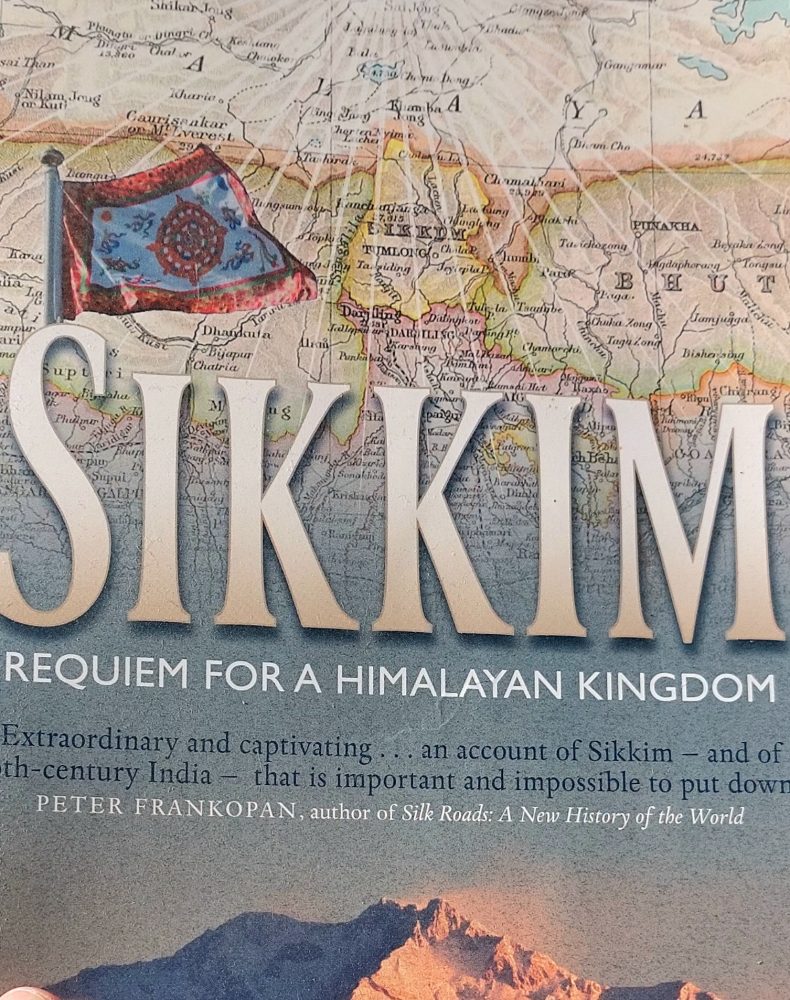
  • “Sikkim, Requiem for a Himalayan Kingdom” Andrew Duff (2015) Review | Fell in love with Sikkim

    “Sikkim, Requiem for a Himalayan Kingdom” Andrew Duff (2015) Review | Fell in love with Sikkim

    ★★★★★+♥️ The more I read the more I’m interested in Sikkim, and this is definitely the most thorough book to learn about the end of Sikkim, and of the king, chogyal. It makes you want to go there… again.

    🔽 log 🔽
    Sikkim
    Requiem for a Himalayan Kingdom
    Andrew Duff, 2015
    320 pages
    Read 2023.01


    🔽 Book review and notes 🔽
    The history of the last few decades of the kingdom before it was annexed by India and the story of their last Chogyal, their last king, Thondup Namgyal.

    The more I read the more I'm interested in Sikkim, and this is definitely the most thorough book to learn about Sikkim.
    The author on the other hand, is Scottish who loved listening to his grandfather telling him about his journey to Sikkim when he was young.
    In 2009 he finally managed to get to Sikkim, and in a Buddhist temple near Pelling, he met a strange monk who gave him a book to read.
    The book was called Smash and Grab (my review here), the monk was Yongda who used to be the chogyal's Captain, and this is how his work has begun.
    Andrew Duff knew he had a story to tell. And I'm glad he did.

    From the 17th century Sikkim had been governed by a Tibetan king, Chyogal.
    It has borders with Tibet (with China behind), Bhutan, Nepal then India, so it's fortunately or unfortunately located in a strategically important place, as such, of course all the great powers were all over this tiny kingdom.
    During the British era, British called in Nepali to cultivate the land to boost economy, even though Nepal had been an enemy of Sikkim for centuries.
    The mass immigration meant that the ruling race, Tibetan, became the minority.
    Now, Britain has left India, and increasingly the last chogyal was vocally against Indian influence to maintain his kingdom independent.
    Sikkim was split in half, those who supported the chogyal and those who didn't, which was not an unobvious choice for the majority of Sikkimese who were Nepali origin.
    Was he only clinging to his personal power? His illusion? Was he unnecessarily influenced by his young American wife (Grace Kelly of the East)? Did he do his politics well? Did he had a choice?
    It's a fascinating book that goes deep inside the life of the last chogyal.

    All the essence of the Himalaya is here, between the big powers, India and China, and of course the British Empire, what could a tiny kingdom do?
    But it's also his very personal struggles of keeping him kingdom, of his young American wife.
    Many say he played his cards wrong, but actually, he had no chance of winning anyway against India.
    Sikkim remains to be a unique little bits of India.
    🔽 Where to buy / Summary and more info 🔽

    ●●● Amazon.com (US) ●●●

    Sikkim: Requiem for a Himalayan Kingdom


    ●●● Amazon.co.uk (UK) ●●●
    Sikkim: Requiem for a Himalayan Kingdom

    ●●● Amazon.it (Italy) ●●●
    Sikkim: Requiem for a Himalayan Kingdom [Lingua Inglese]
  • “The Book of Tea” Kakuzo Okakura (1906) Review | Tea and philosophy

    “The Book of Tea” Kakuzo Okakura (1906) Review | Tea and philosophy

    ★★★★☆  It is the most famous book on tea and Japan for the last 120 years. But it is much more, it’s about what is tea for Japanese people in a very philosophical way – delicate yet strong message to the West.


    🔽 log 🔽
    The Book of Tea
    Kakuzo Okakura, 1906
    128 pages
    Read in 2022.06


    🔽 Book review and notes 🔽

    It is the most famous book on tea and Japan for the last 120 years or so.
    But it is much more, it's about what is tea for Japanese people in a very philosophical way - delicate yet strong message to the West.

    This collection of writings were written for the West who looked down on Japan and the East.
    It spends lot of time speaking about flowers and the sentiments around flower and it tries to communicate the Eastern aesthetics with the West, ending it with the death of the tea master.
    It doesn't necessarily teach you about the tea ceremonies etc, it's more about the spirits of Japan via tea.
    The afterword is also interesting.
    🔽 Where to buy / Summary and more info 🔽

    ●●● Amazon.com (US) ●●●

    The Book of Tea Classic Edition


    ●●● Amazon.co.uk (UK) ●●●
    The Book of Tea: The Book of Oz (Penguin Little Black Classics)

    ●●● Amazon.it (Italy) ●●●
    Il libro del tè (Italiano)